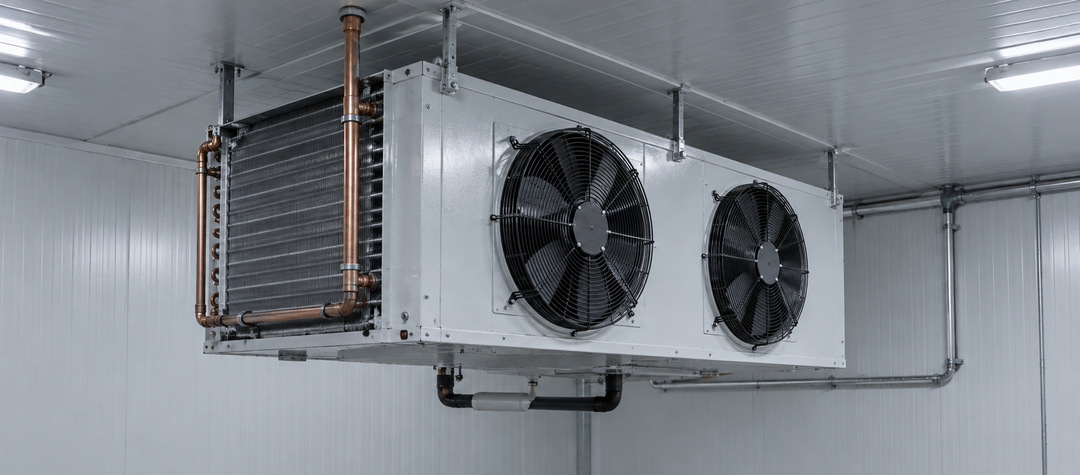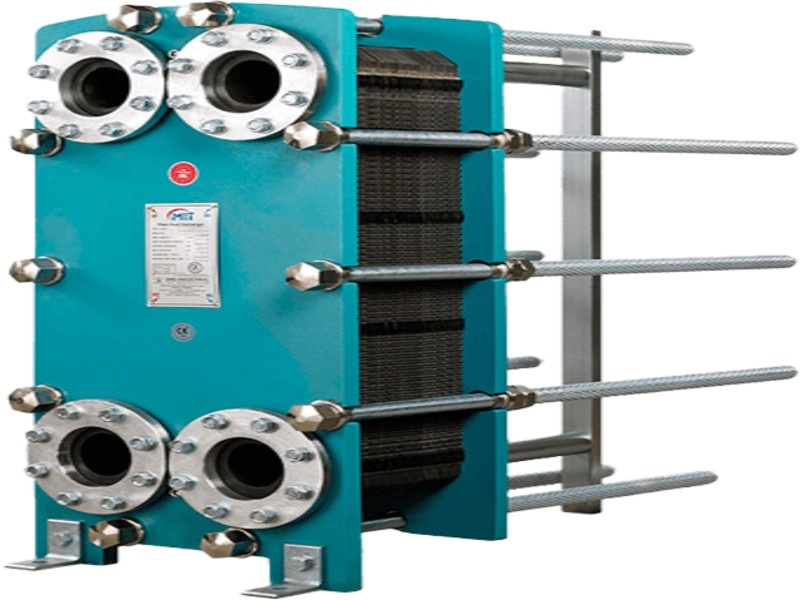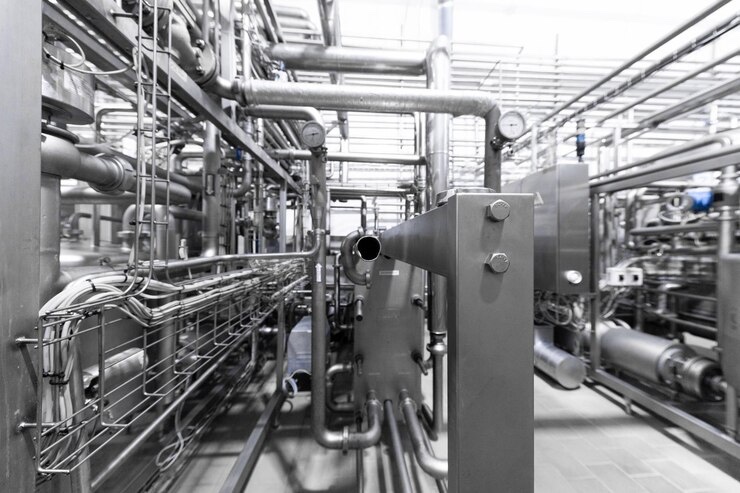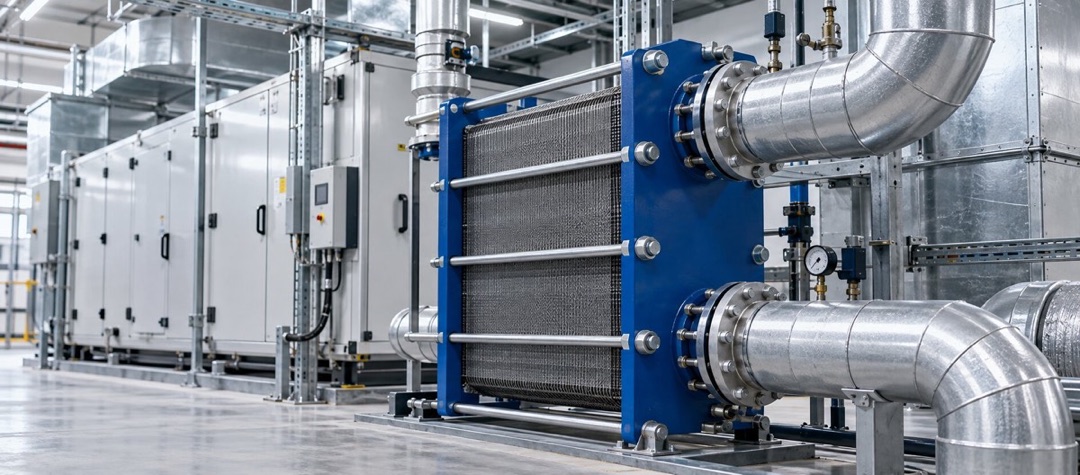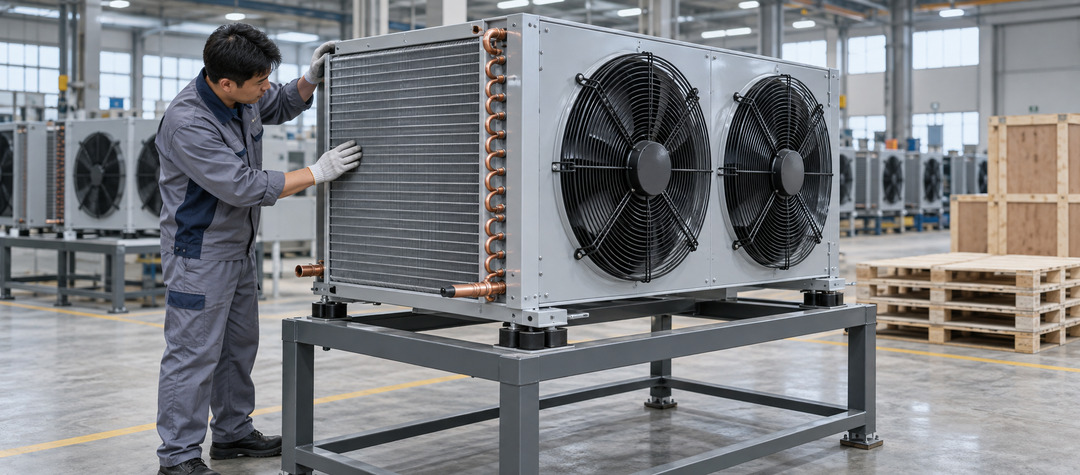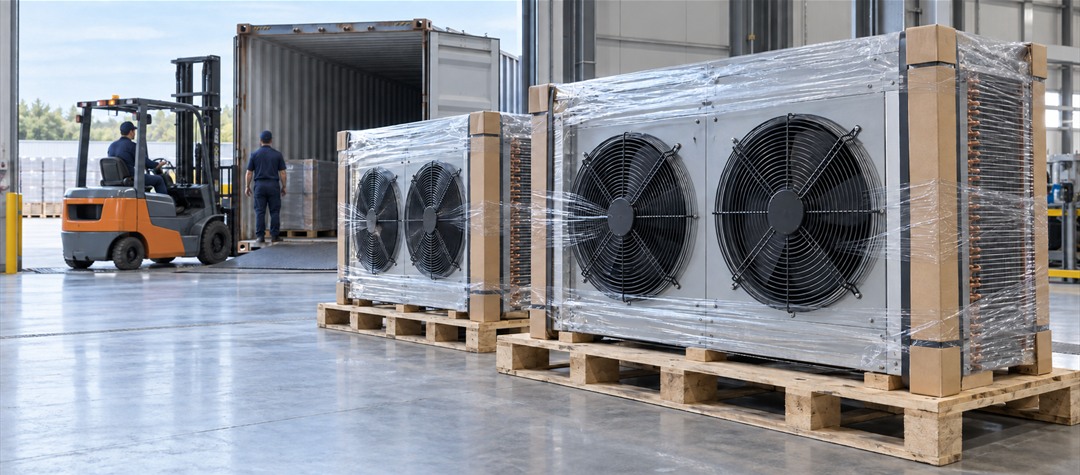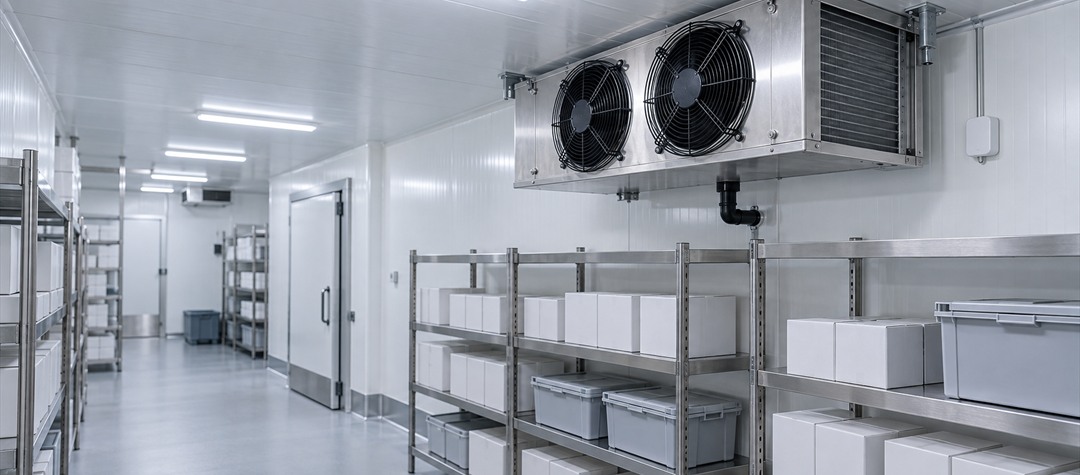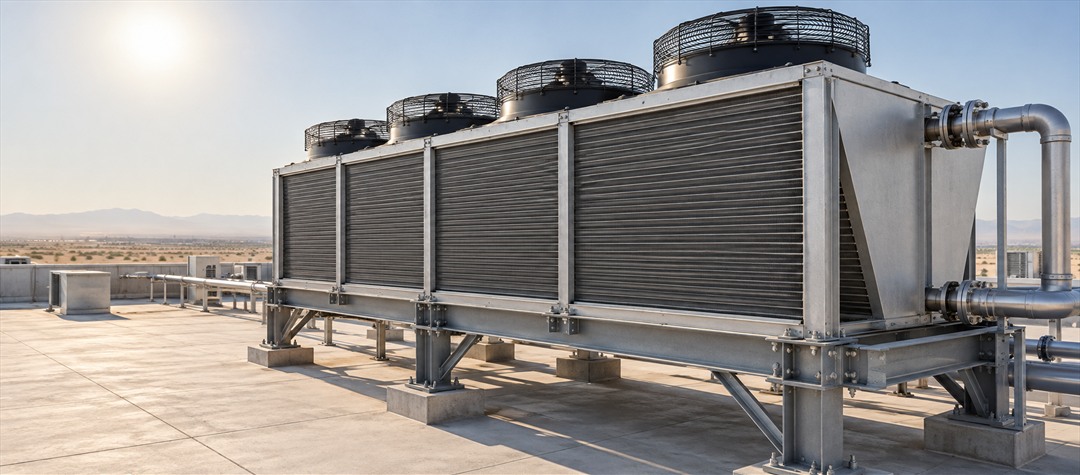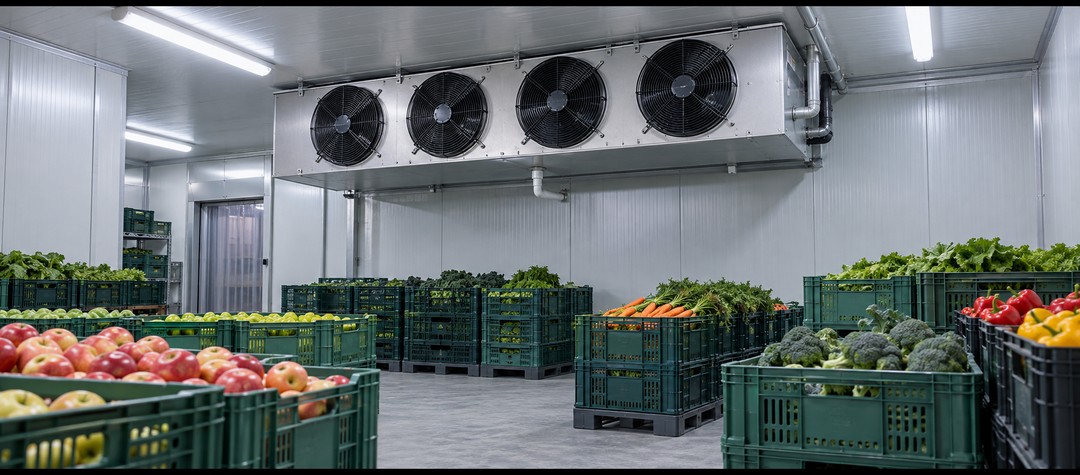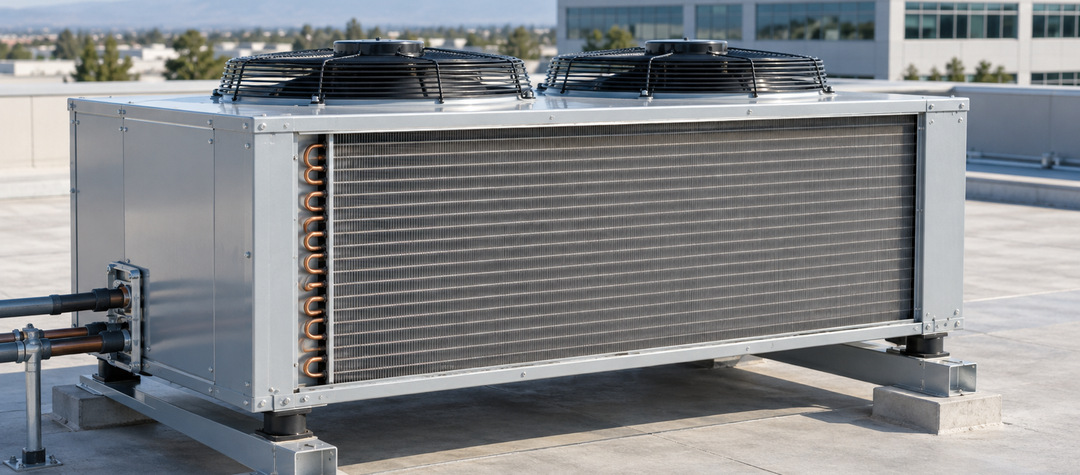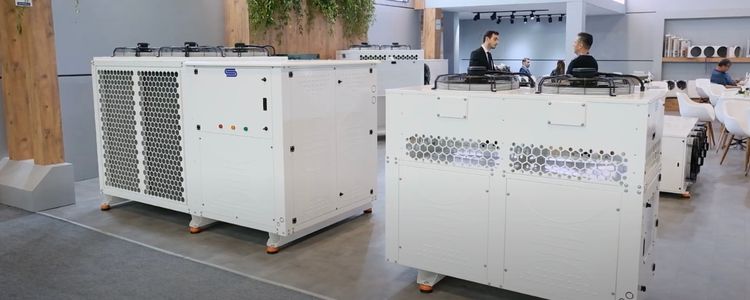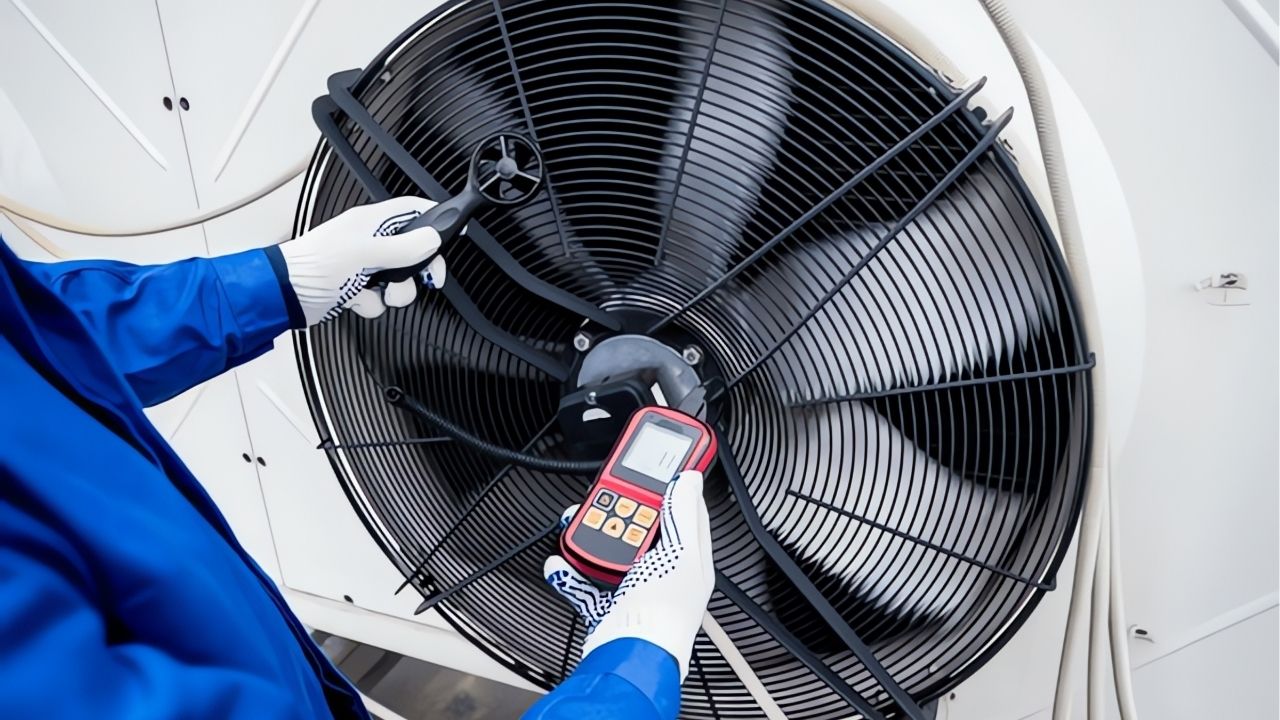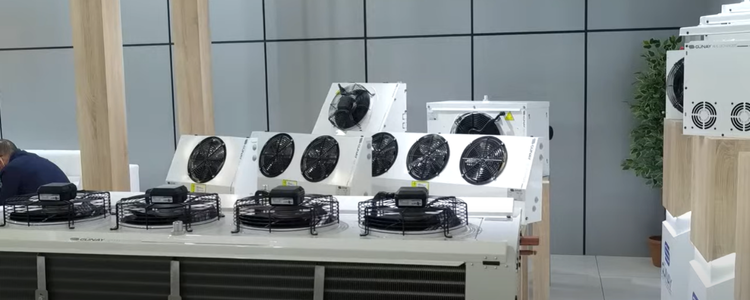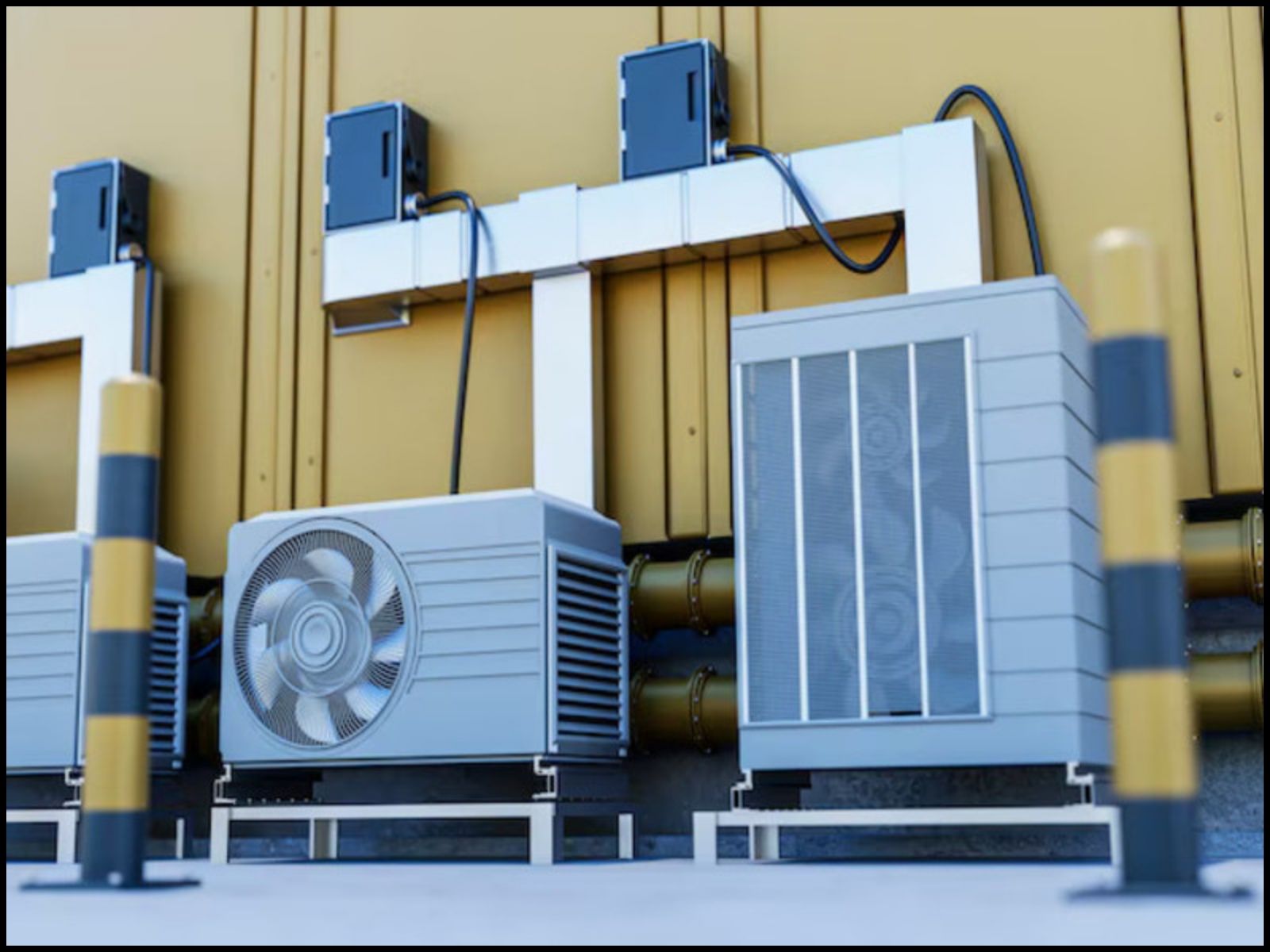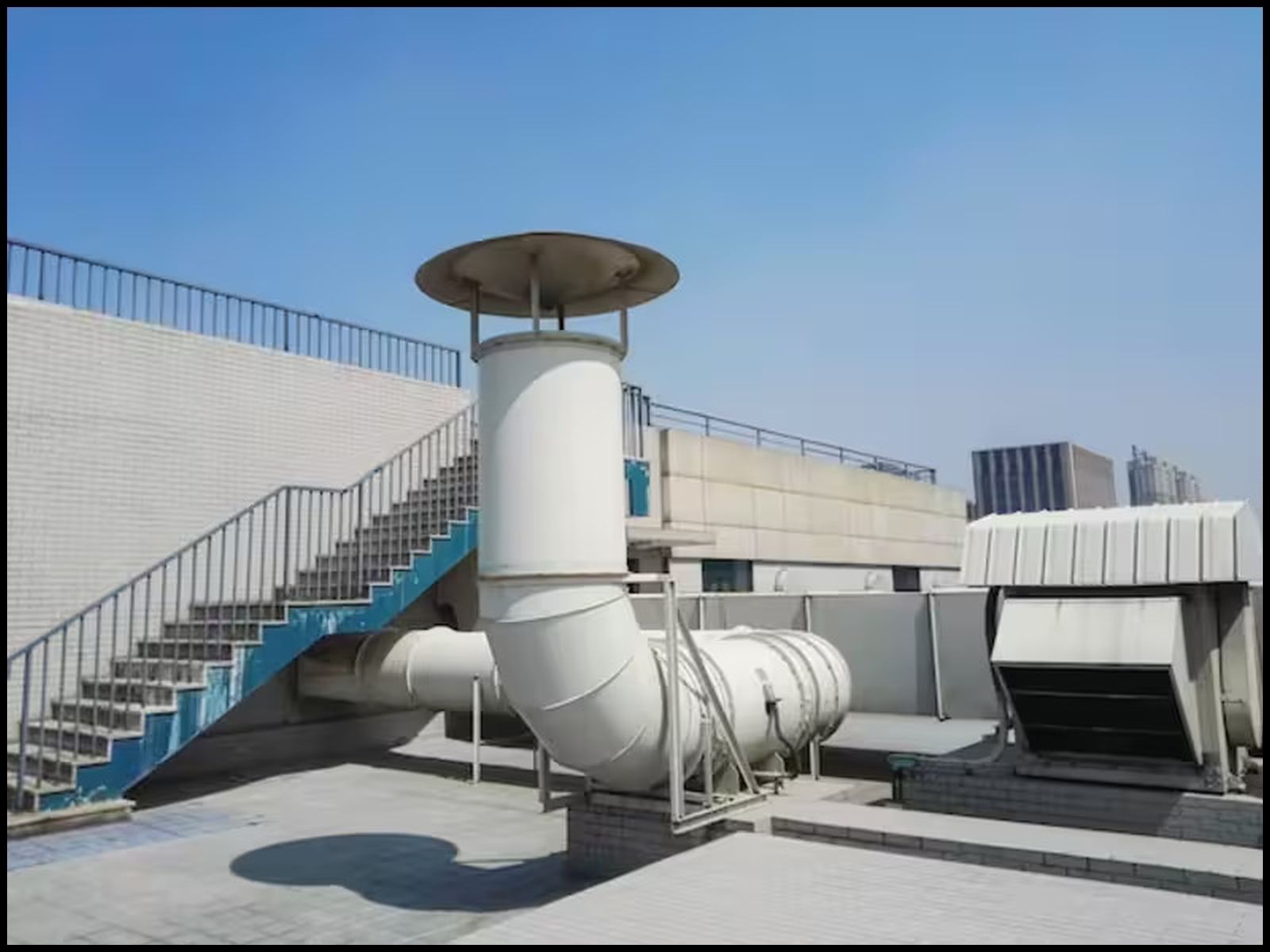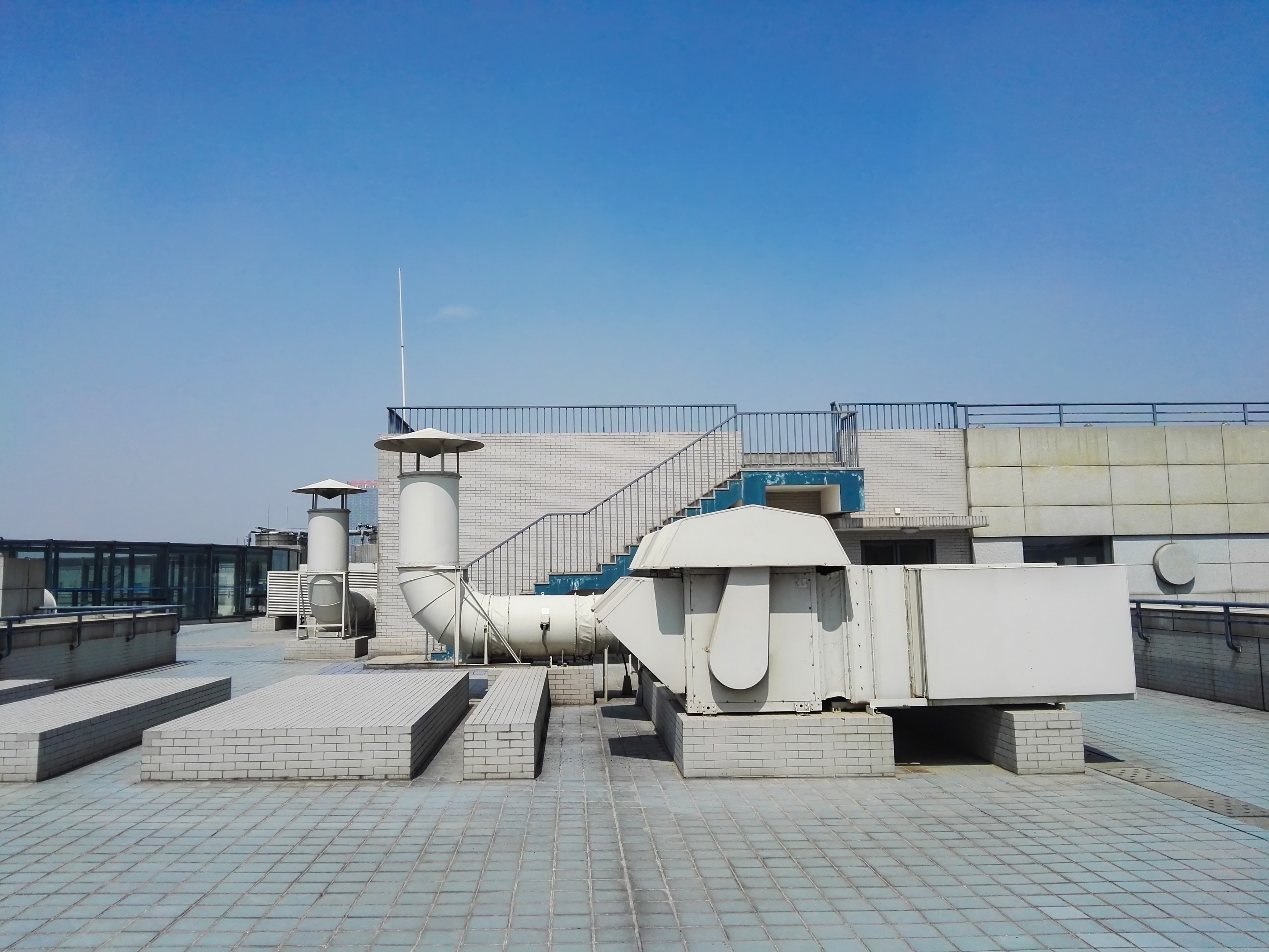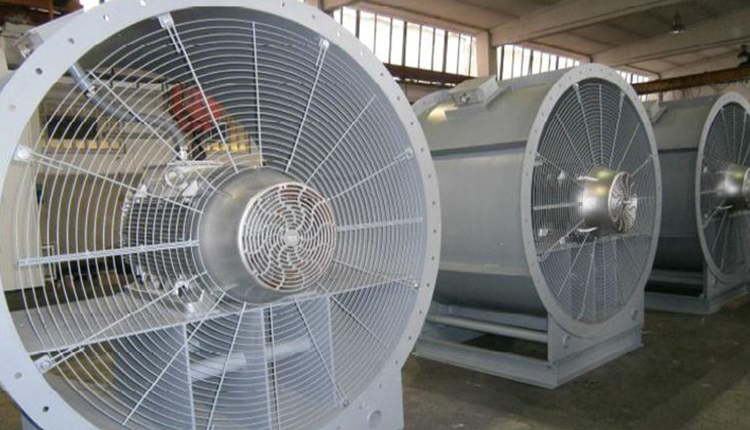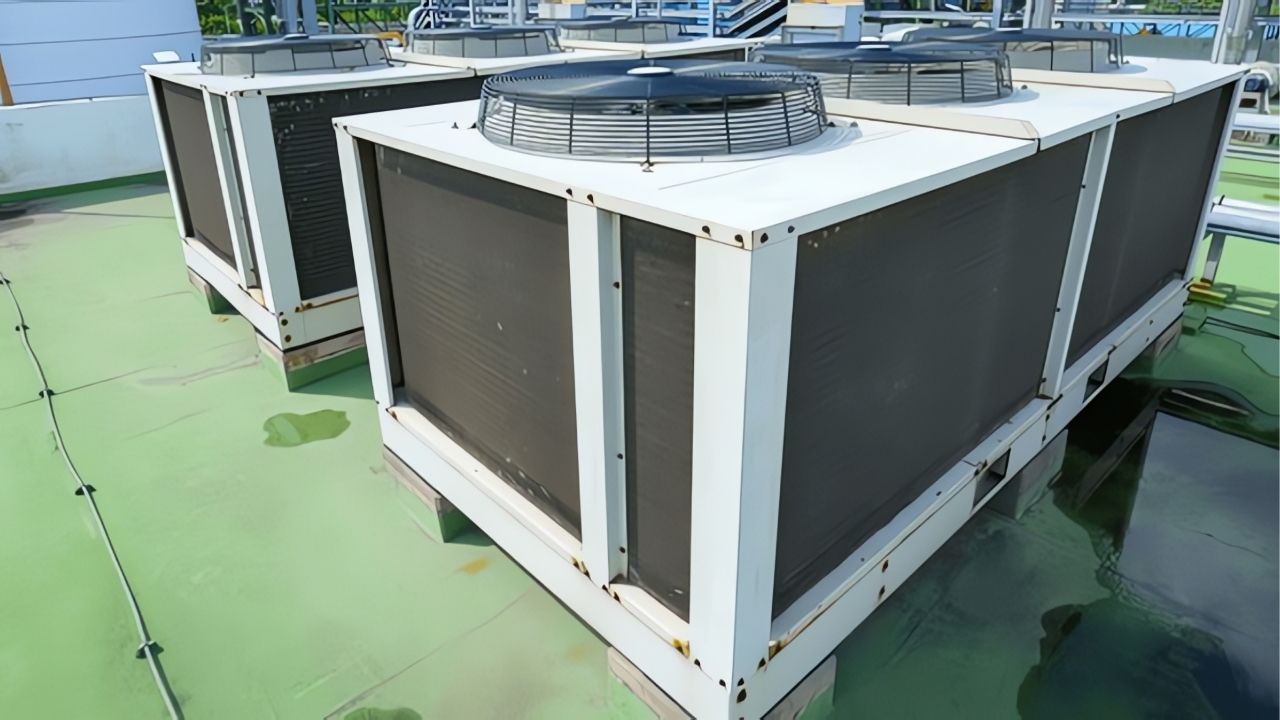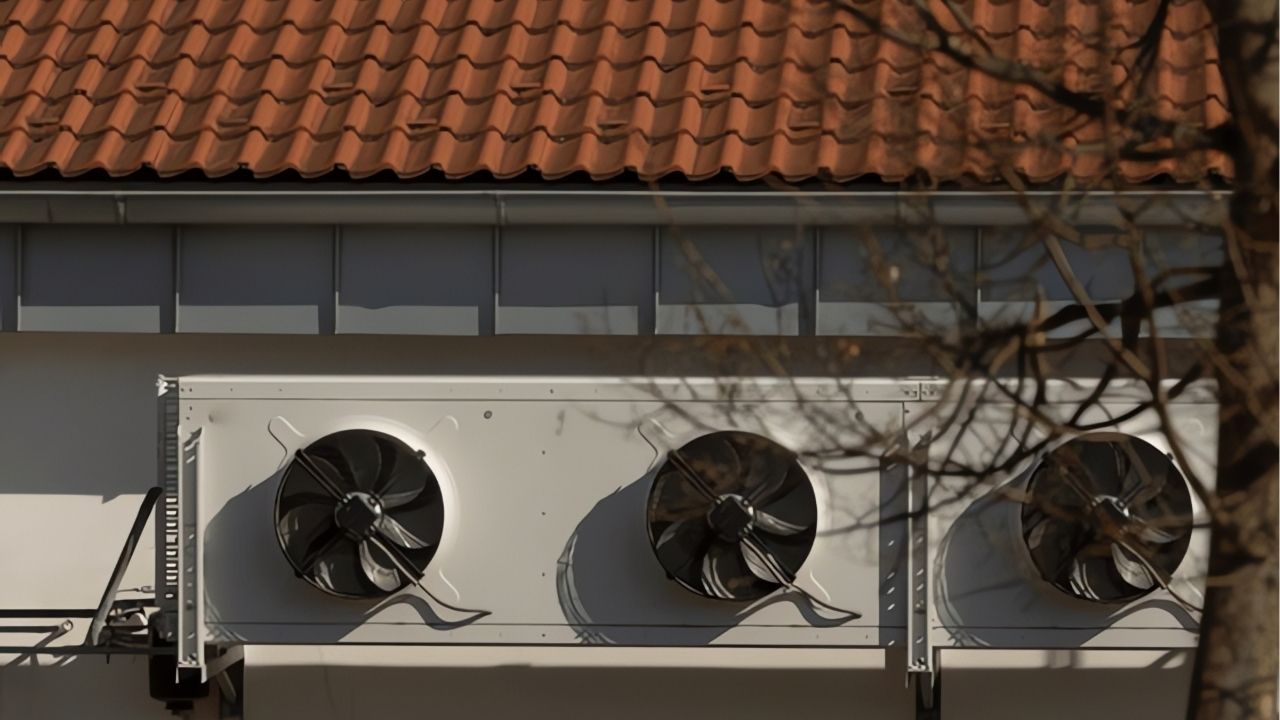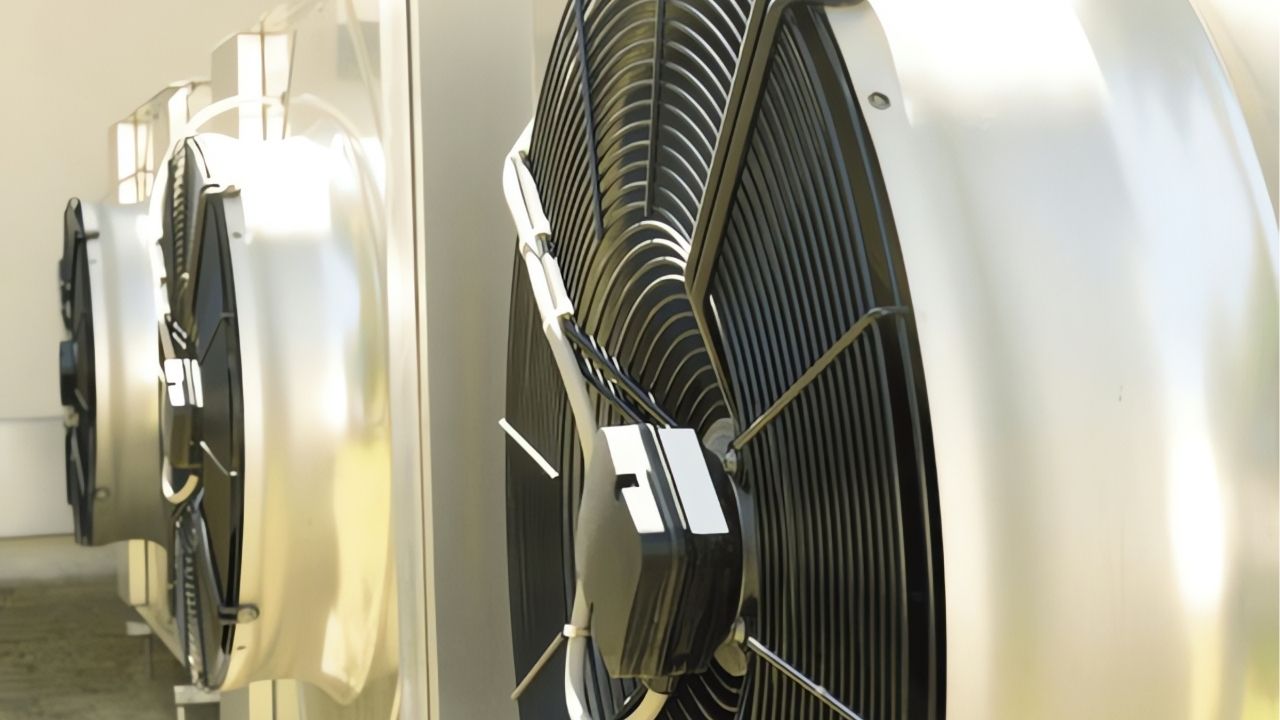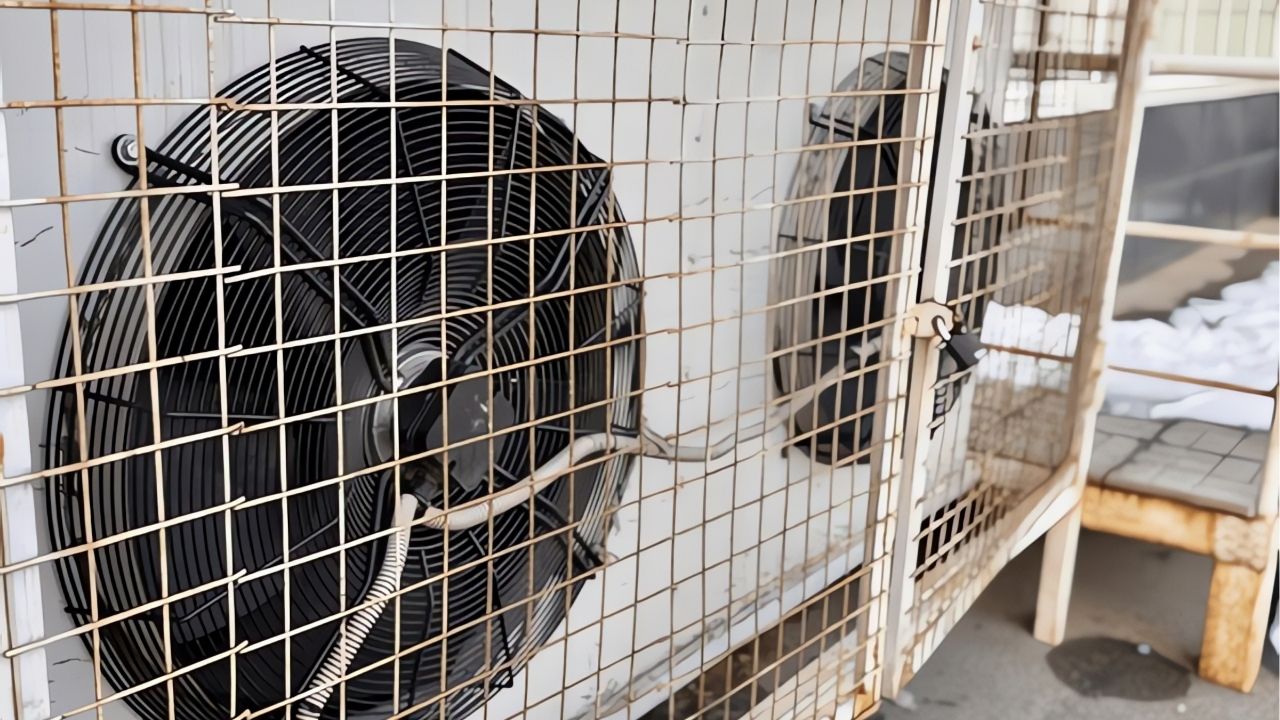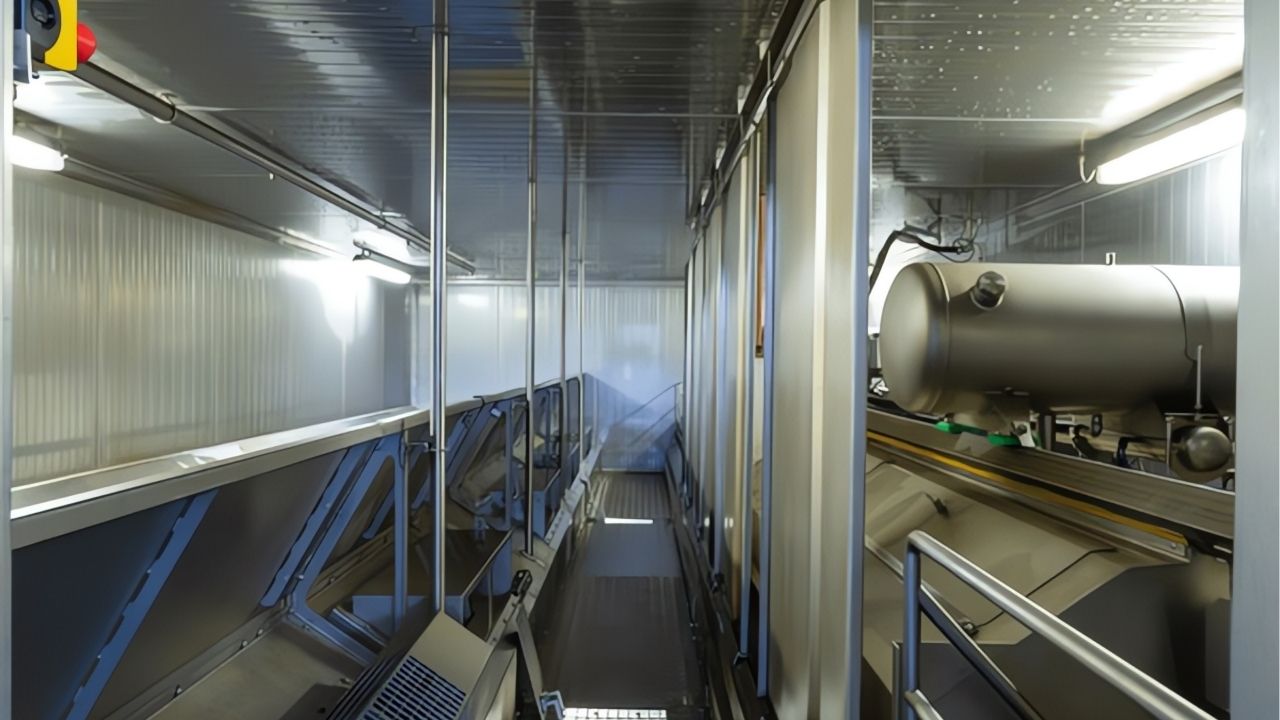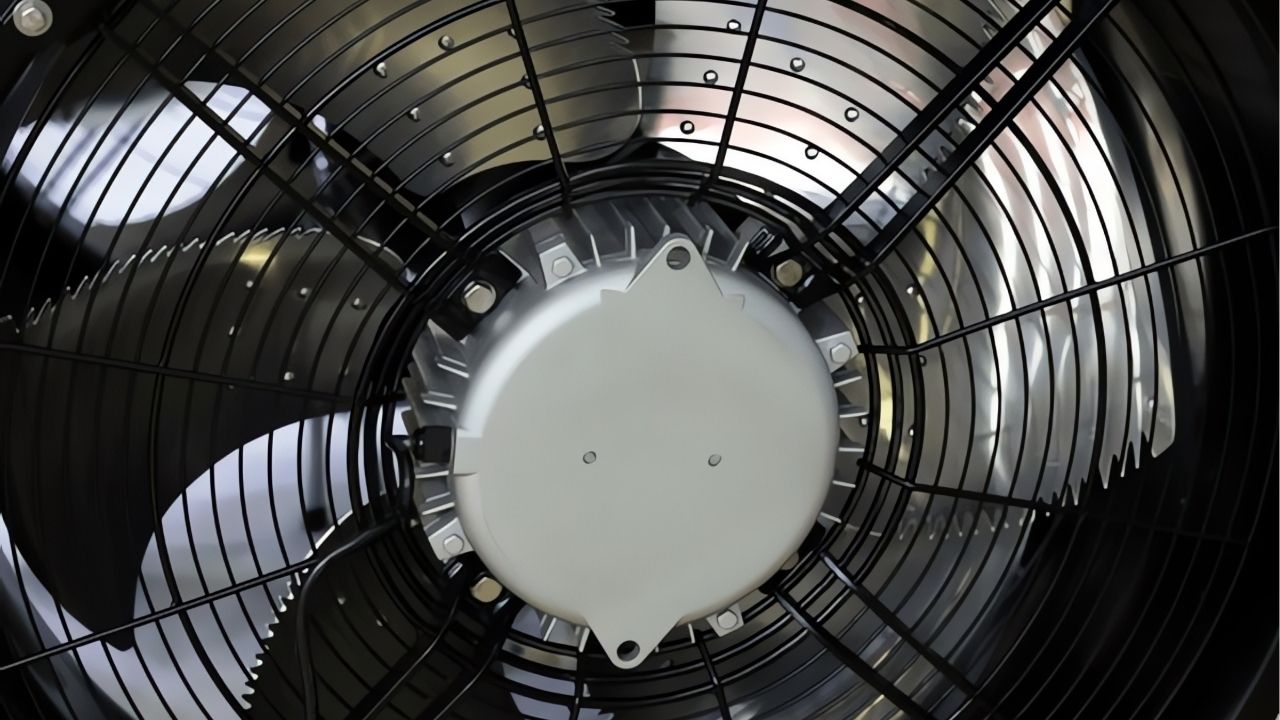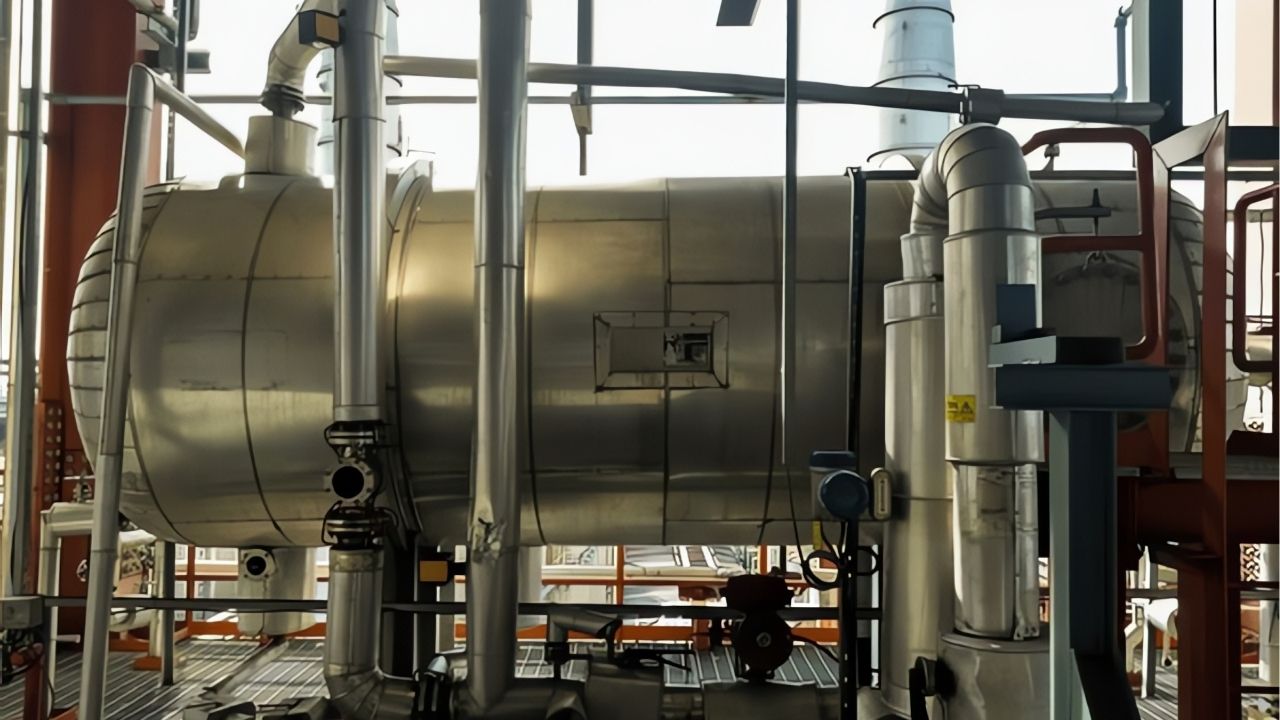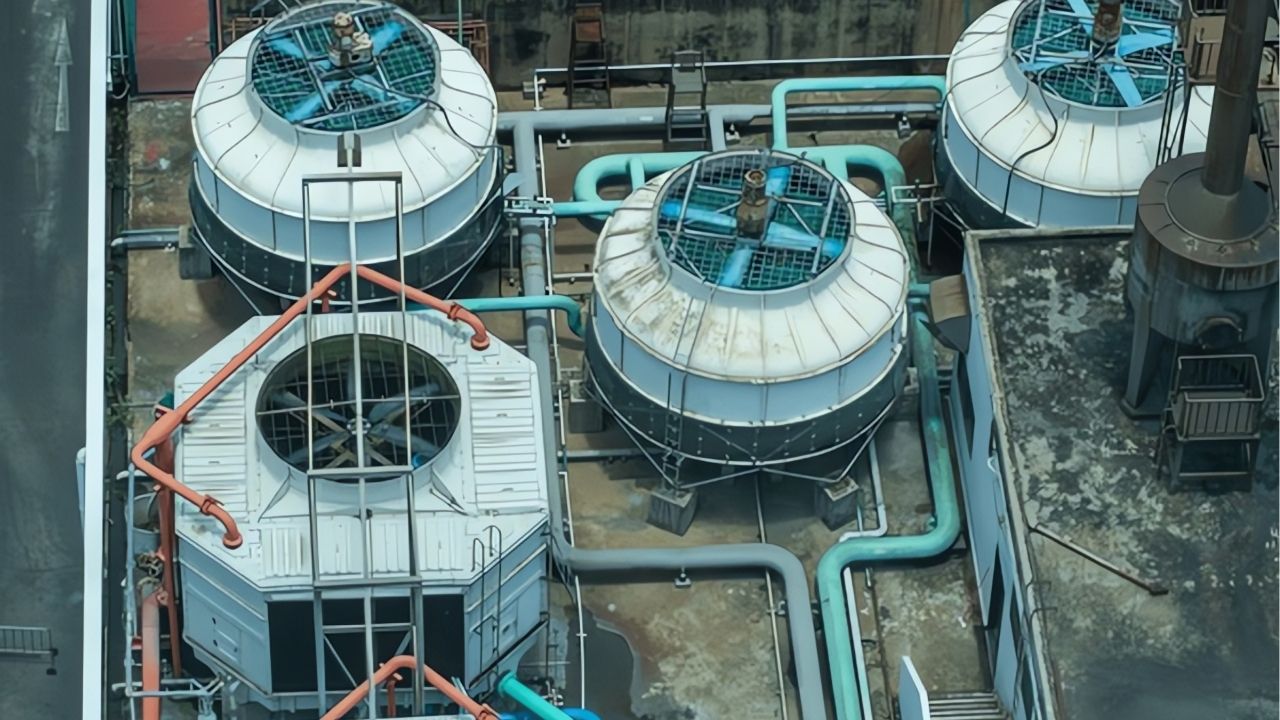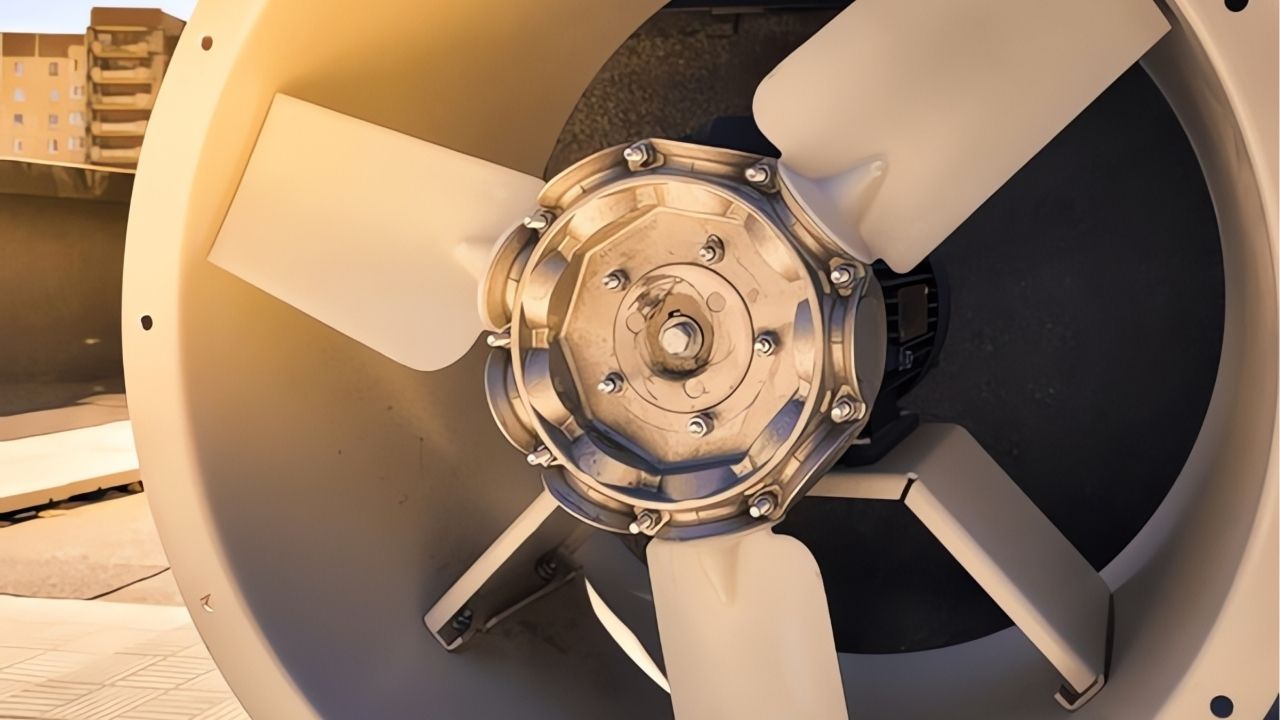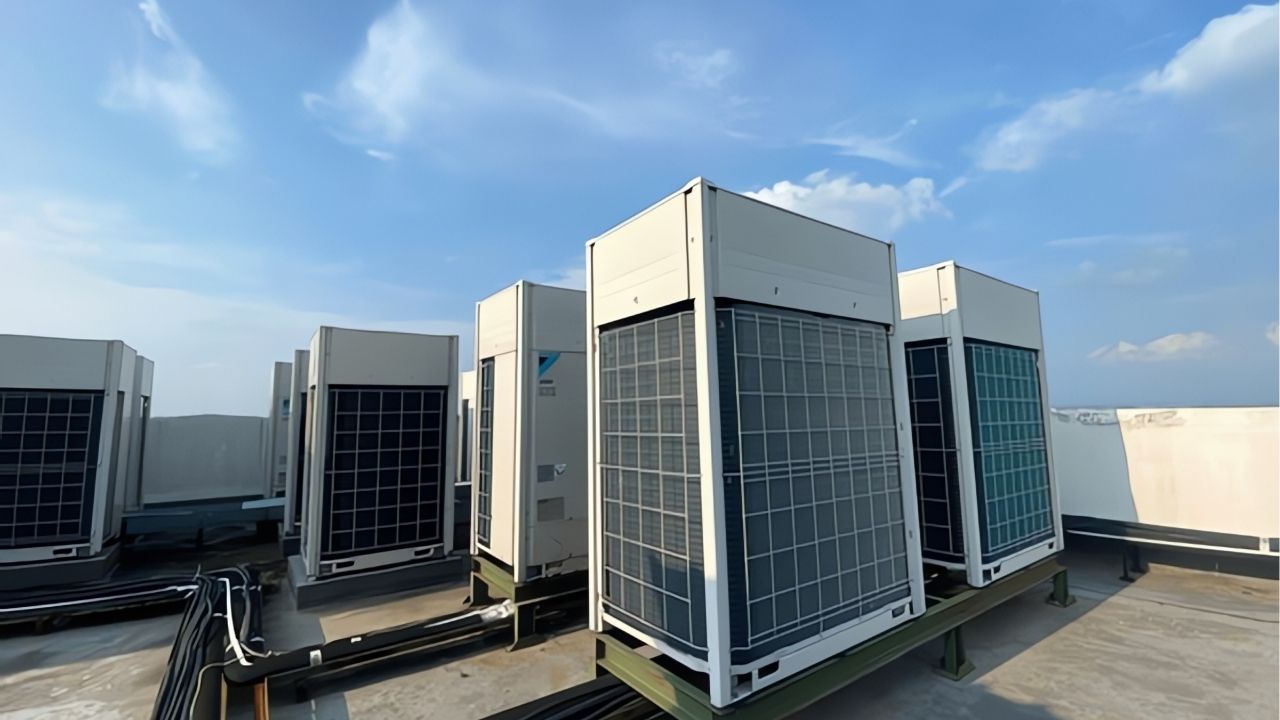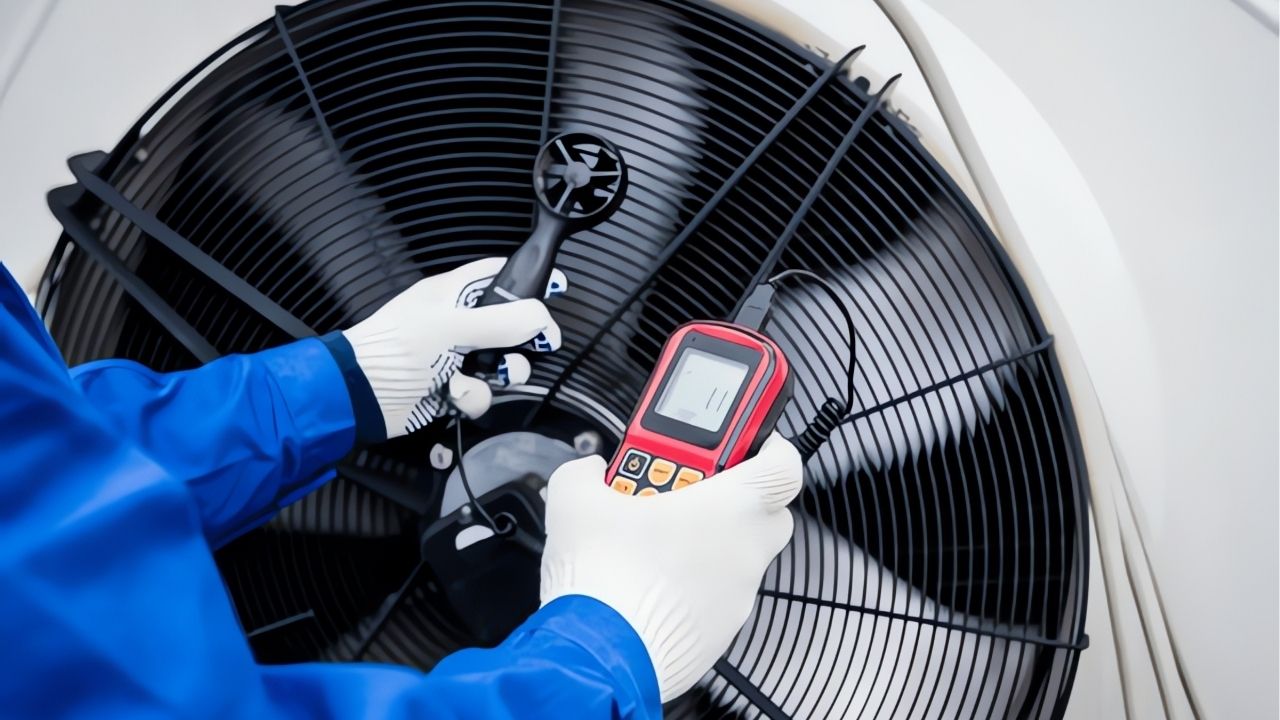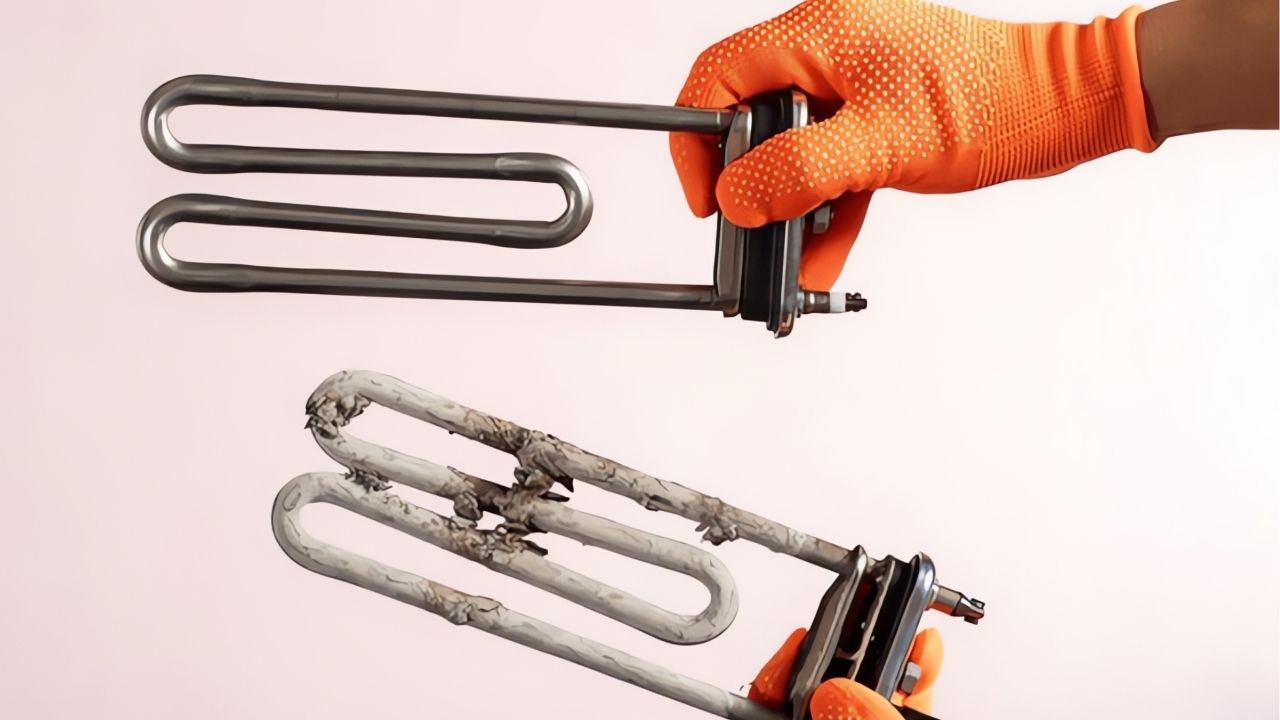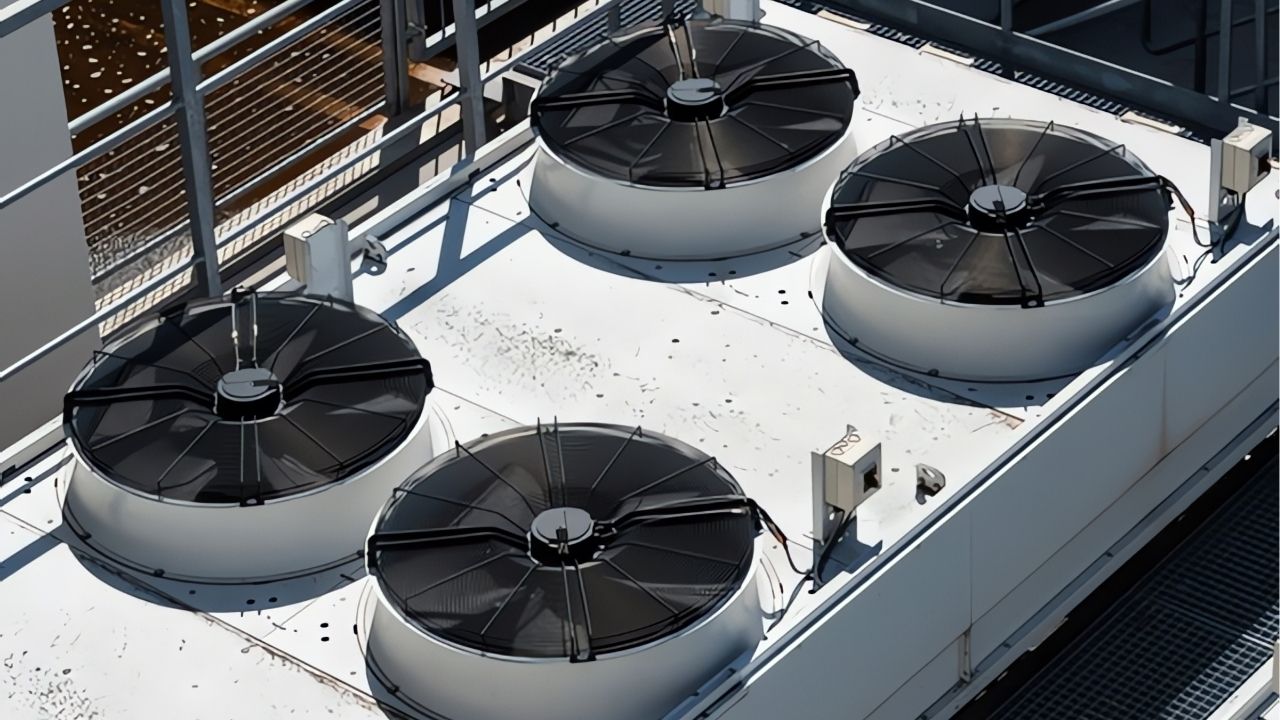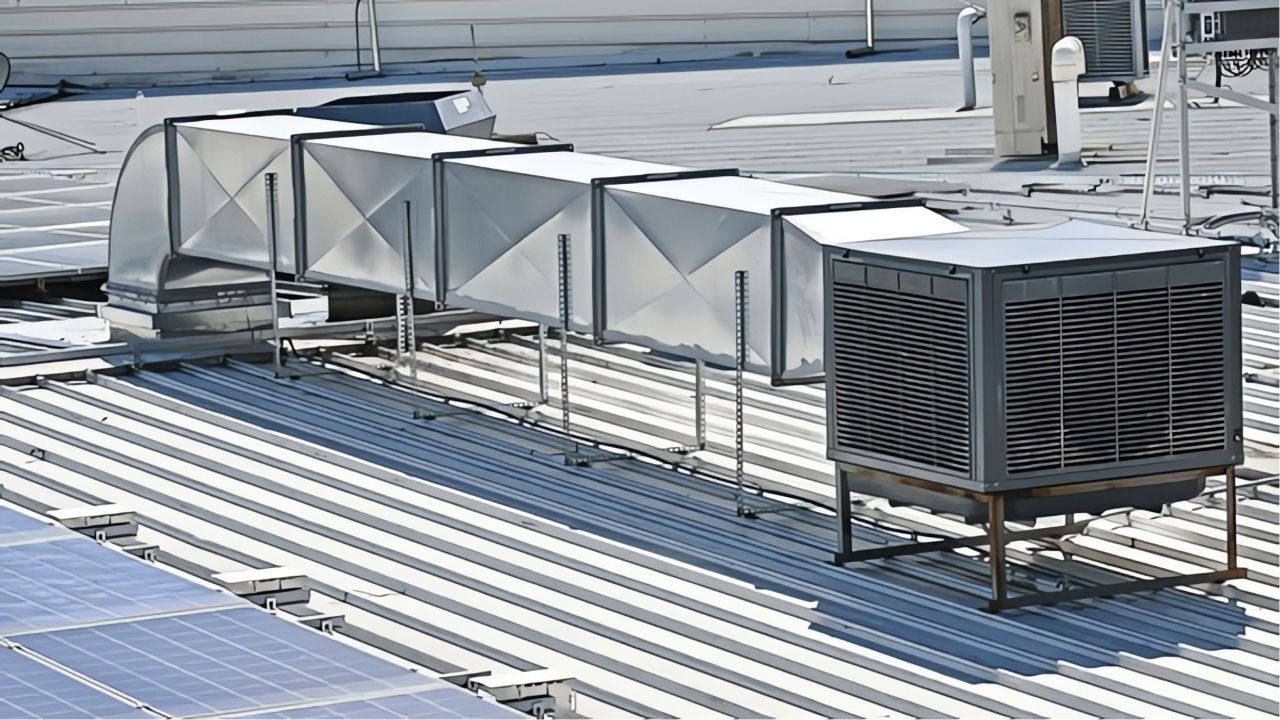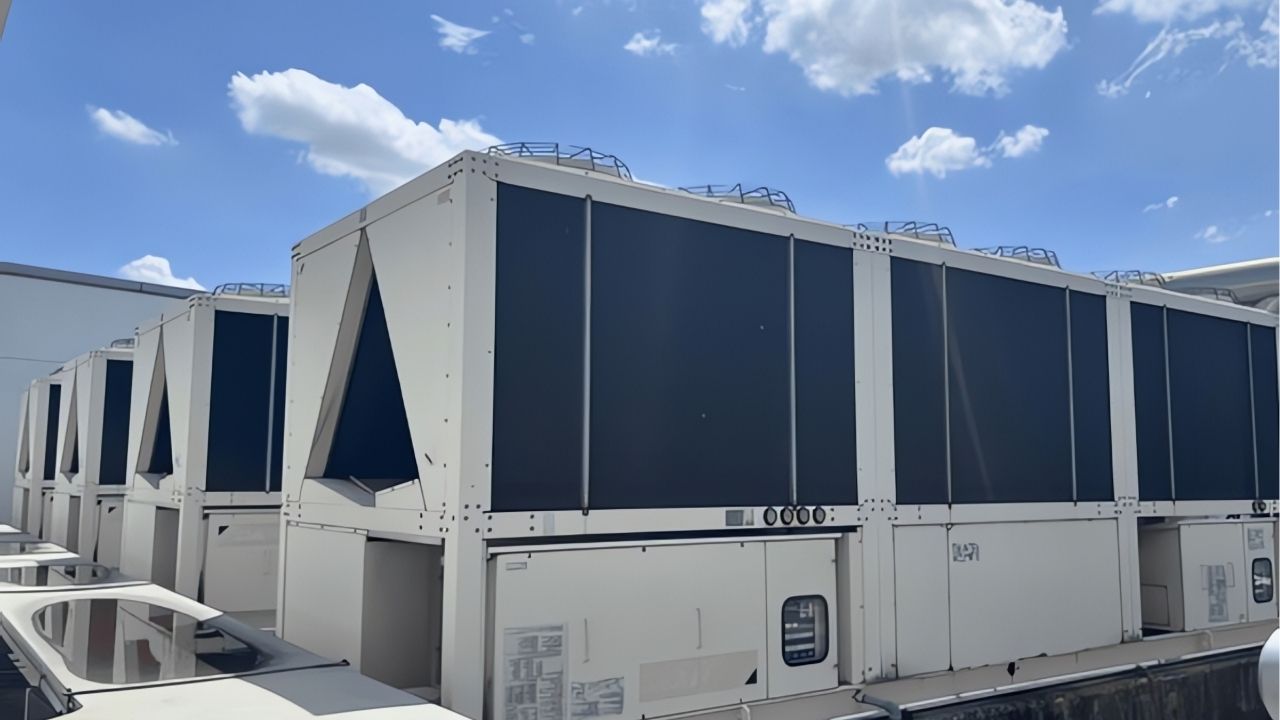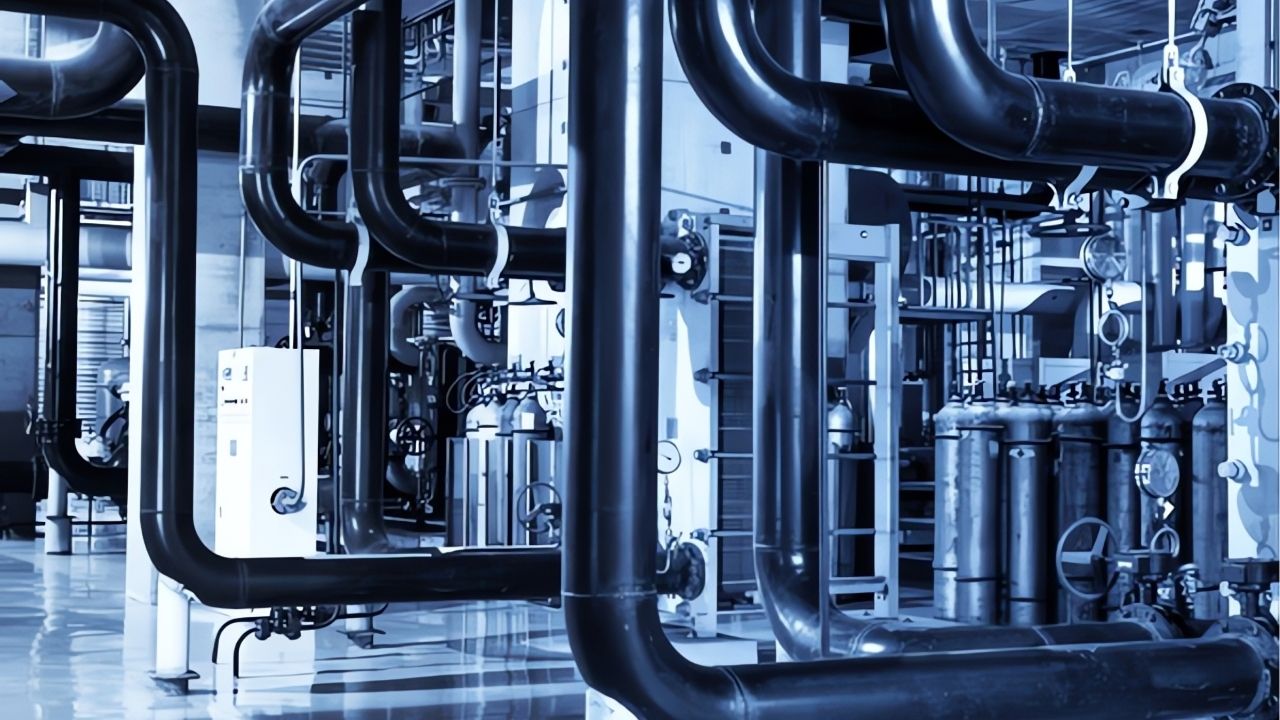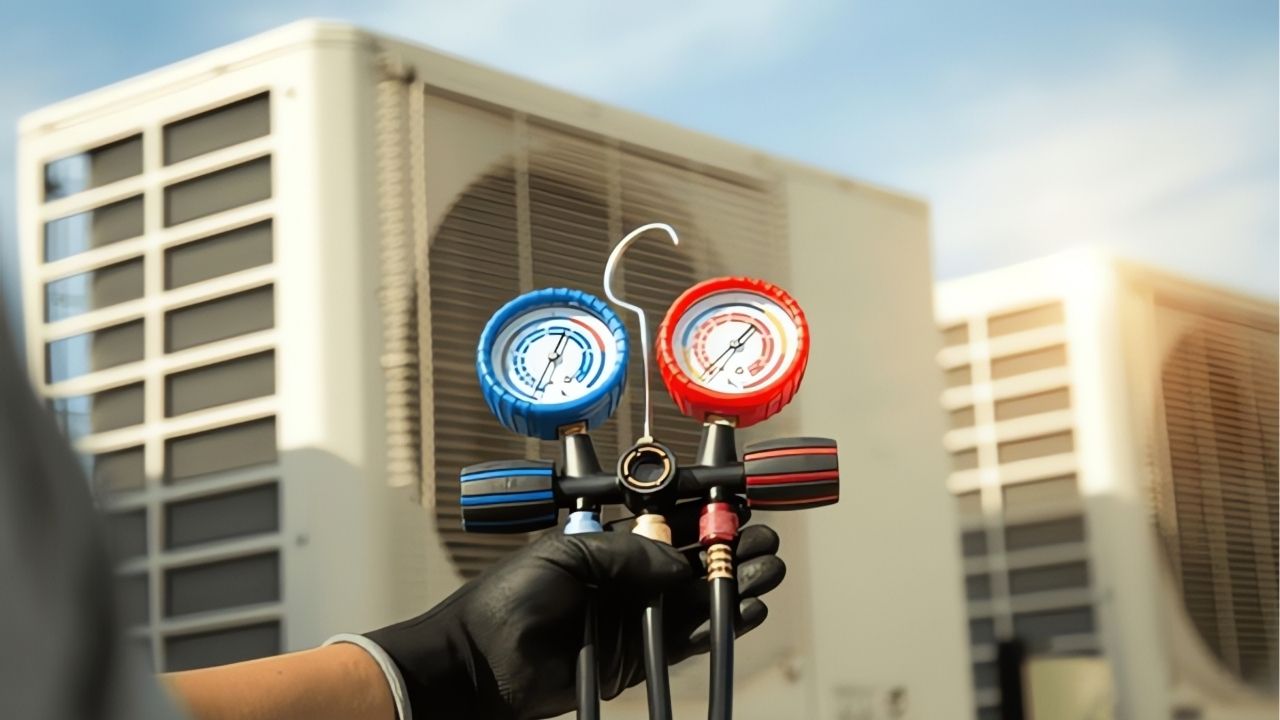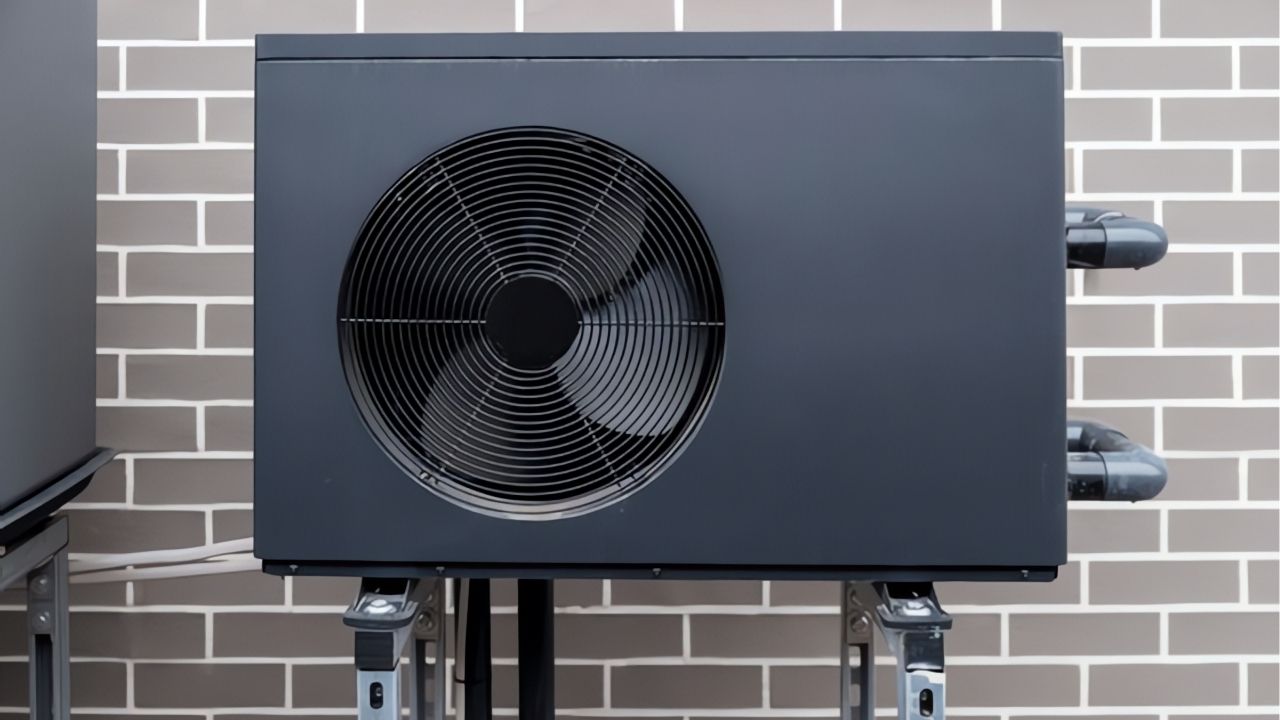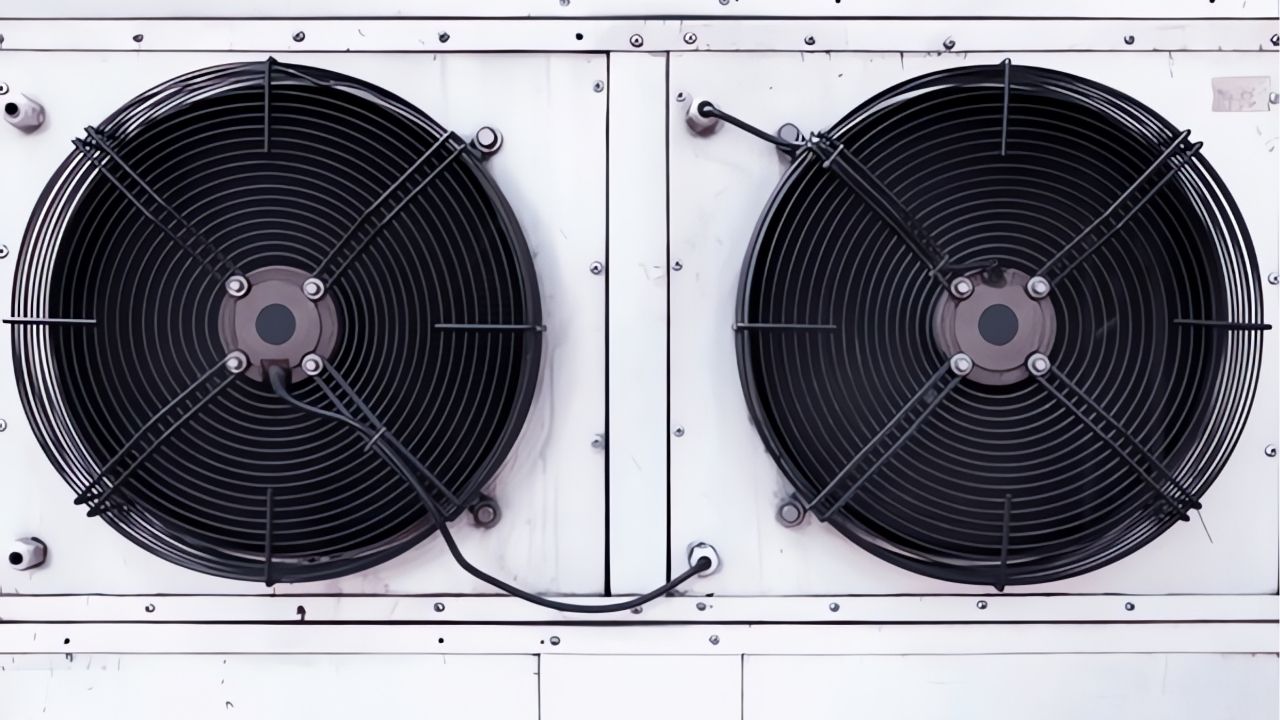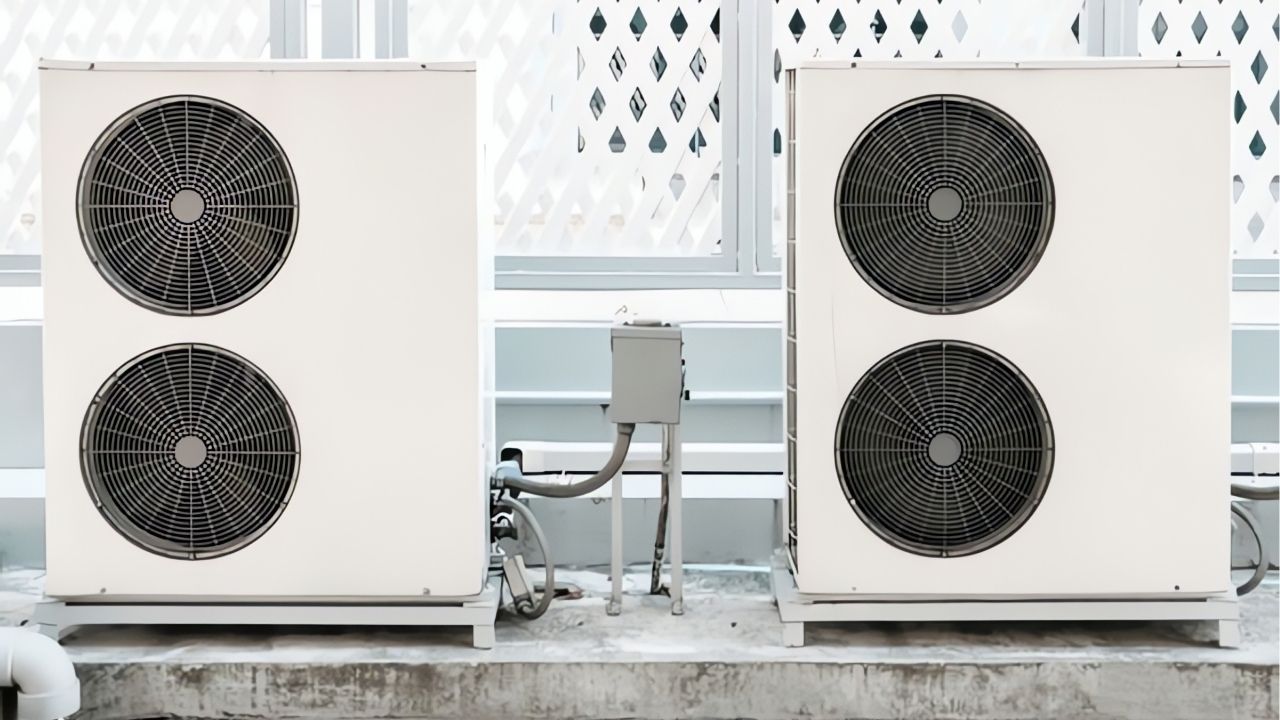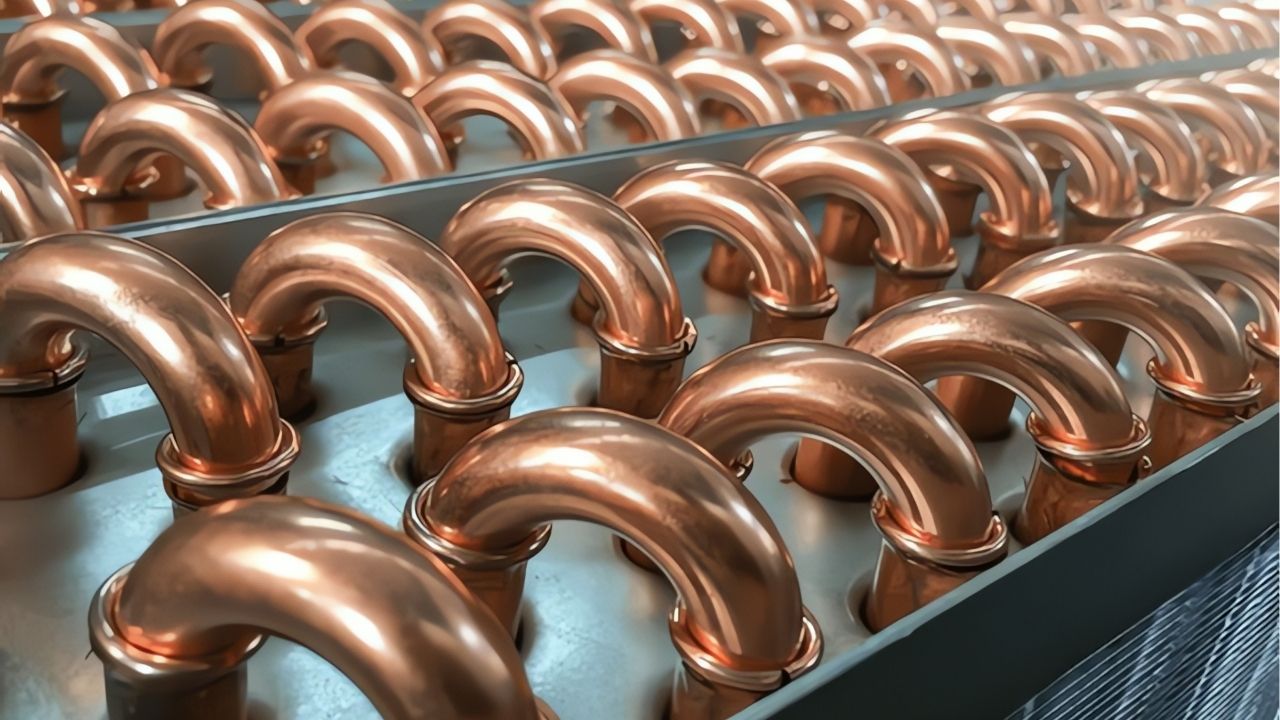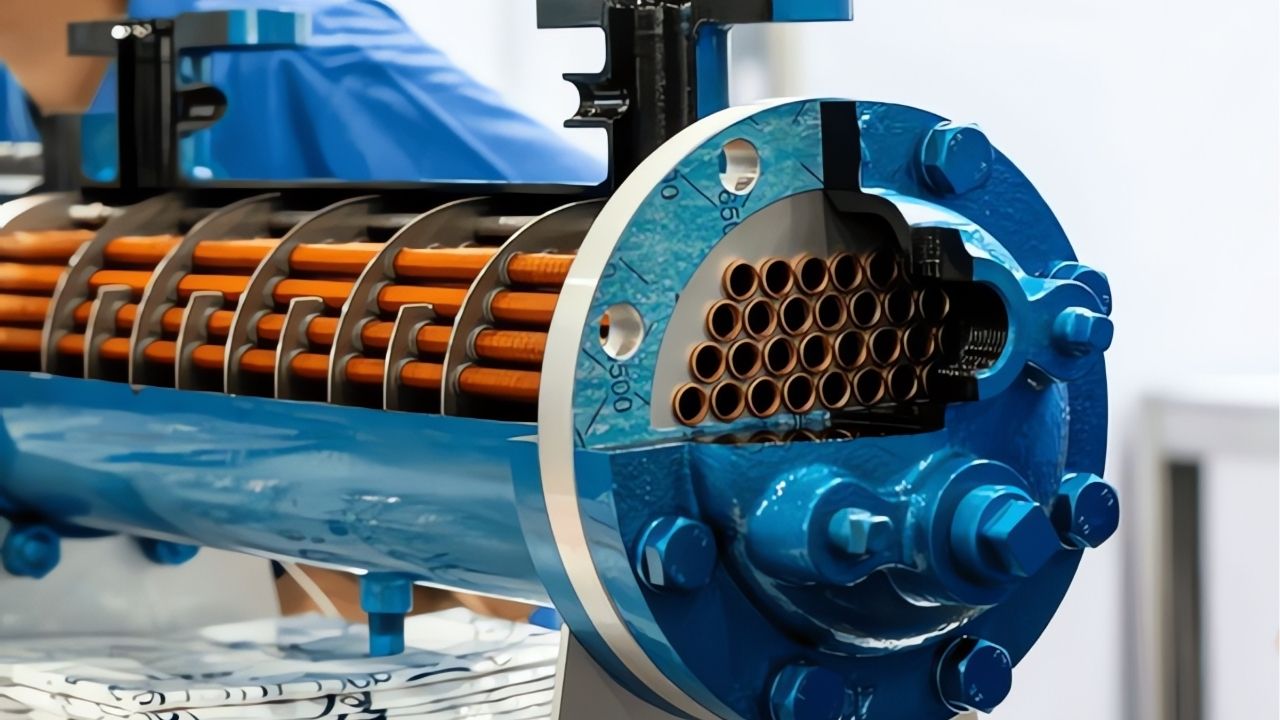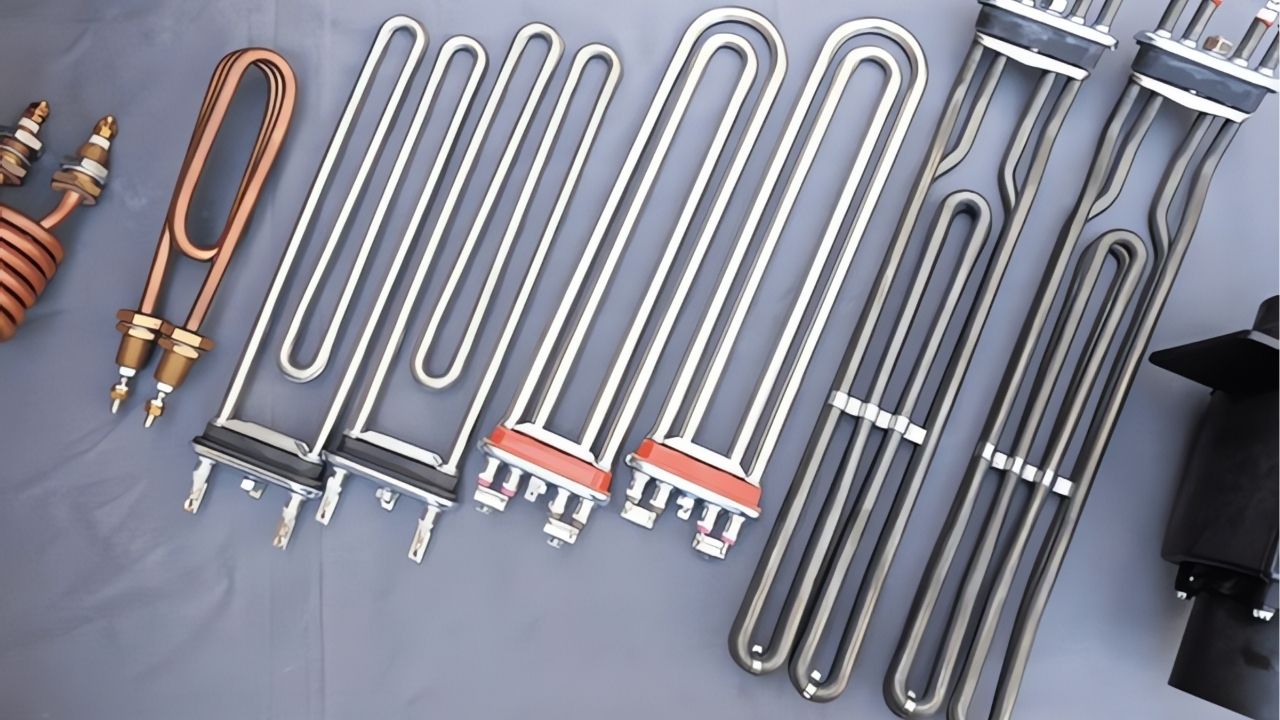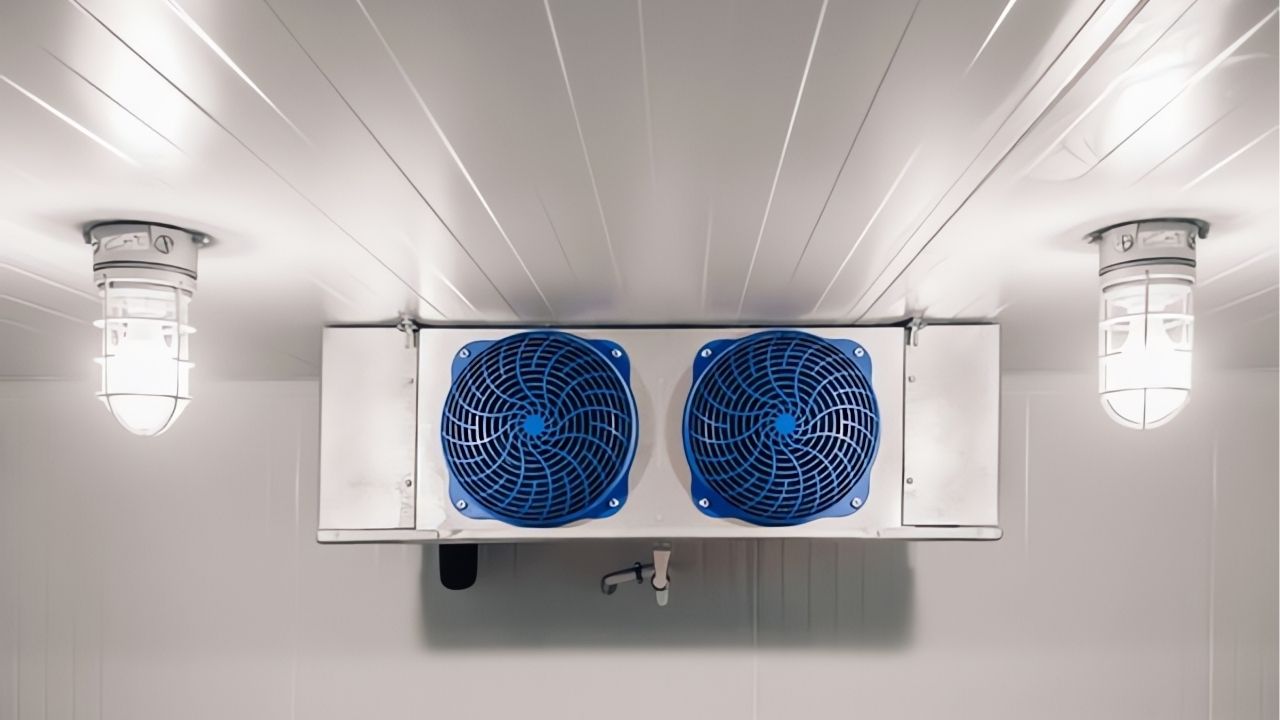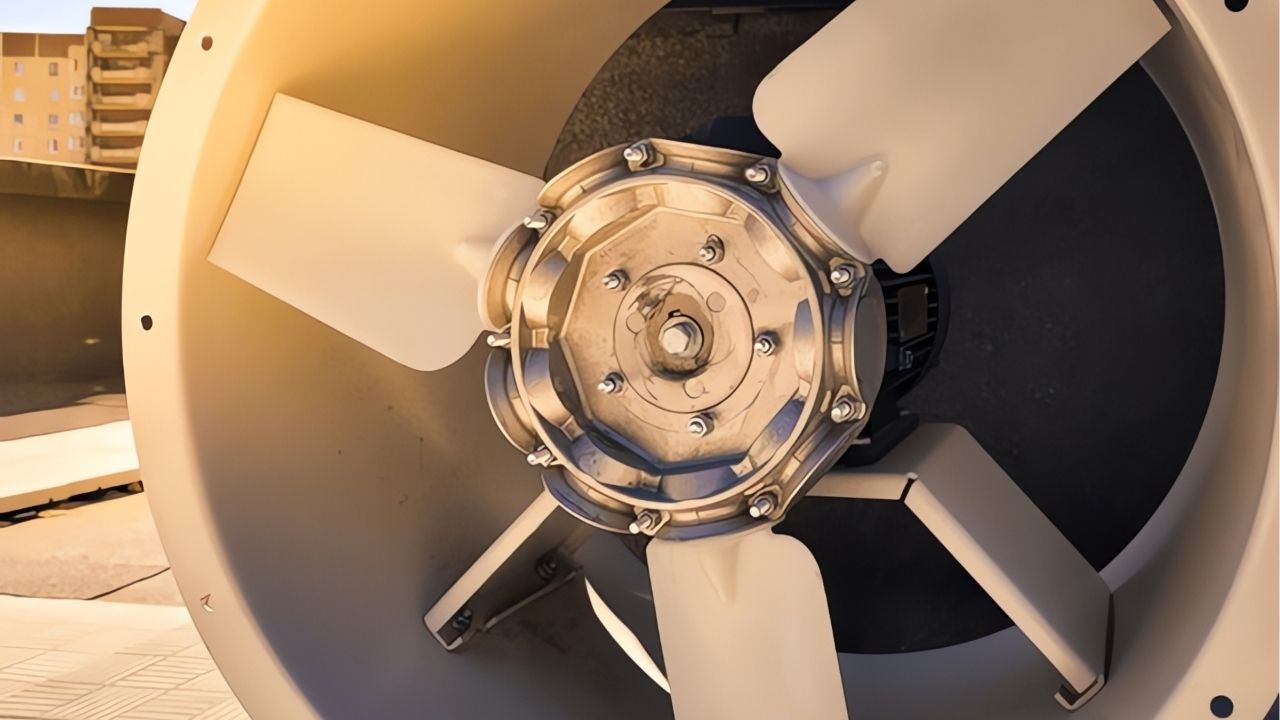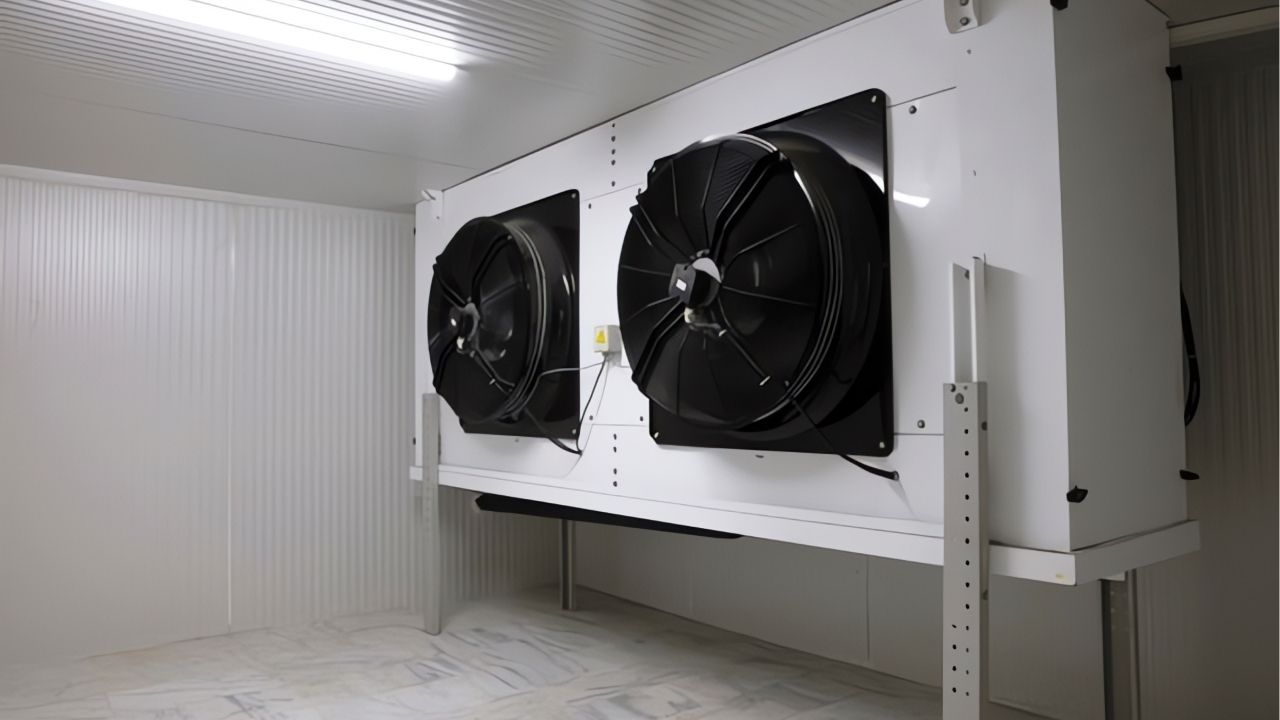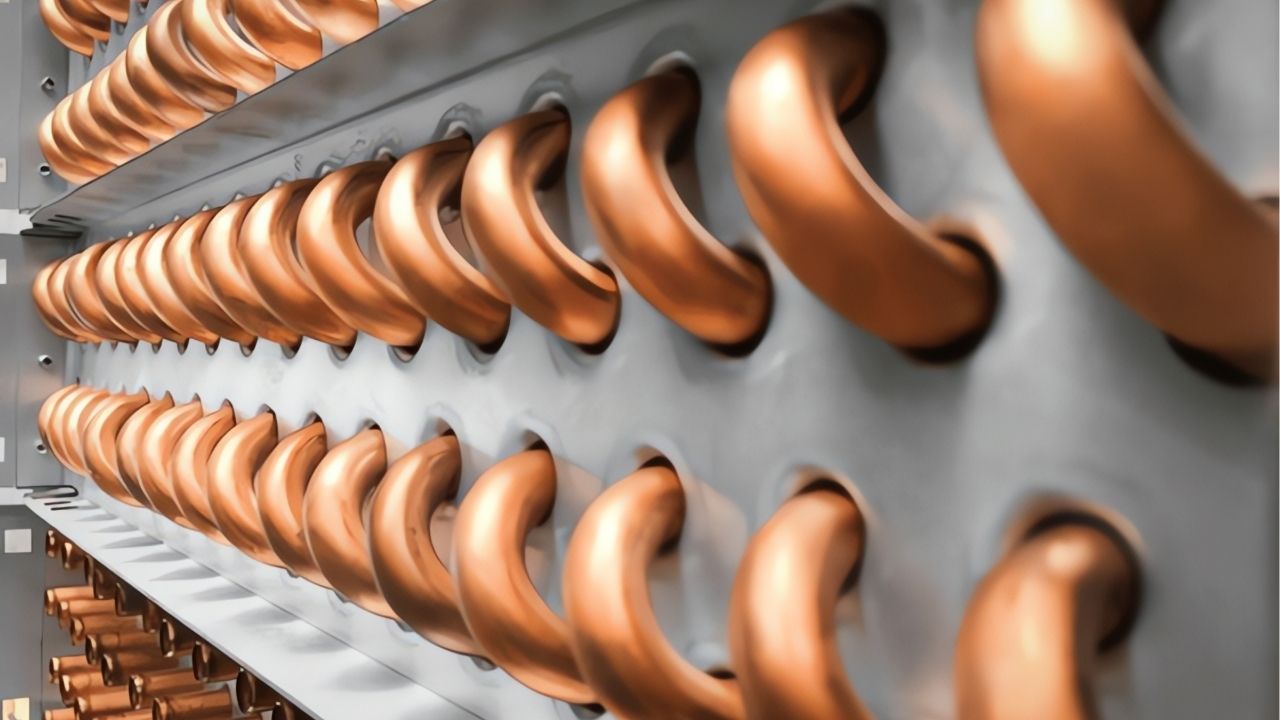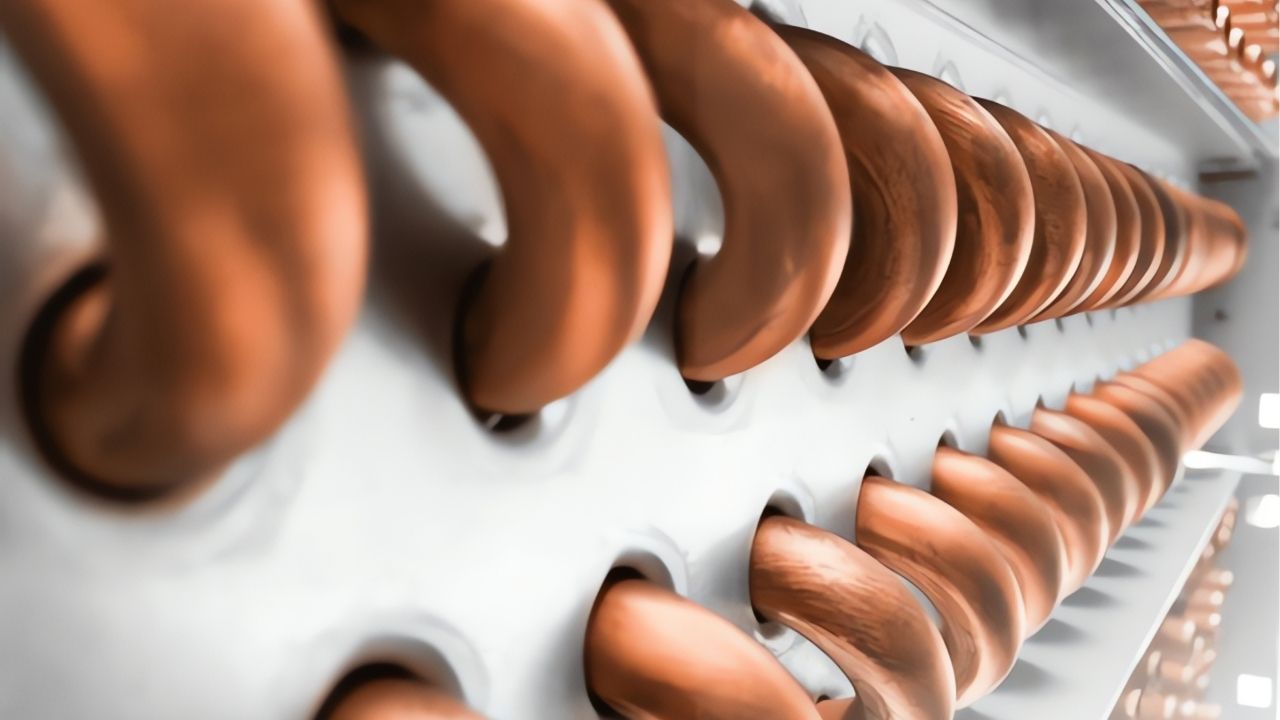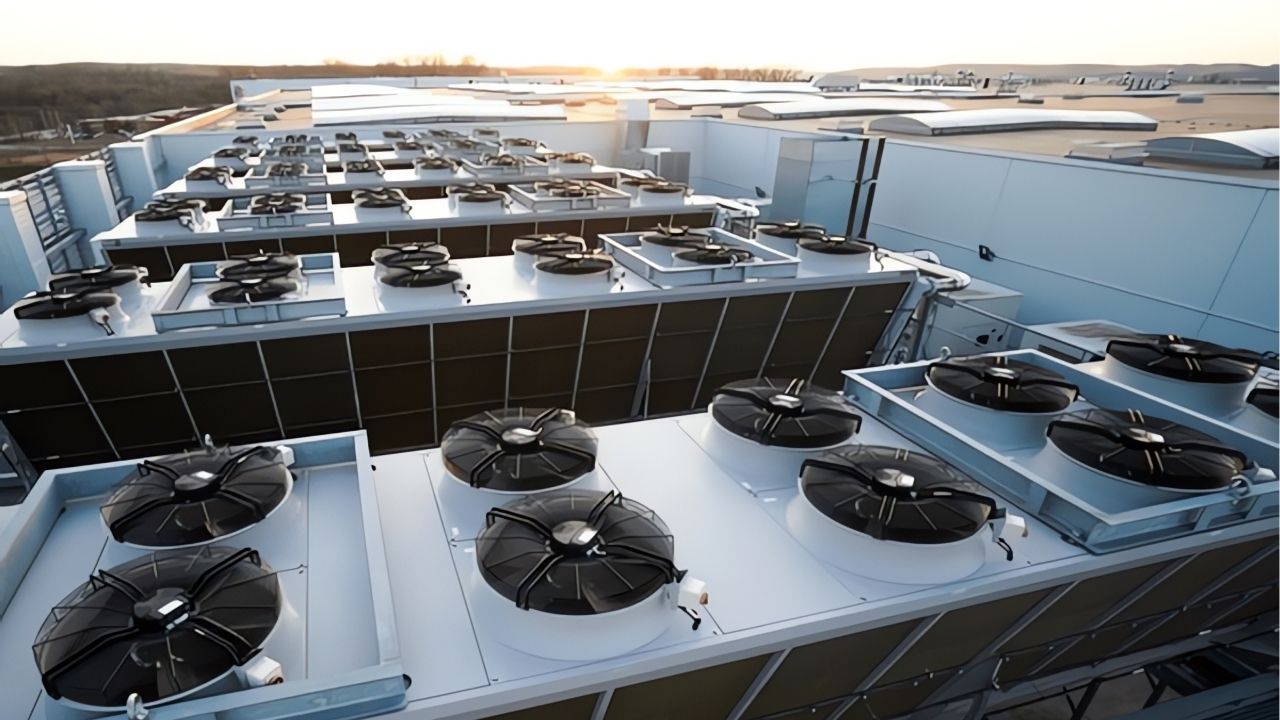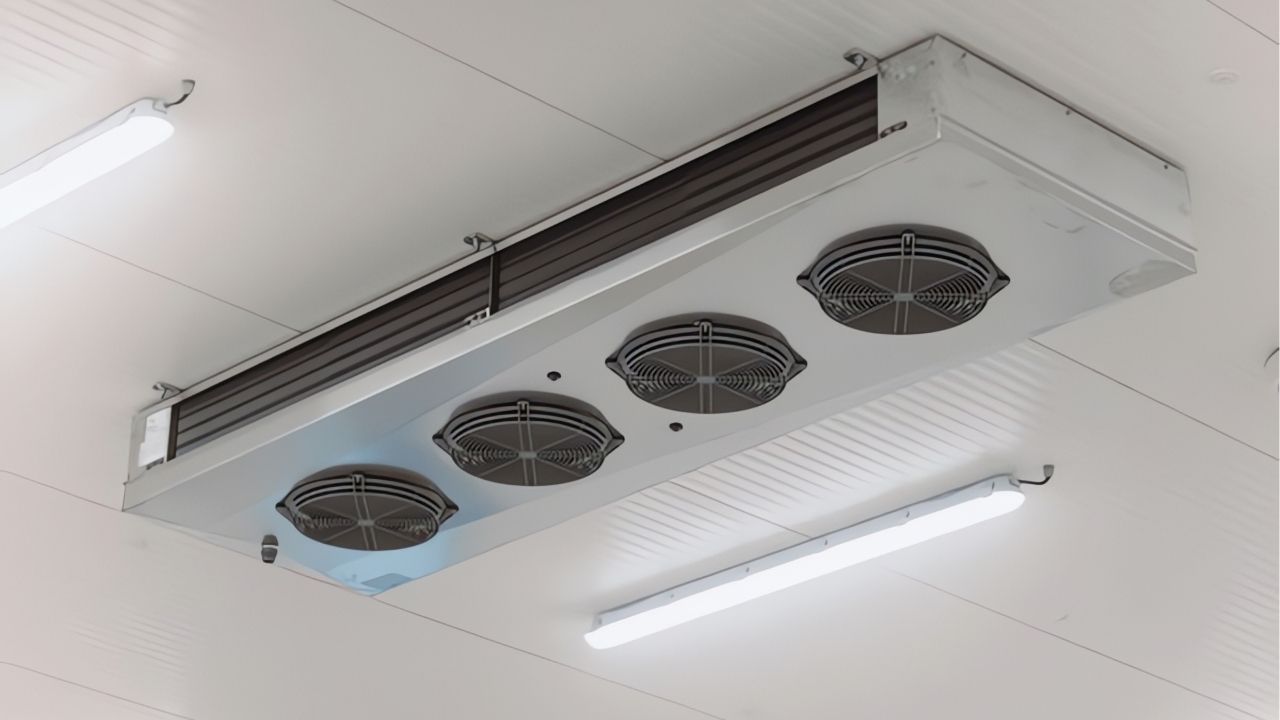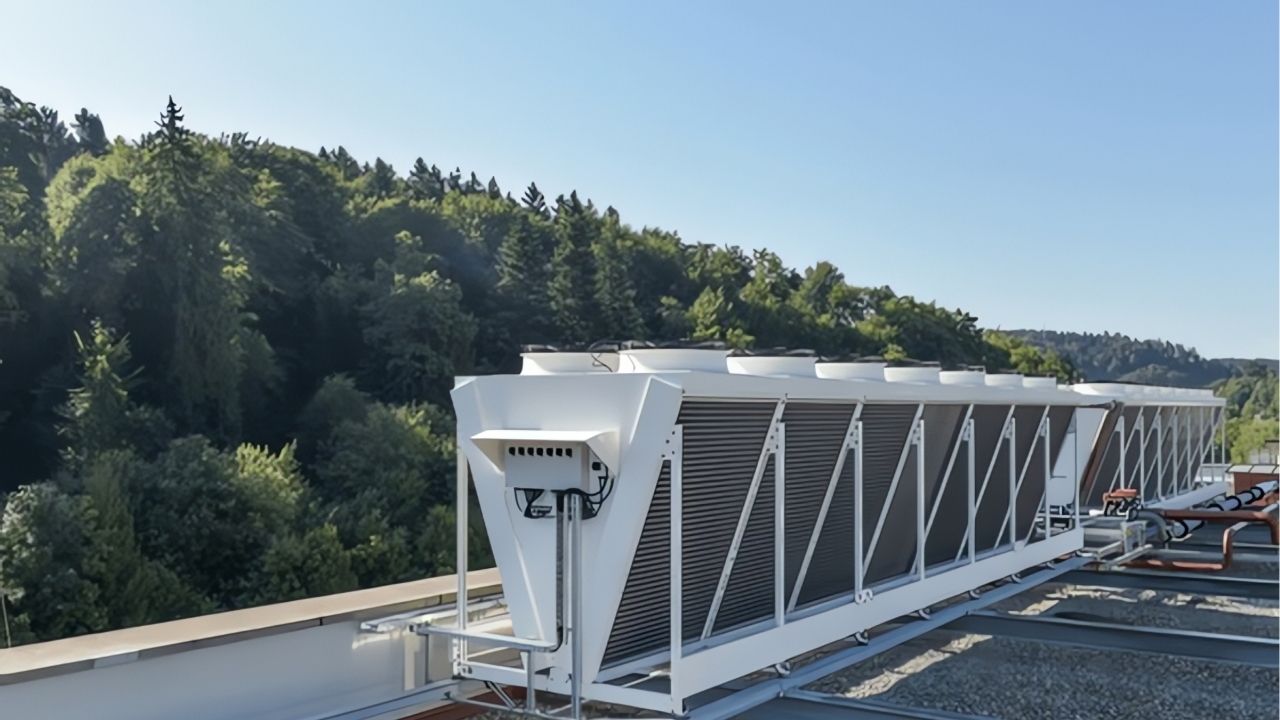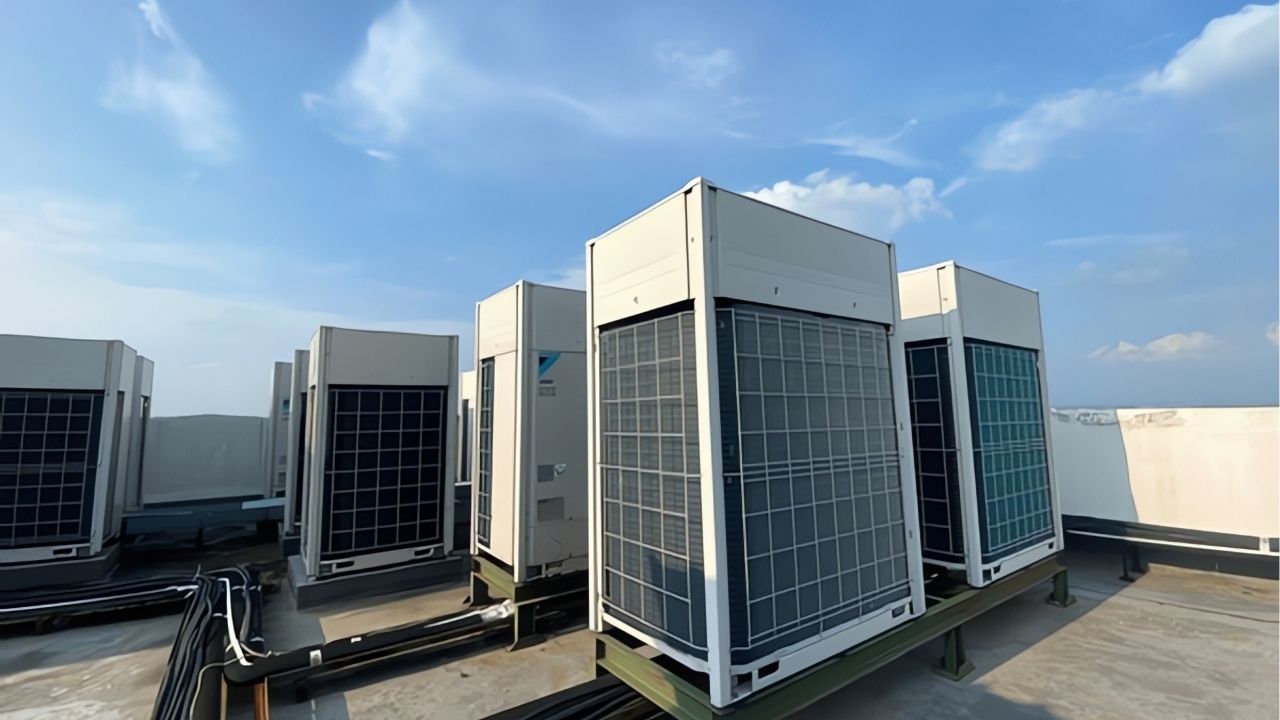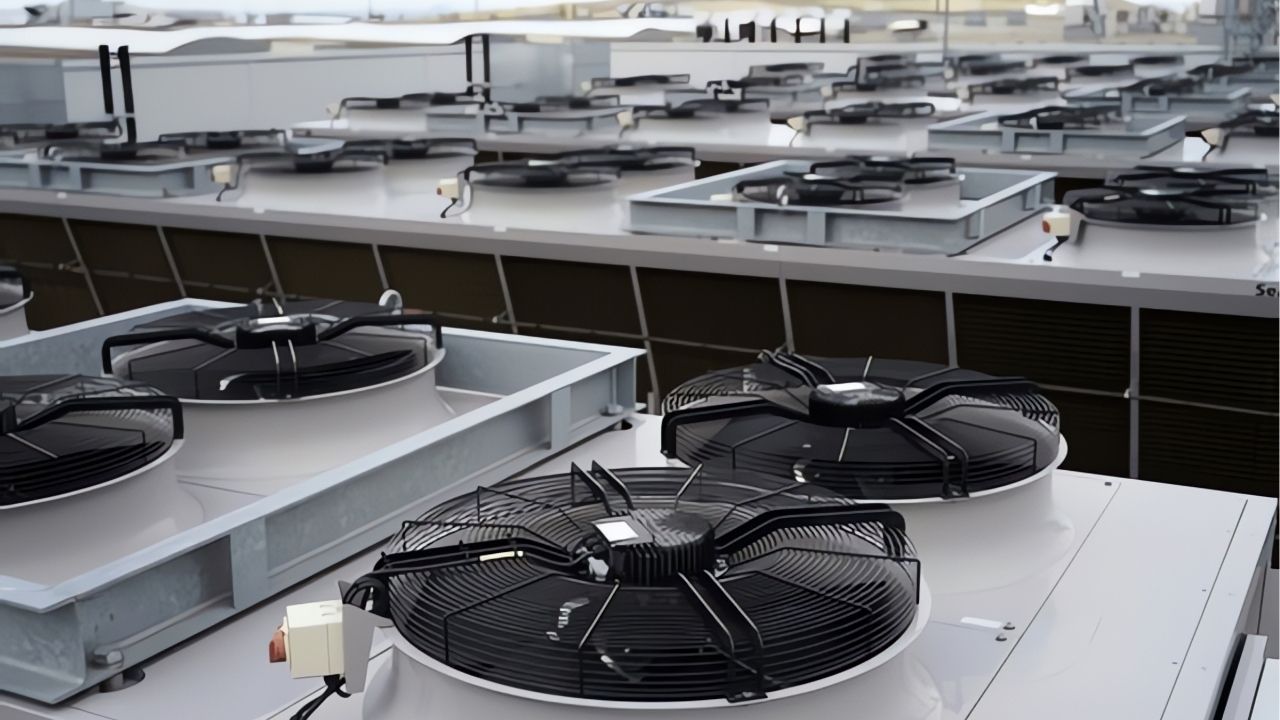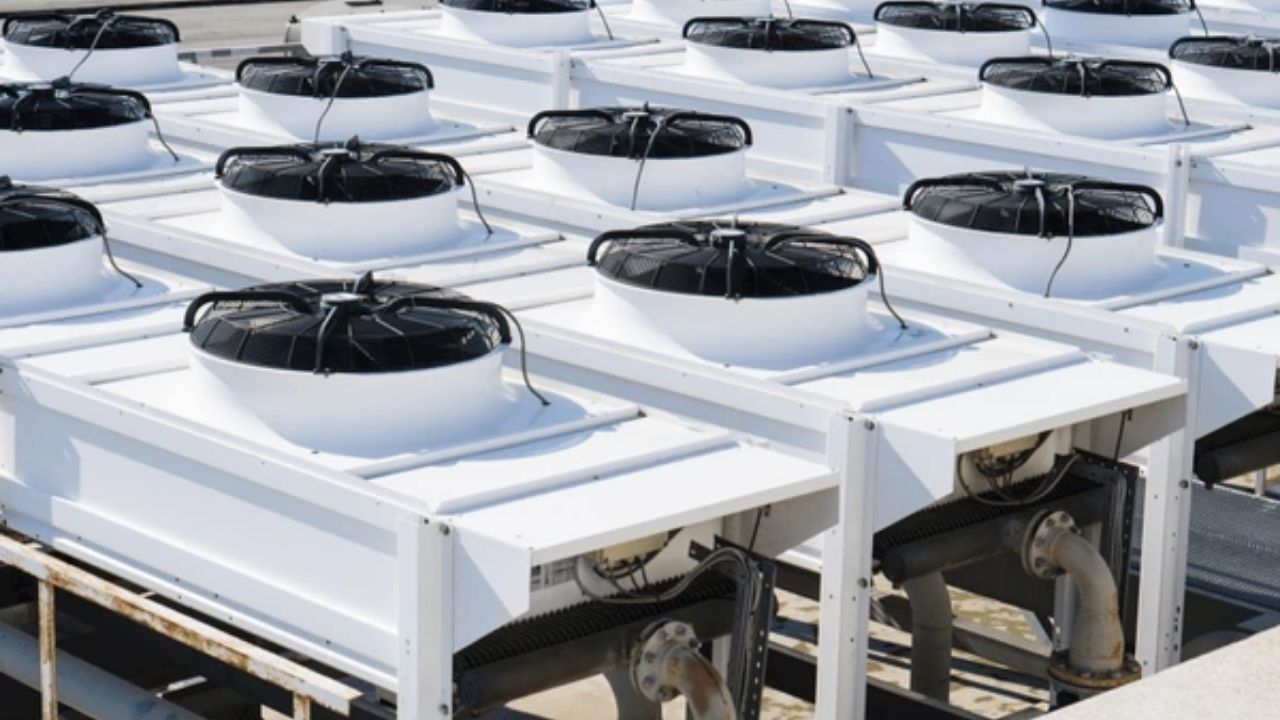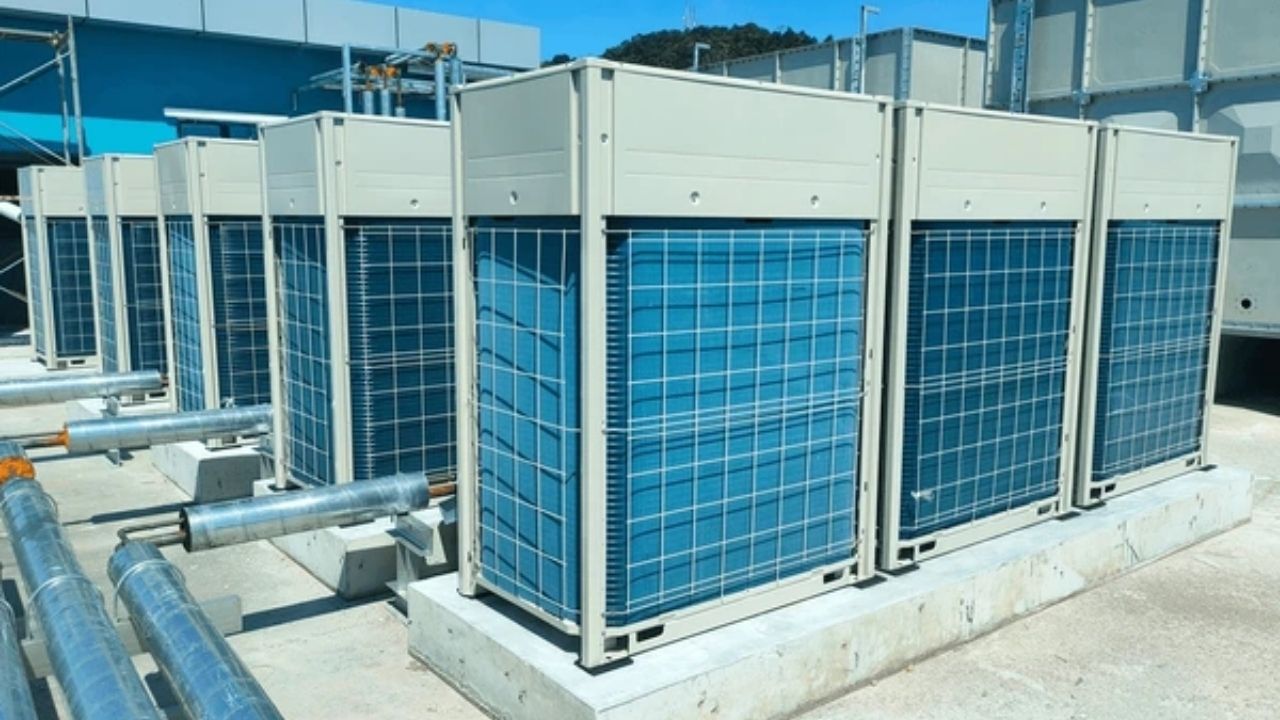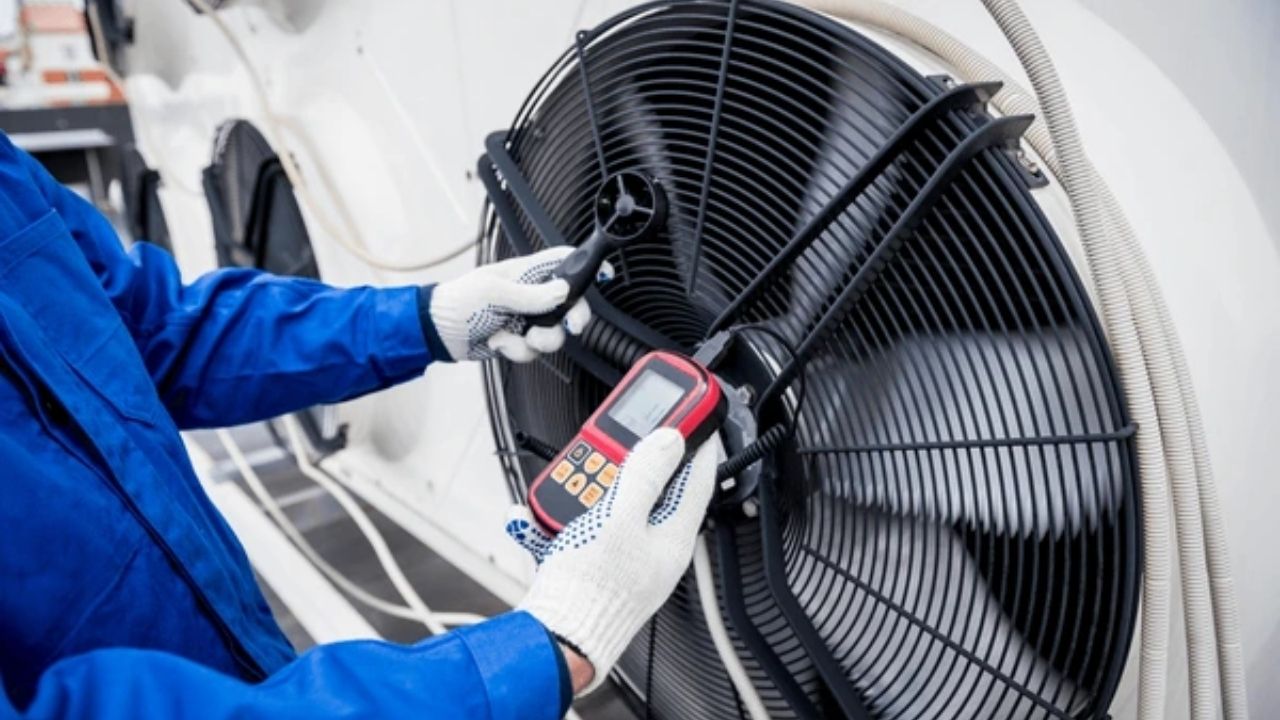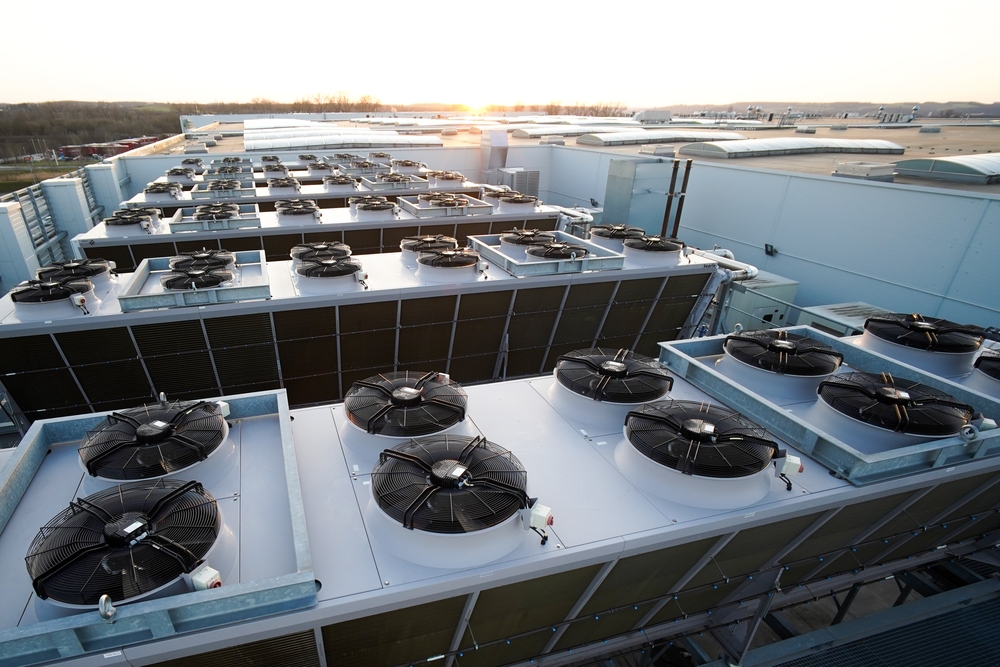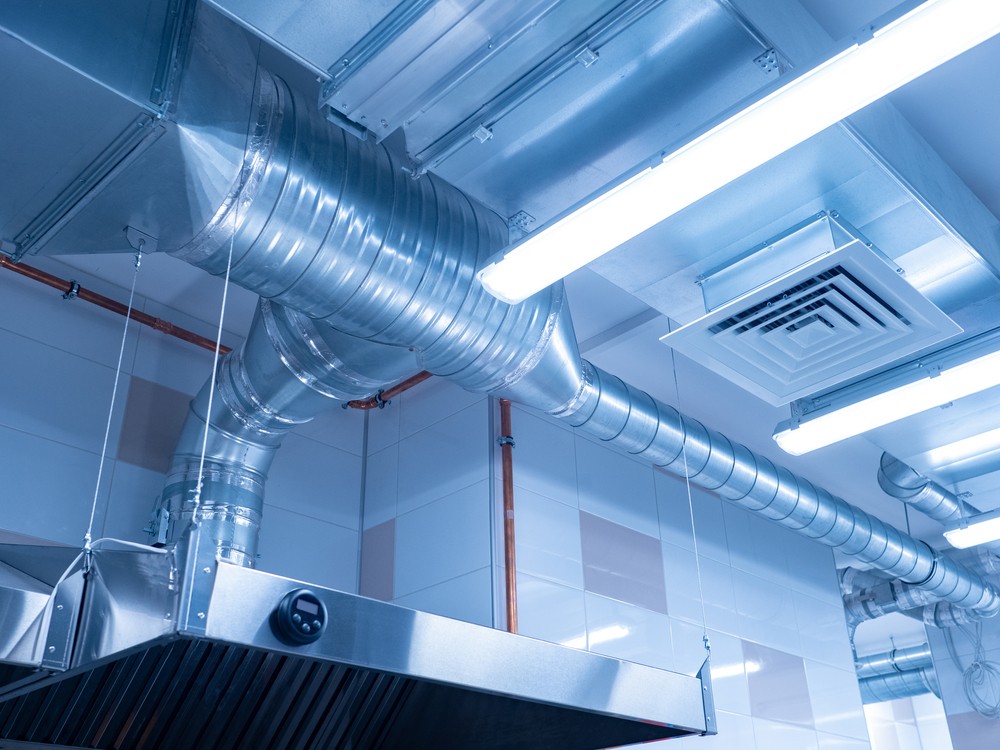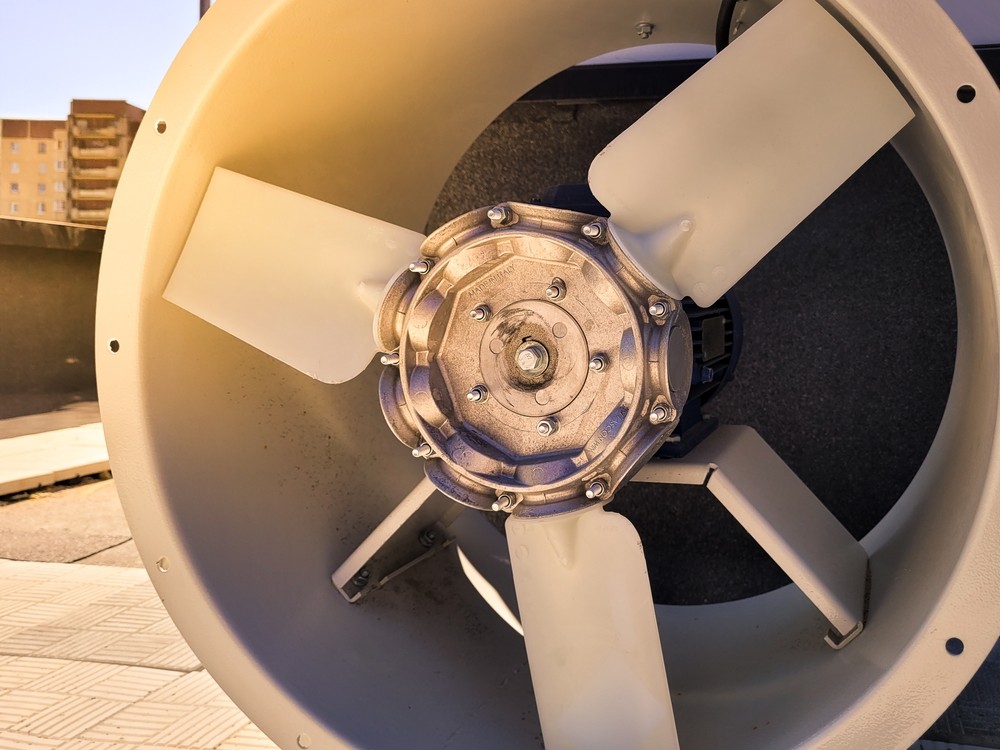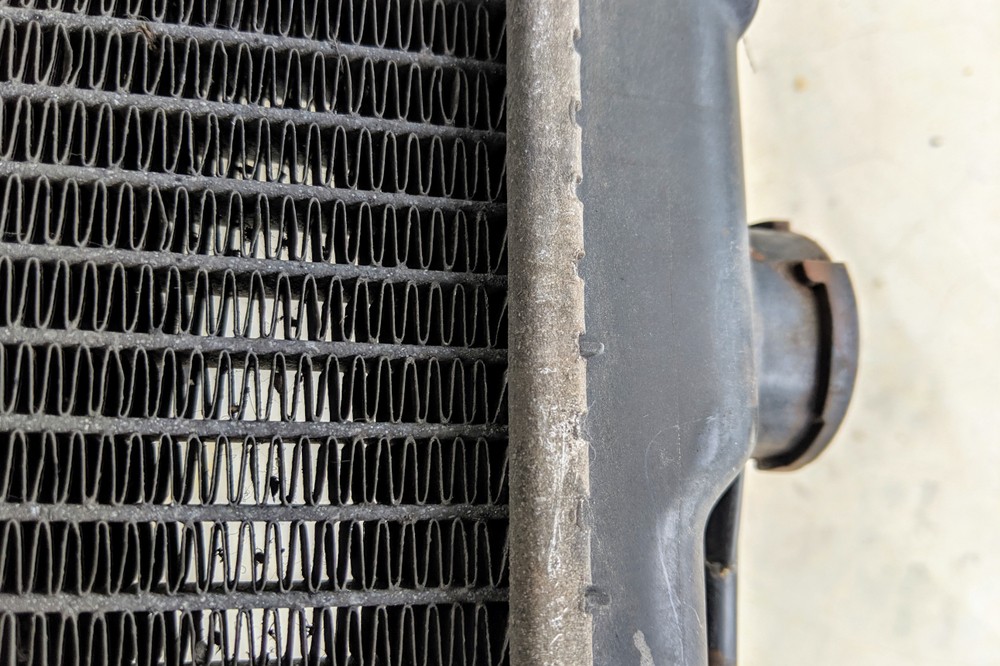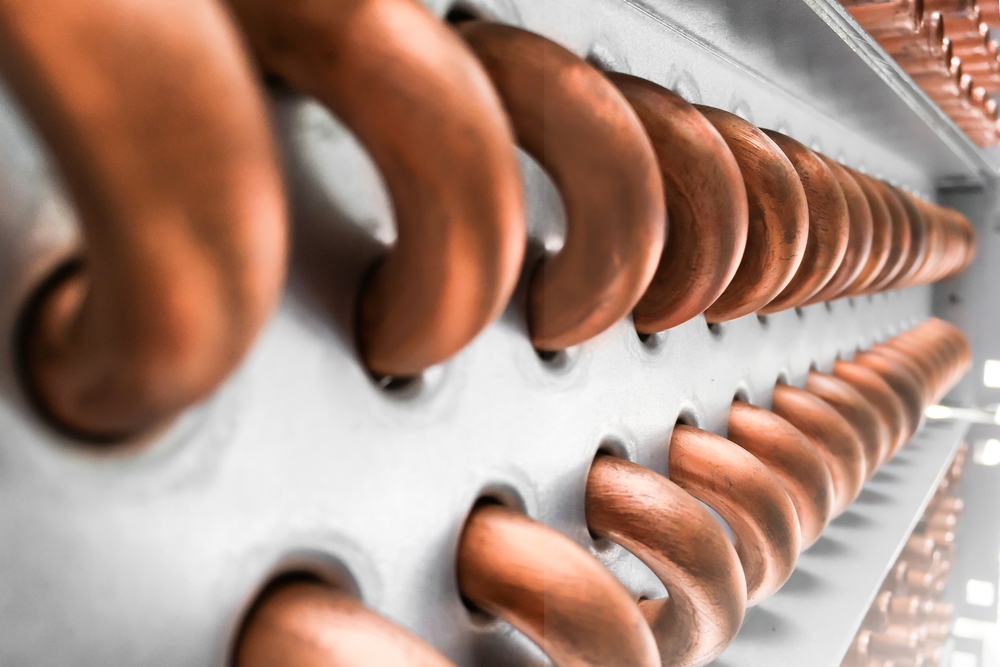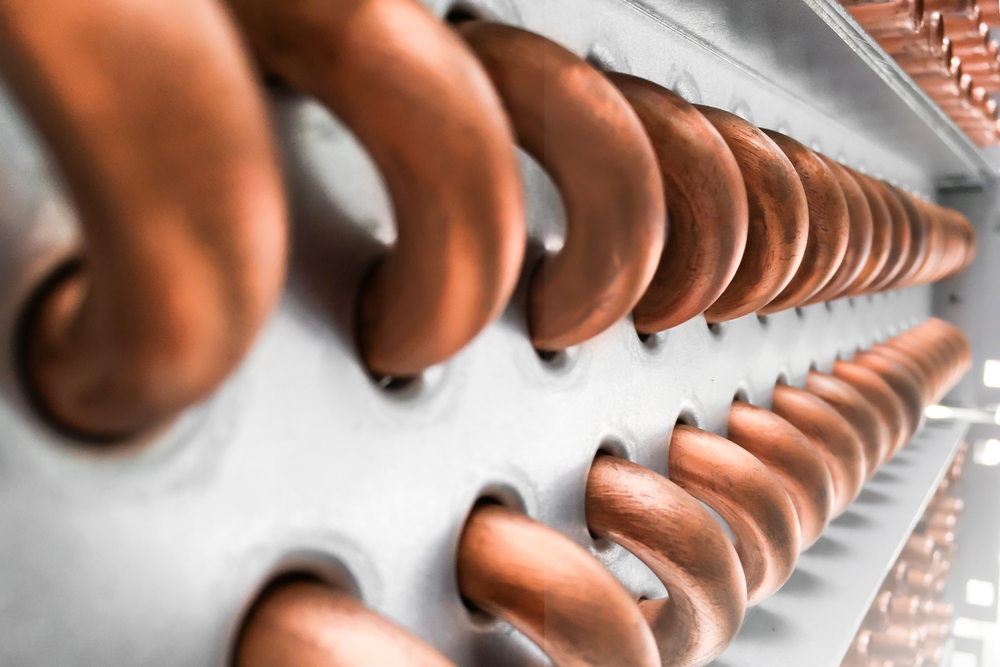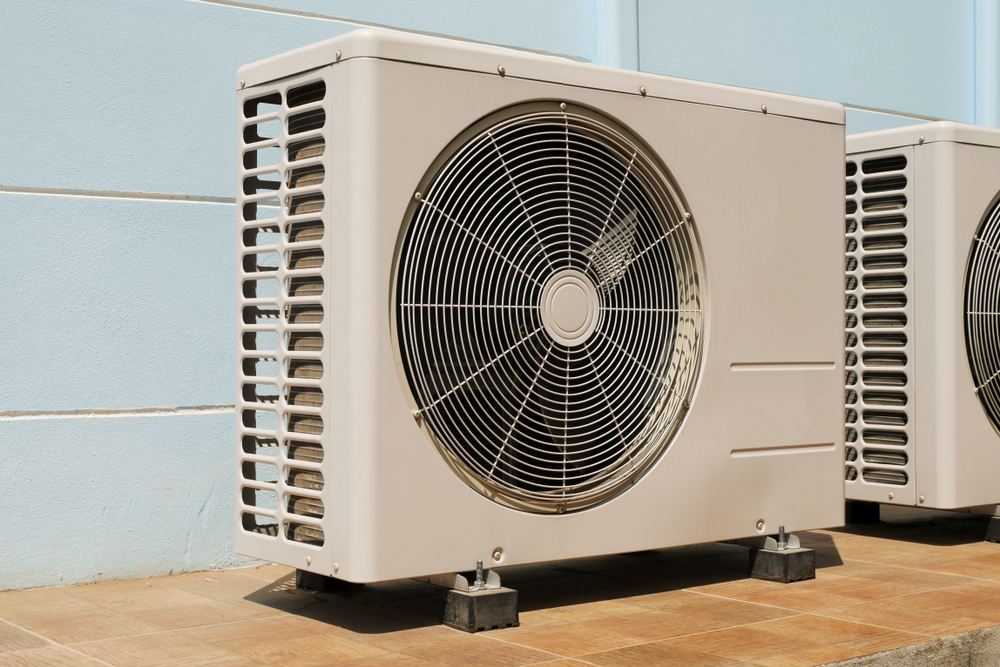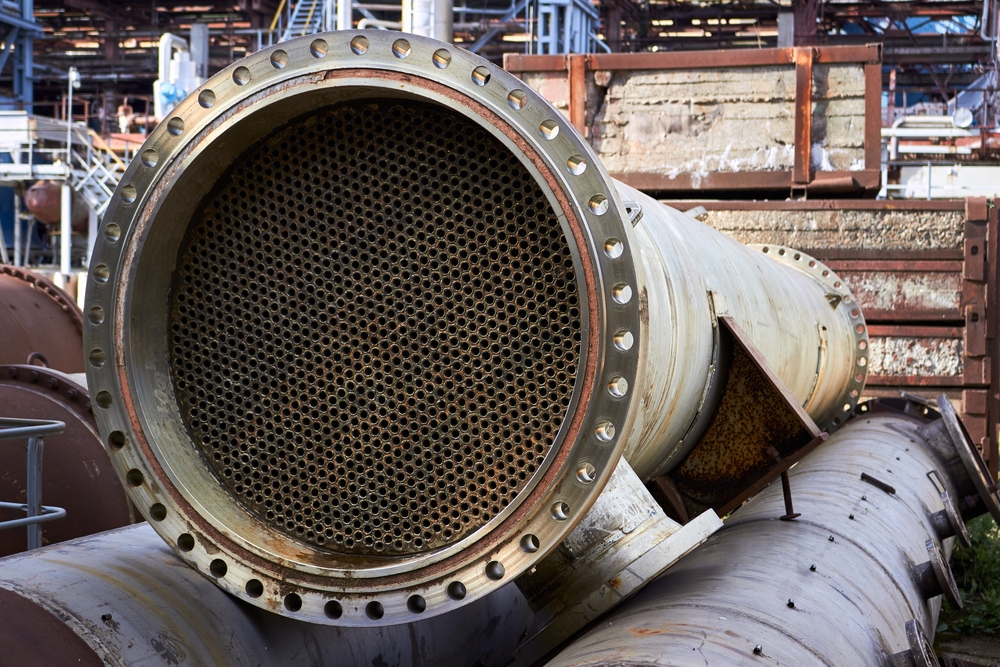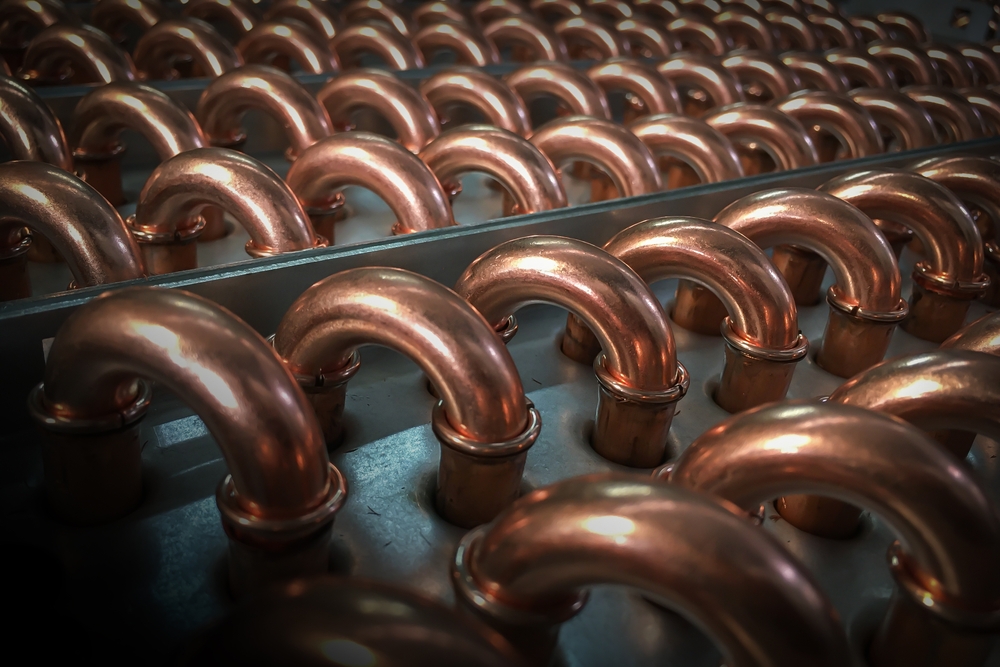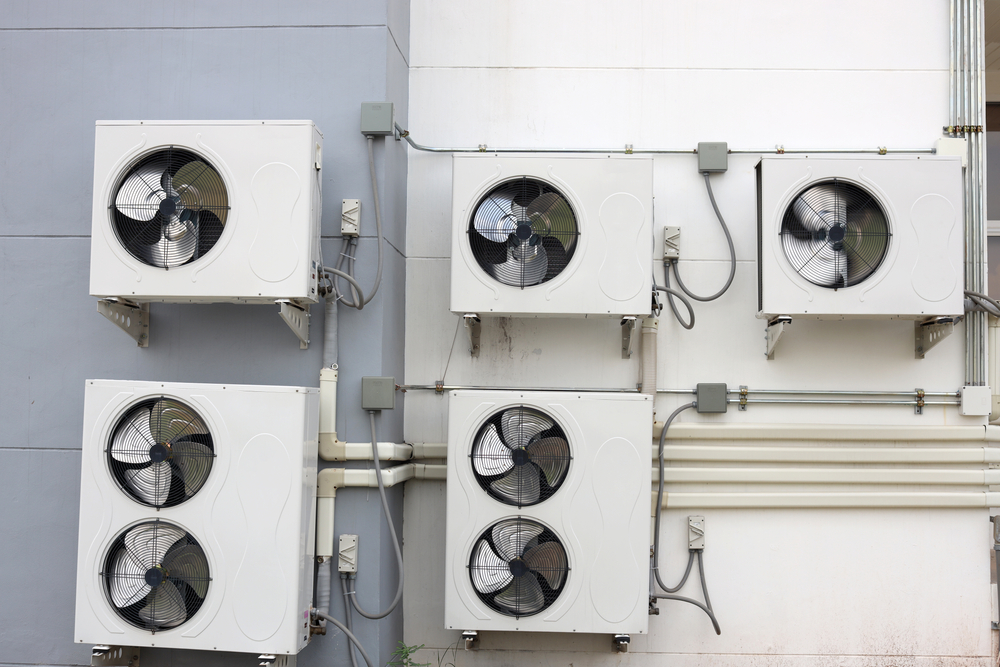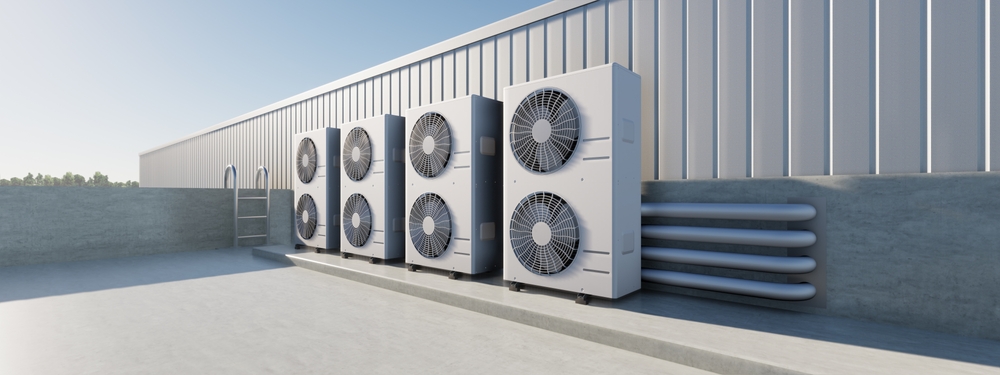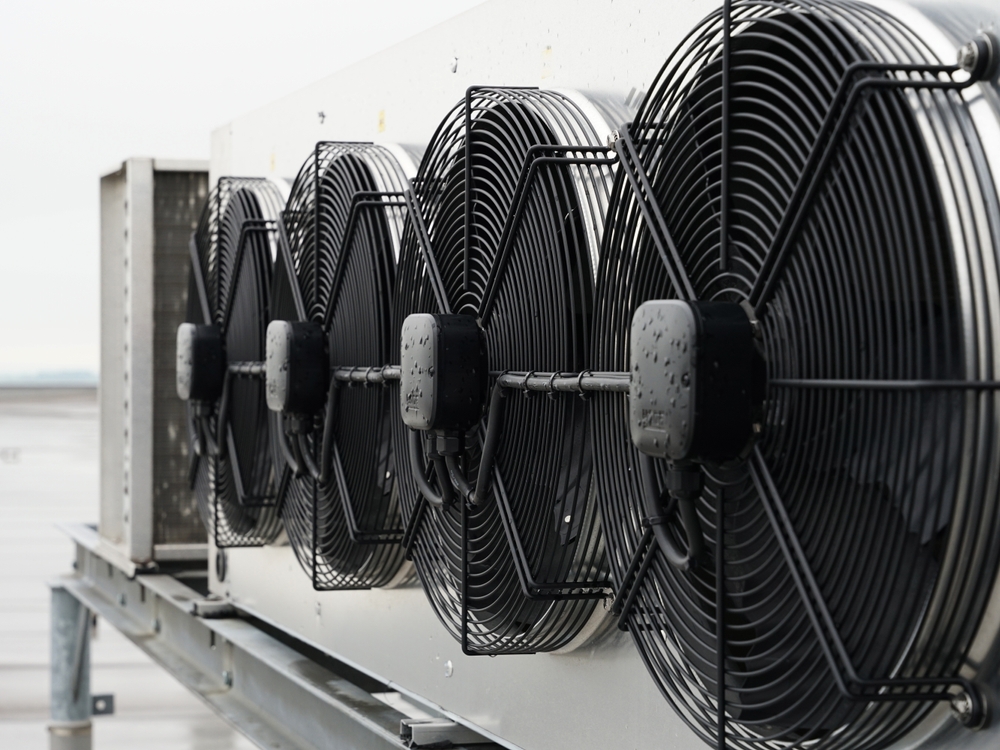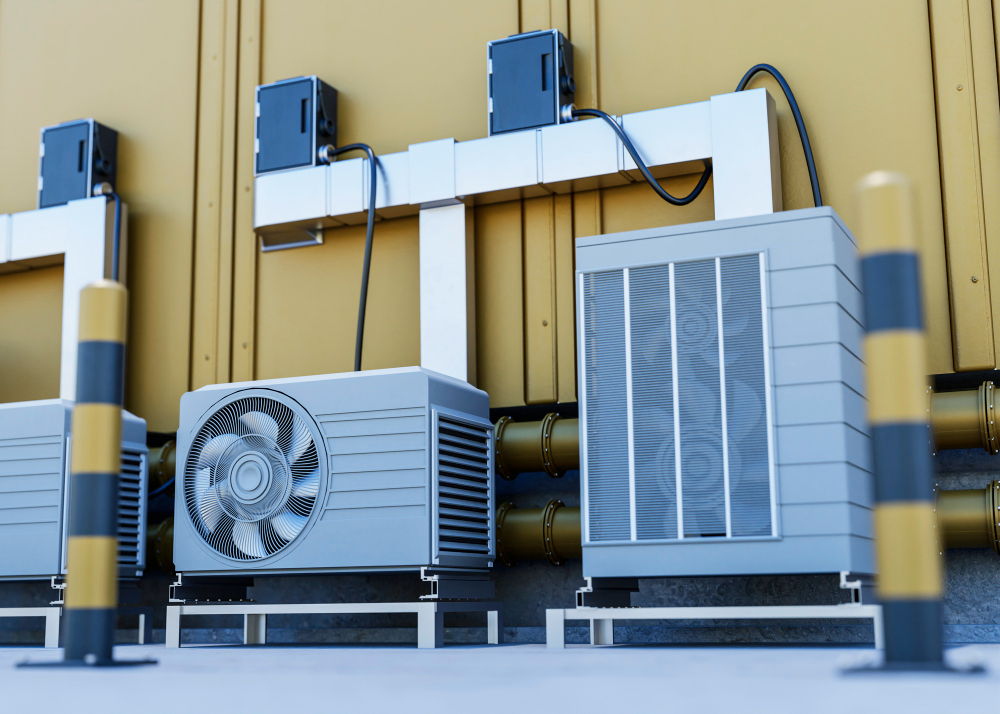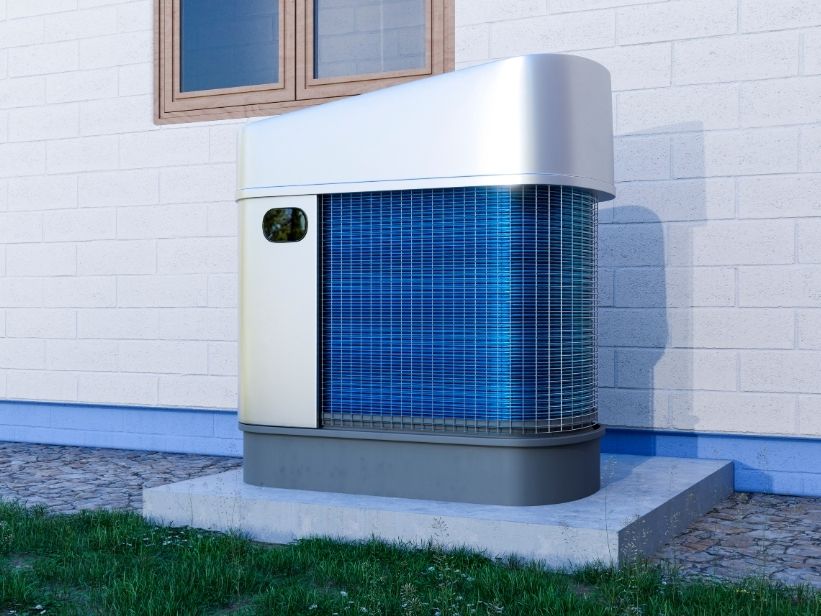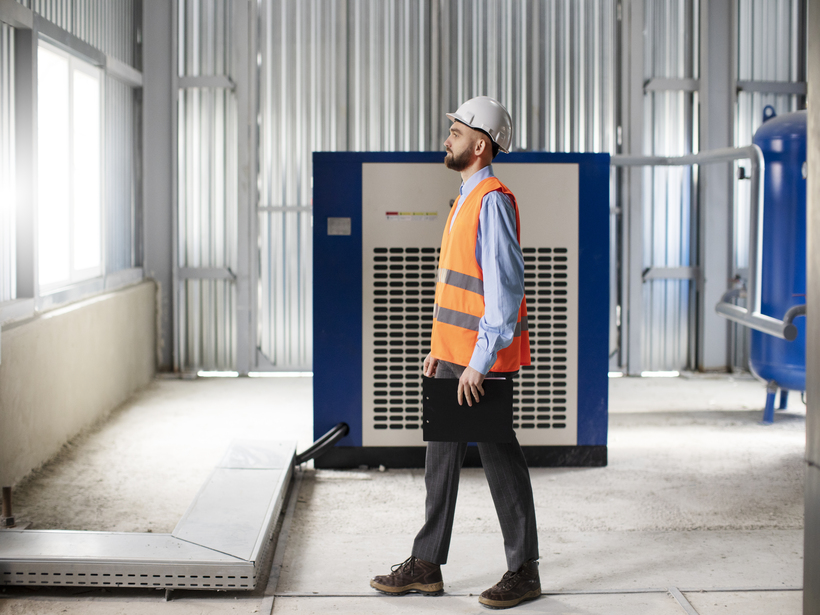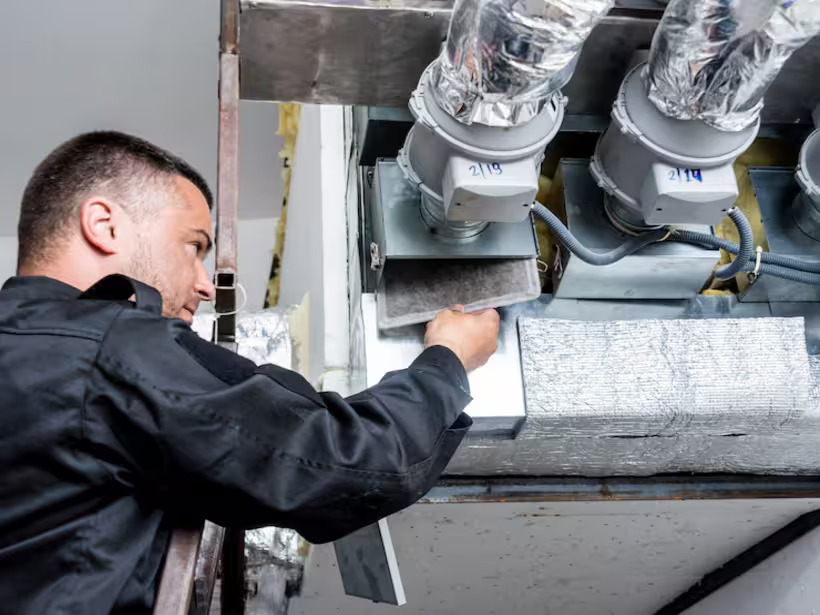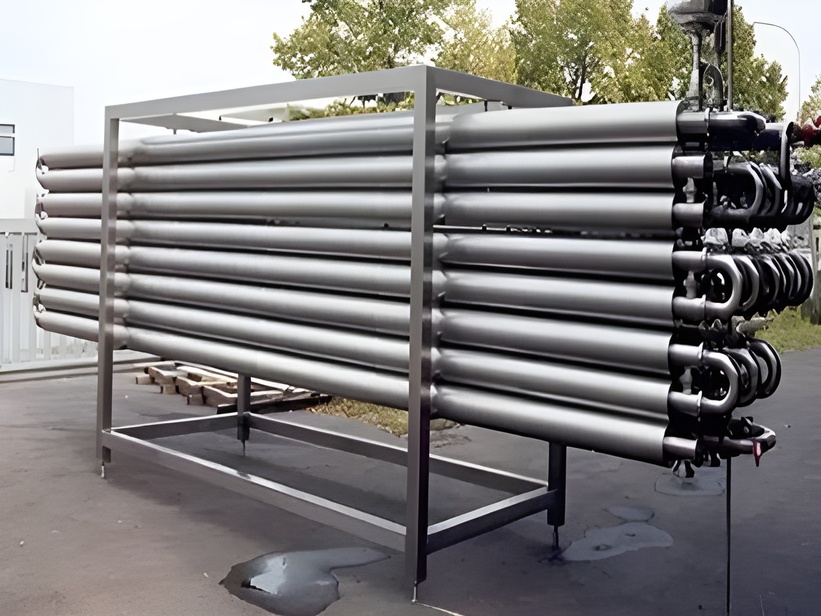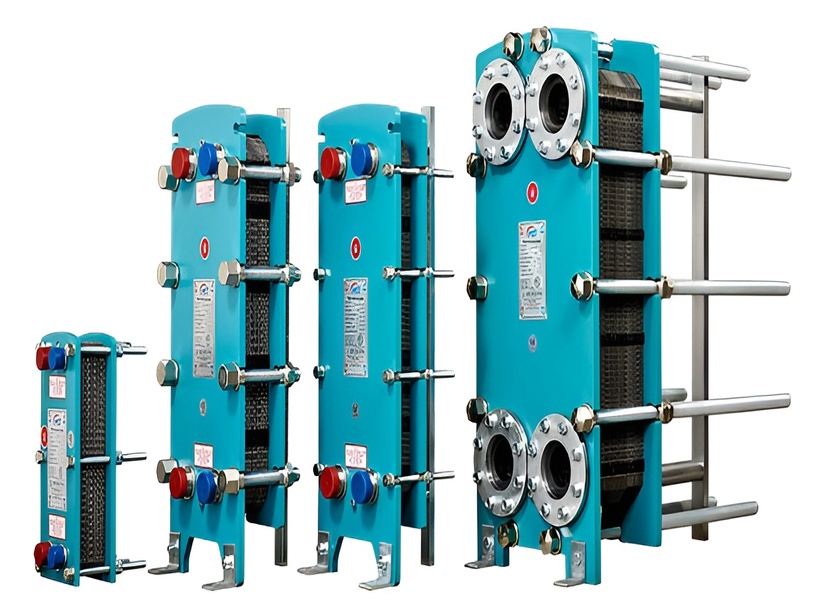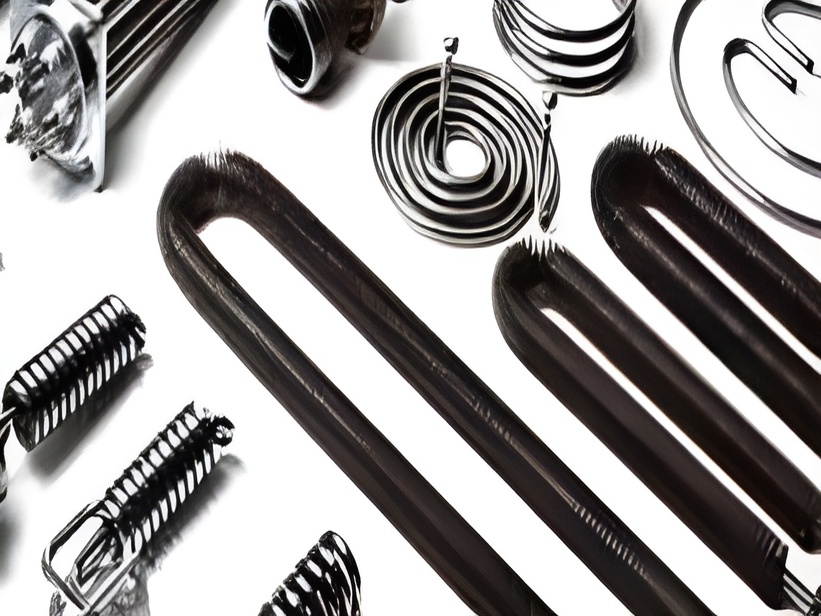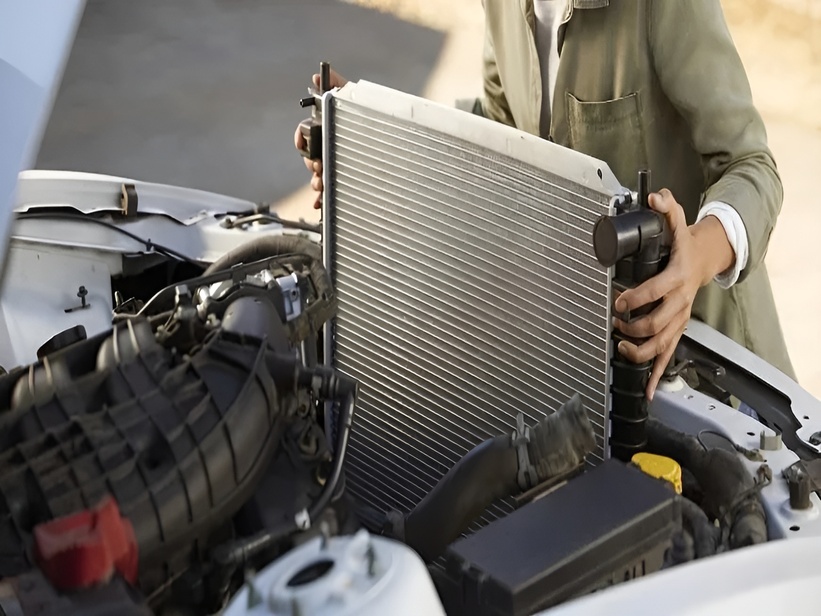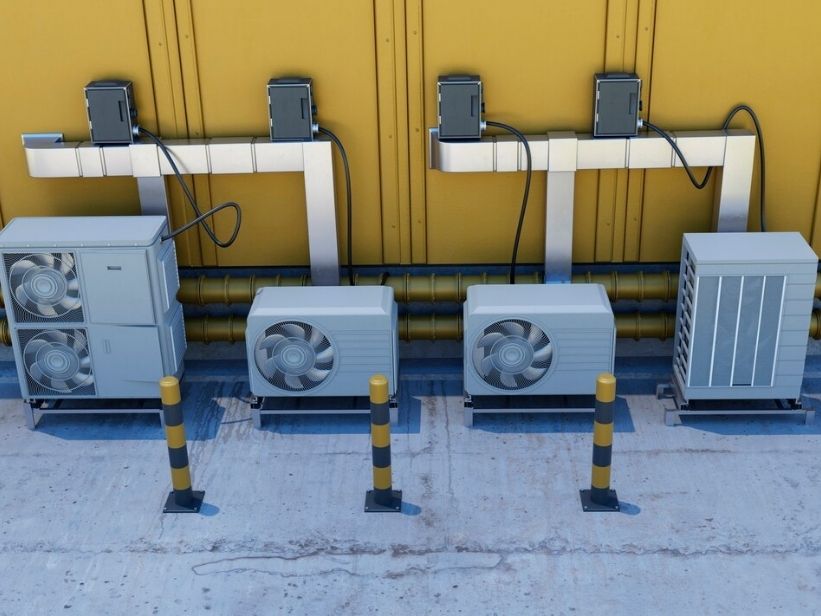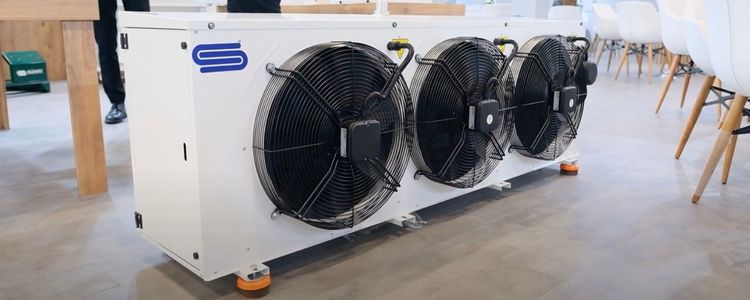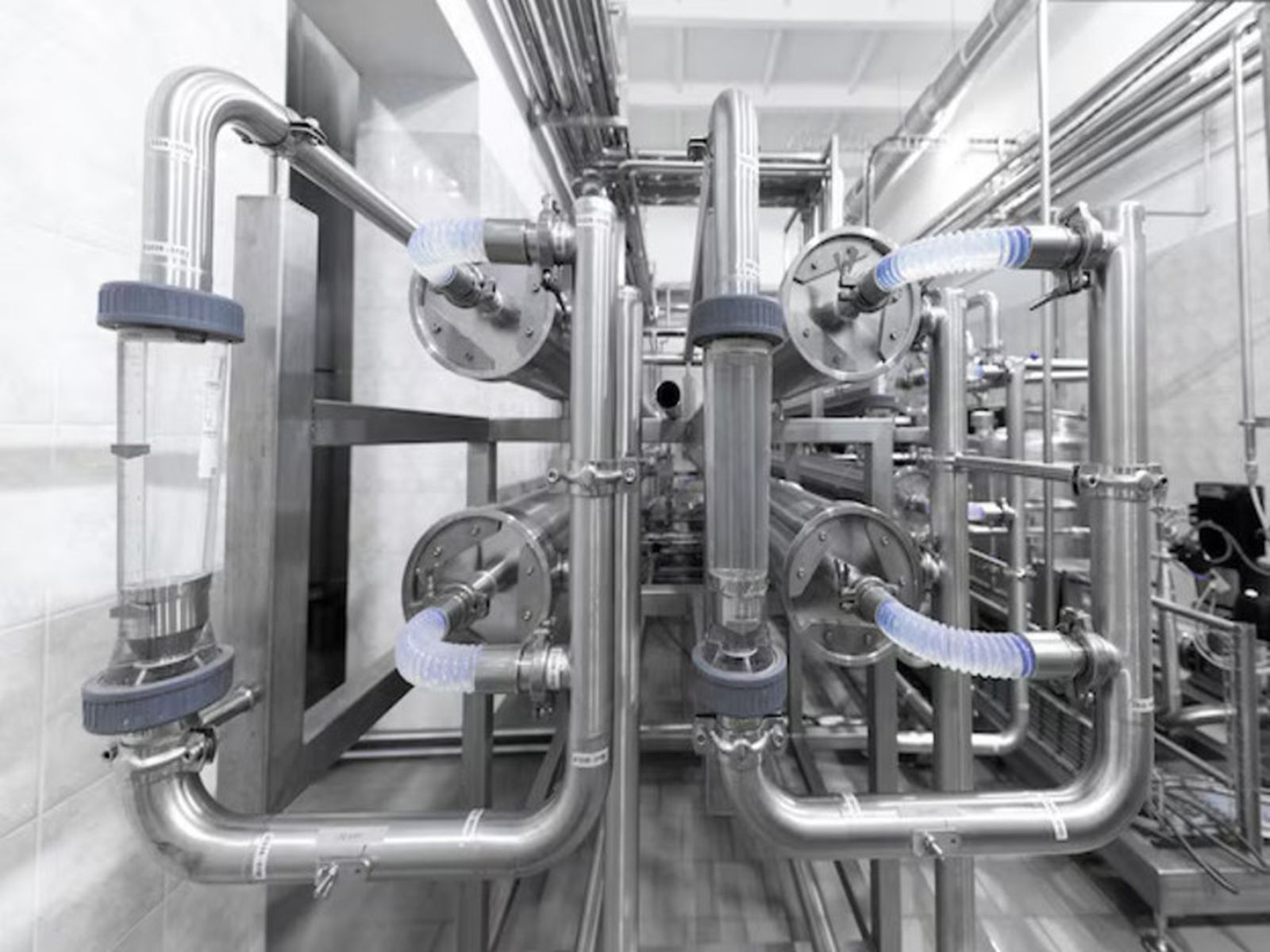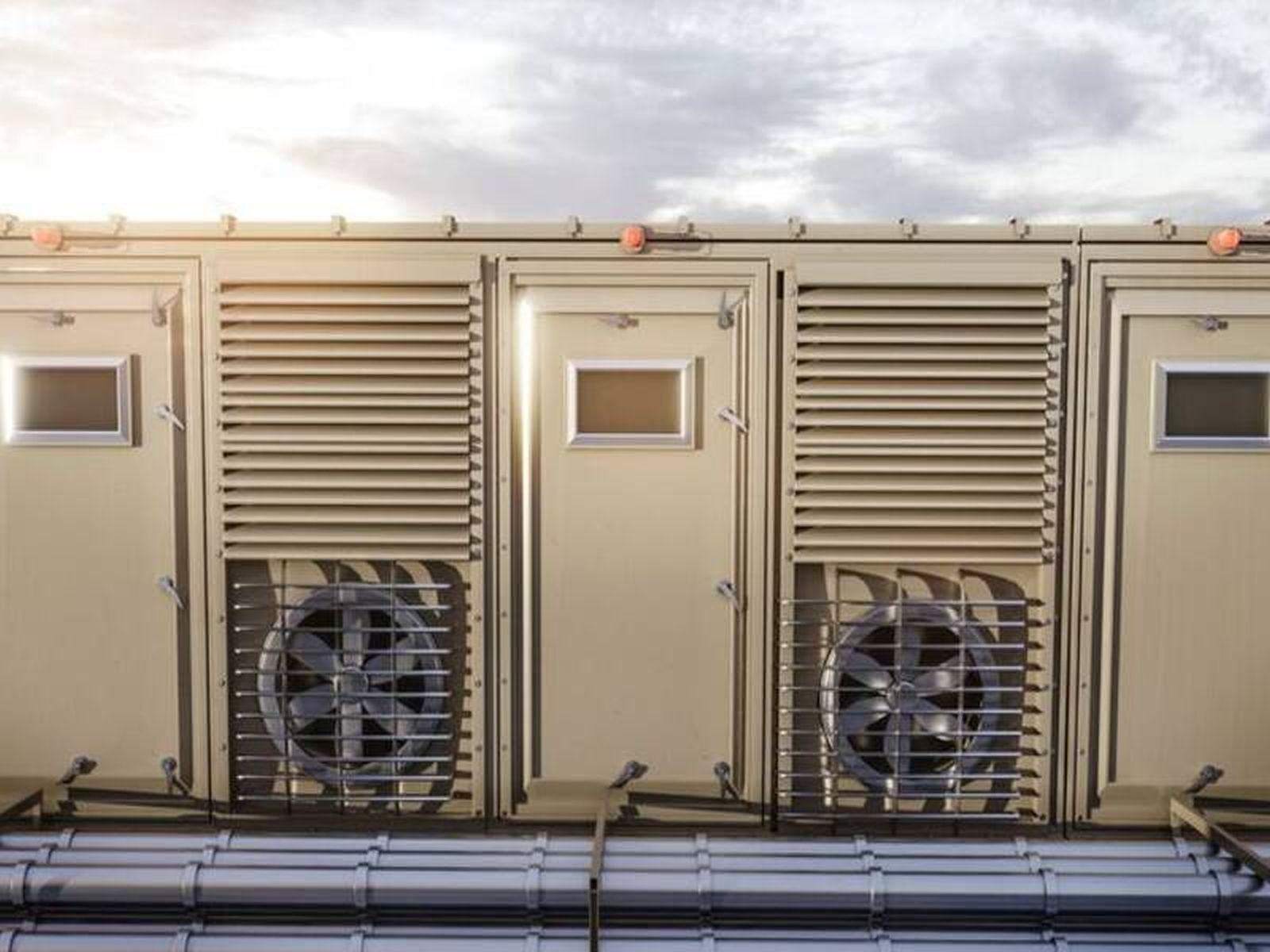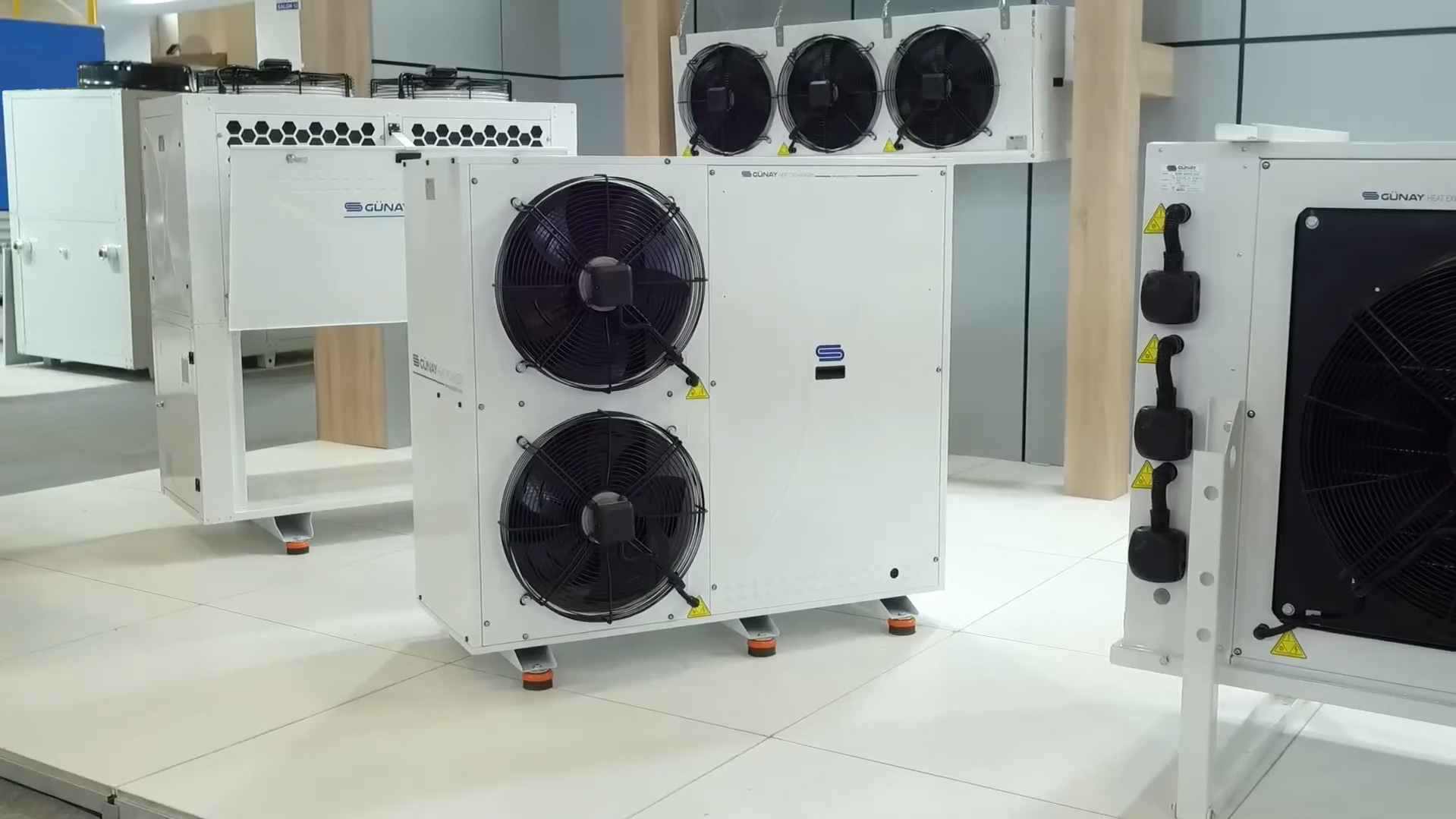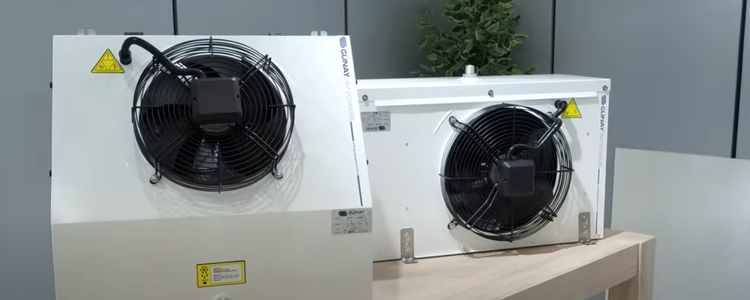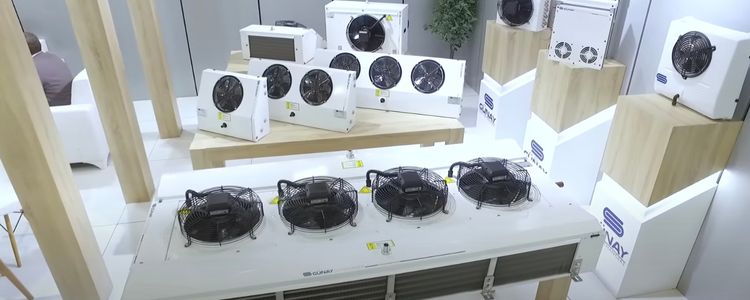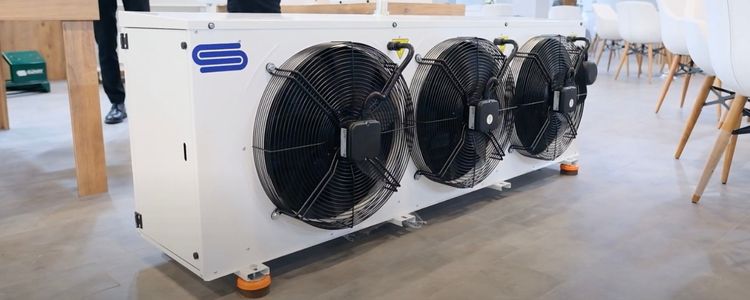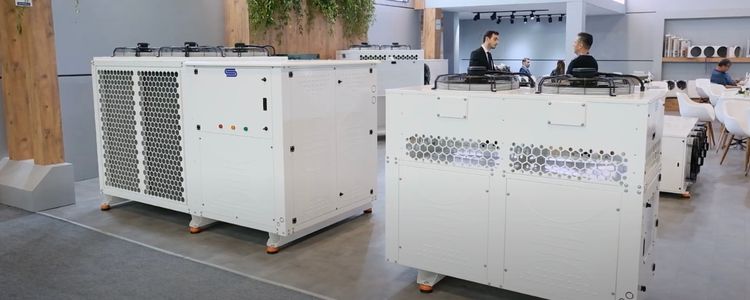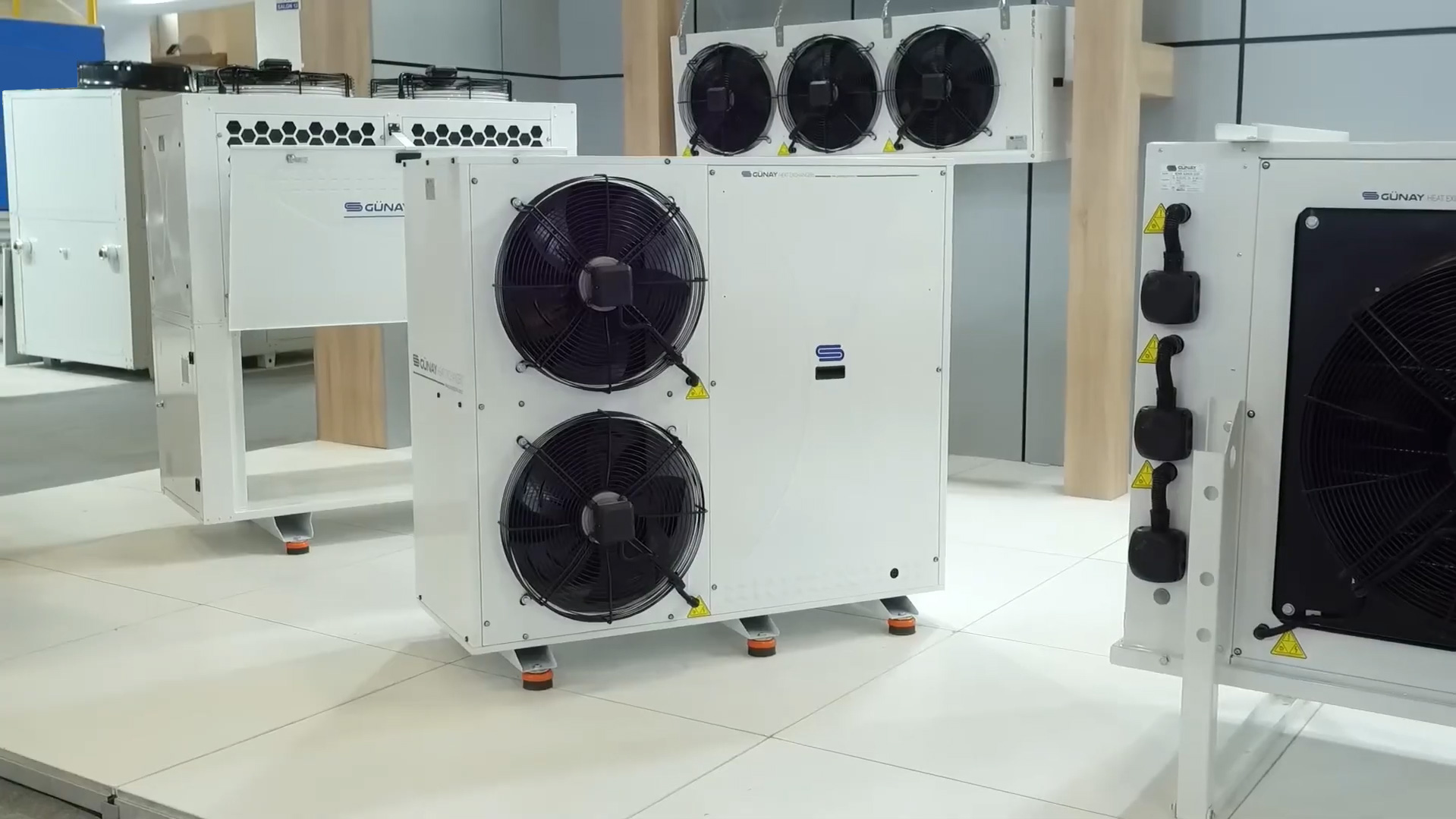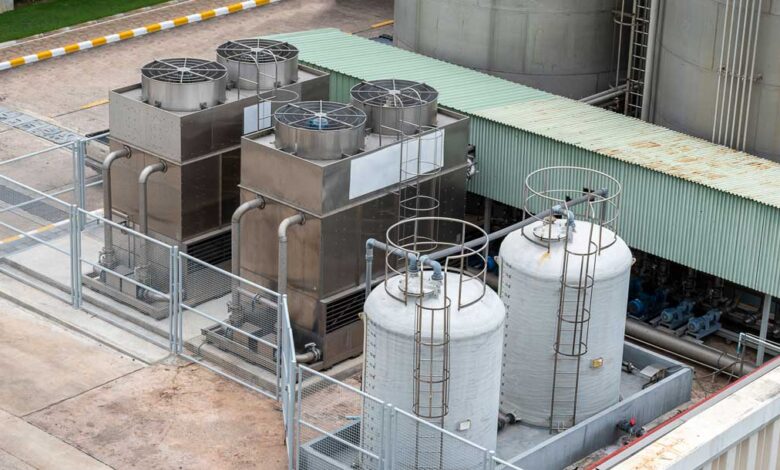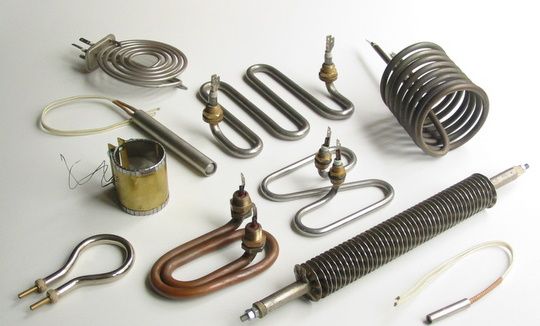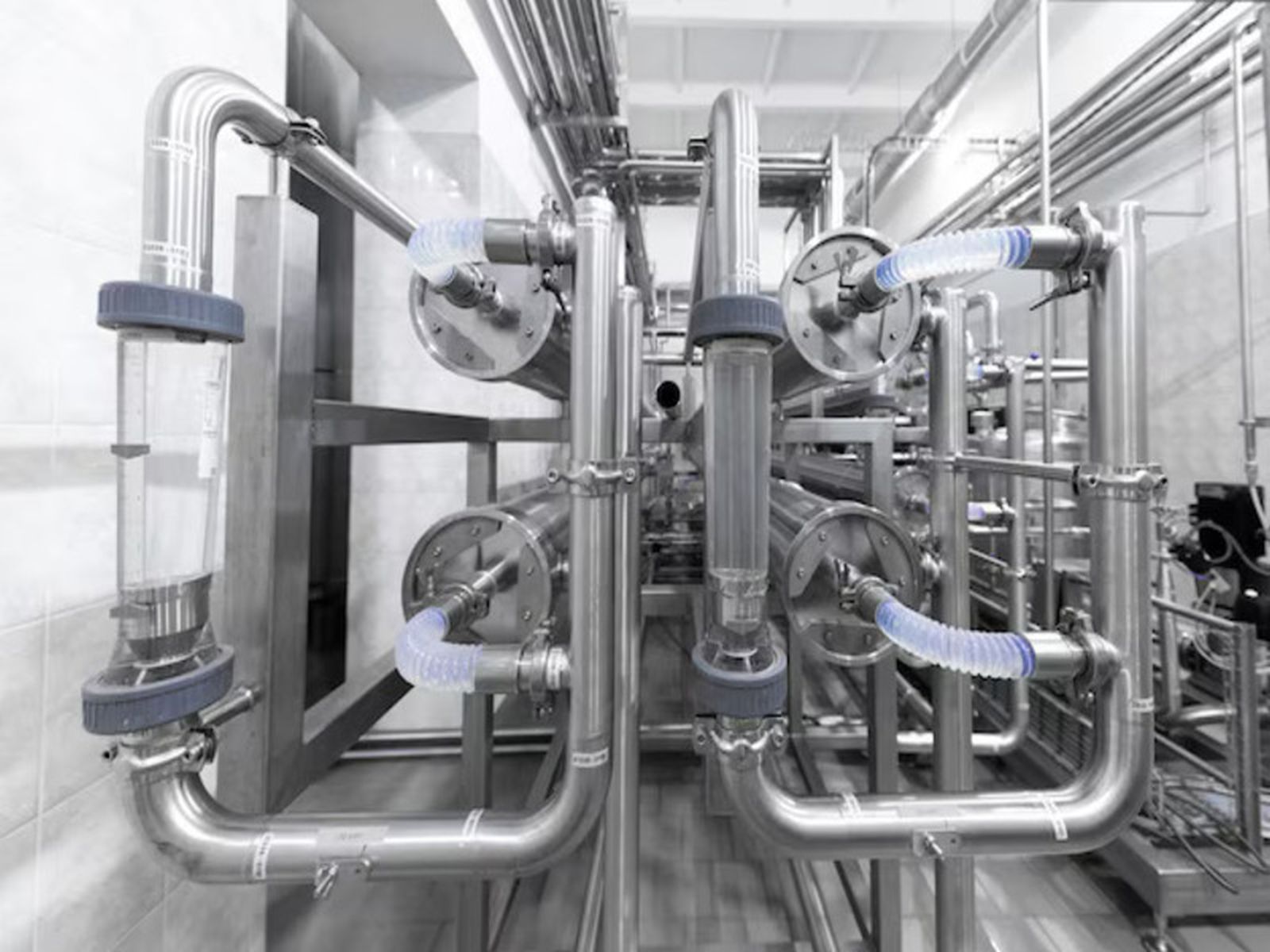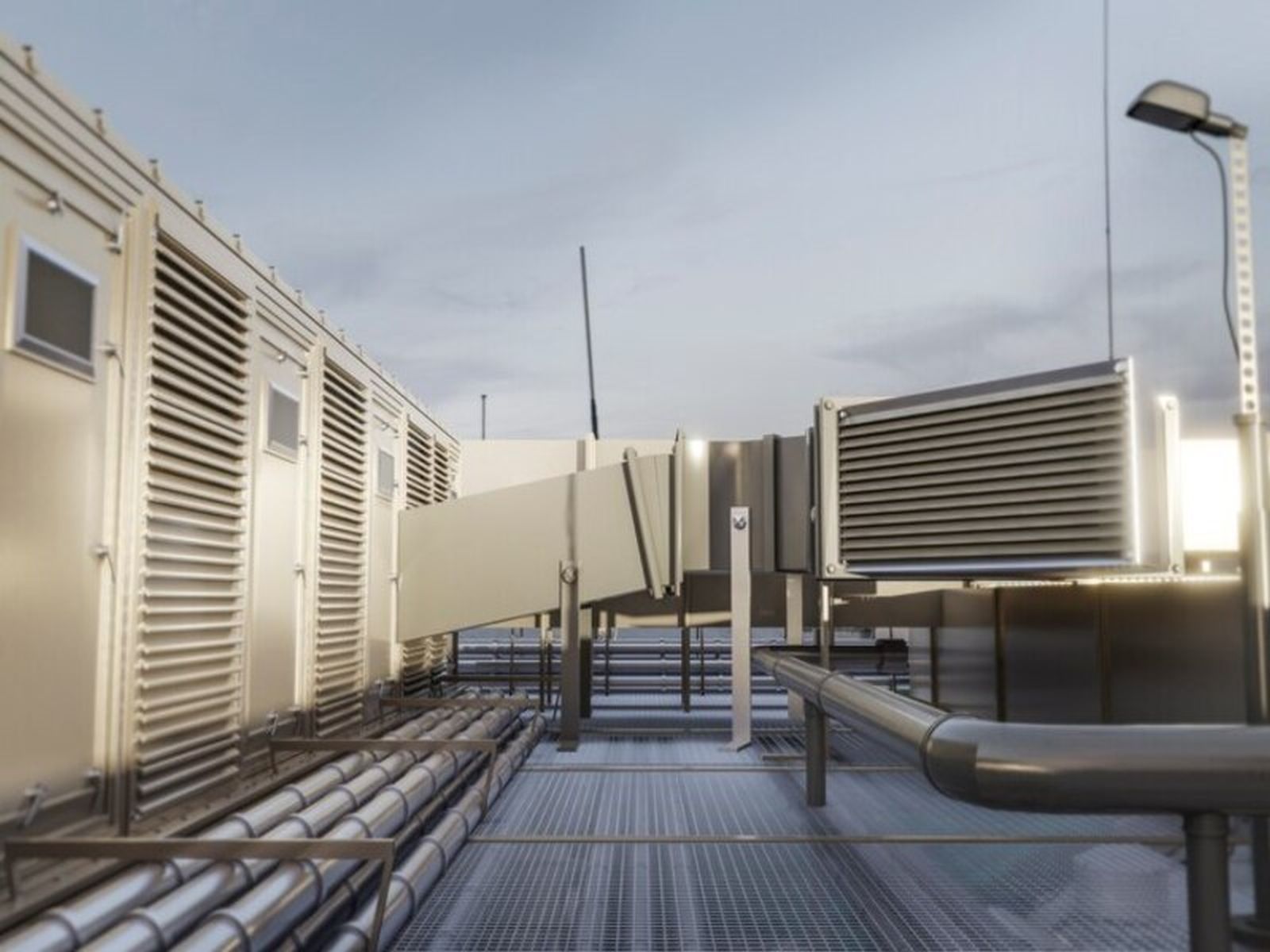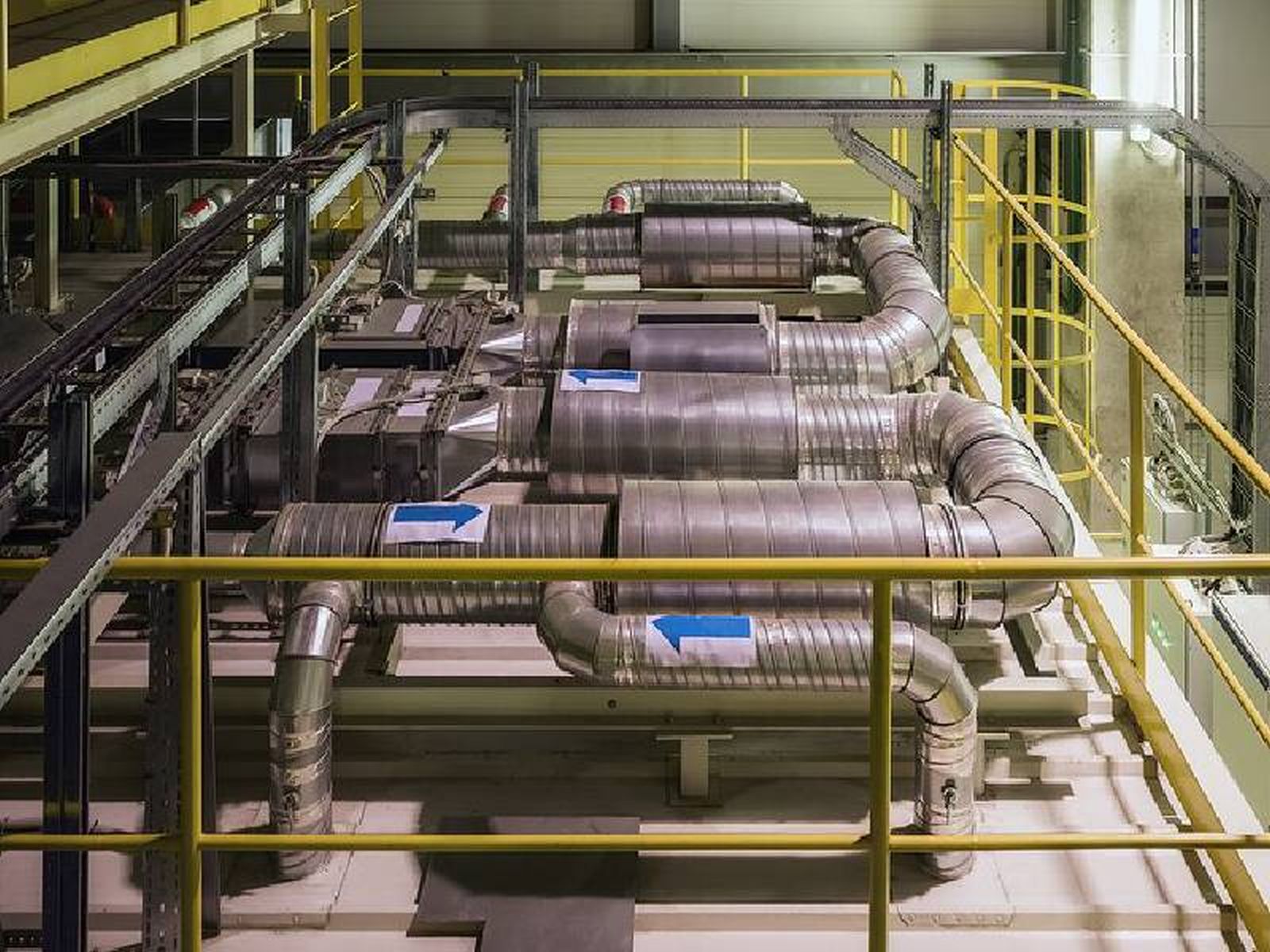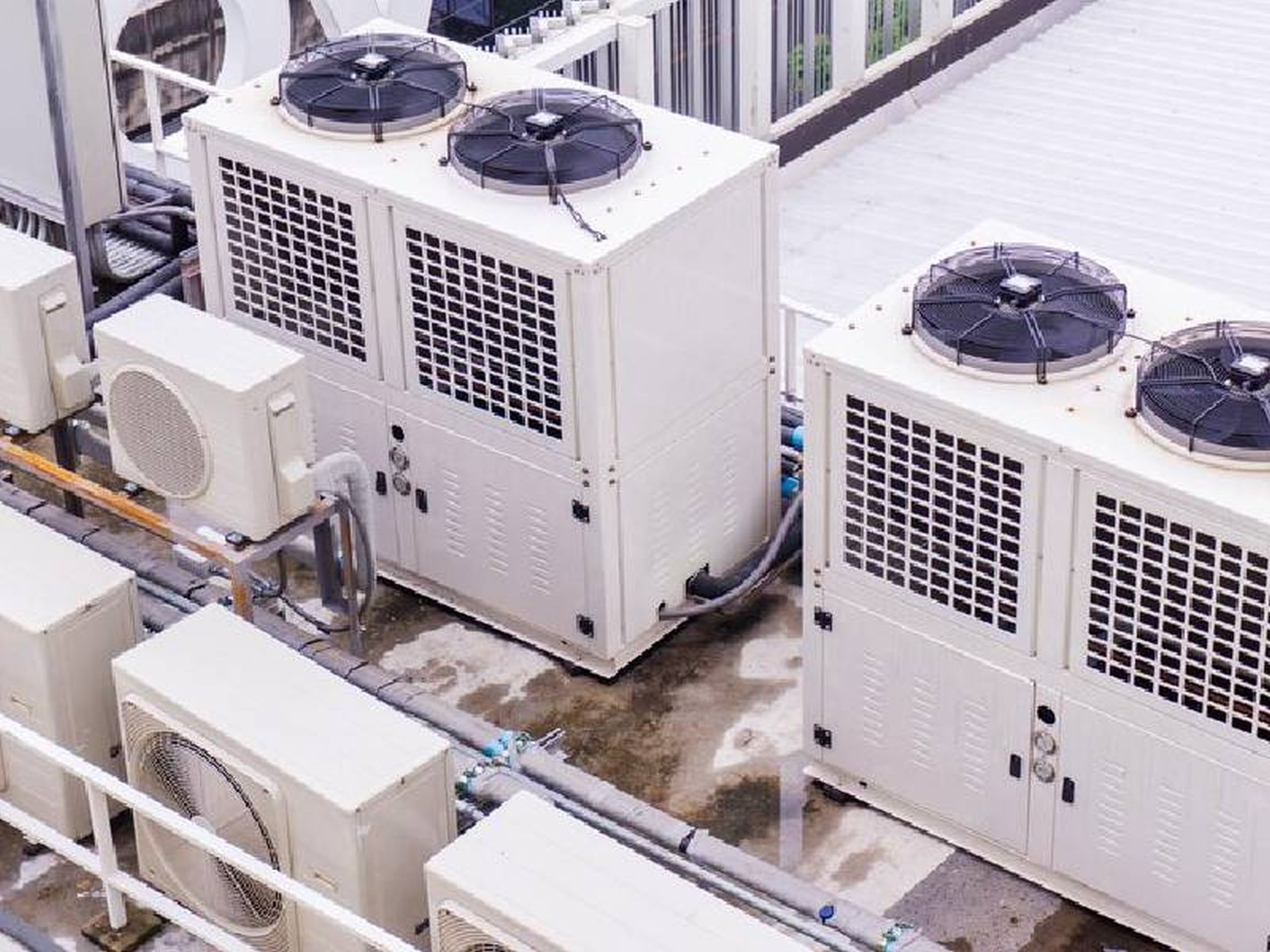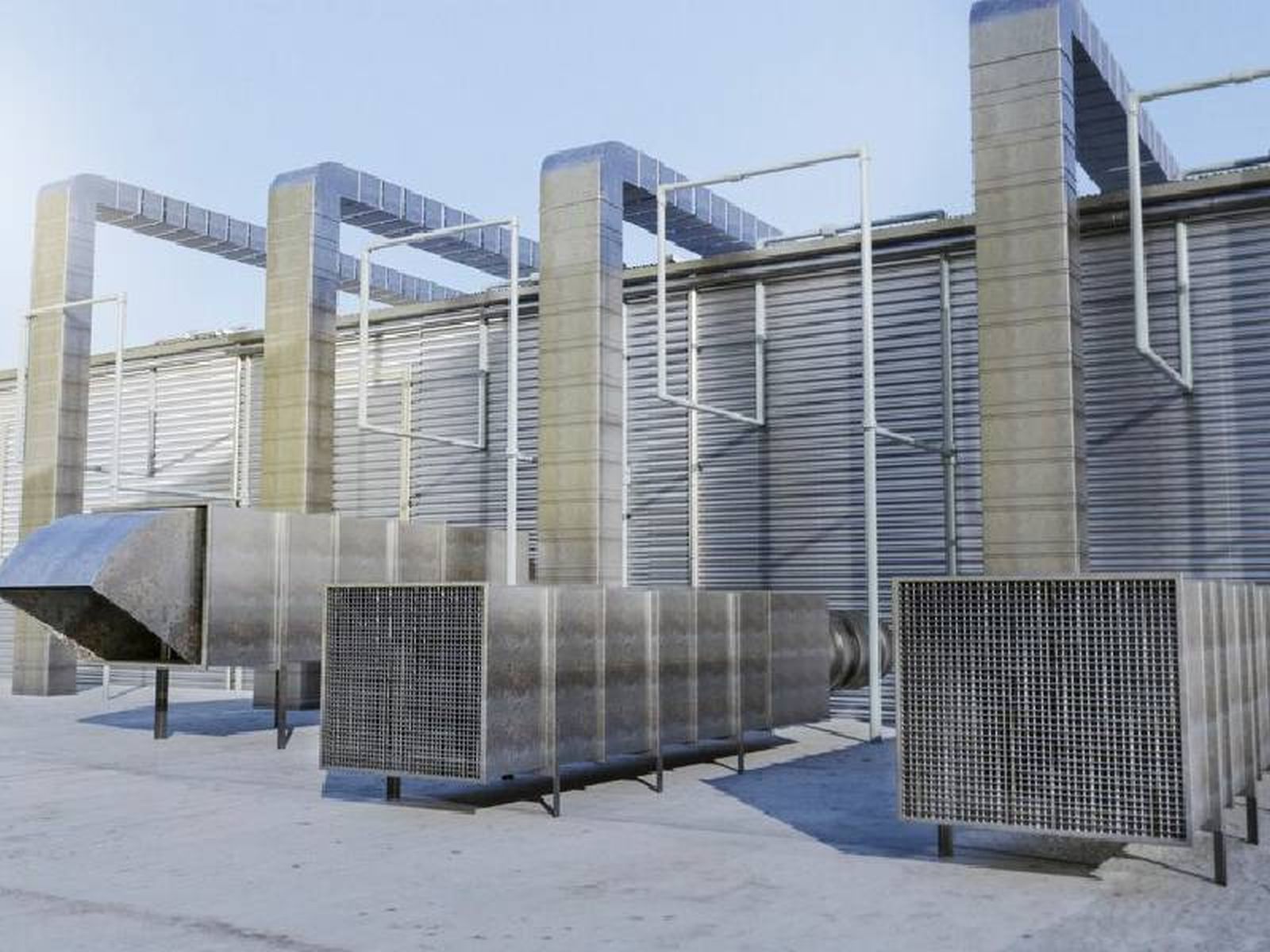


Air handling units and industrial process lines operate under demands very different from a standard cold room evaporator. Airflow can run far above catalogue products, the fluid may be water or a glycol mix, the pressure class can rise, or the installed size may be dictated by a duct cross-section unique to that plant room. In such projects, a standard evaporator or condenser model usually falls short, and a custom-designed heat exchanger becomes the answer.
For HVAC companies, engineering and project firms, machine manufacturers and mechanical installation companies, the guide below explains when a custom heat exchanger becomes necessary for air handling unit and process applications, which technical parameters take priority, and what needs to be clarified for the right selection.
Table Of Contents
- Why Does An Air Handling Unit Coil Requirement Differ From A Standard Product?
- Which Process Applications Call For A Custom Heat Exchanger?
- What Design Differences Arise In Water And Glycol Coils?
- What Do High-Pressure And High-Temperature Applications Change?
- How Does Duct Cross-Section And Mounting Orientation Shape Coil Design?
- How Is Material Chosen For Corrosive Environments?
- What Extra Data Do Heat Recovery Applications Require?
- How Do You Decide Between A Standard Product And A Custom Design?
- How Does The Process Work With Günay On AHU And Process Projects?
- Frequently Asked Questions
Why Does An Air Handling Unit Coil Requirement Differ From A Standard Product?
A cold room evaporator is designed to operate within a defined room temperature and humidity range, at a limited number of standard capacity steps. An air handling unit coil, by contrast, is usually sized around the duct cross-section, target air velocity and total pressure-drop budget set by the architect or mechanical engineer. The same capacity value can require a completely different coil depth and row count depending on the duct cross-section, which shows that AHU design relies on a dedicated calculation rather than a catalogue pick.
The data set a project engineer needs to hand over to the manufacturer is therefore broader than a standard evaporator request: airflow rate, allowable pressure drop, entering and leaving air temperatures, humidity, and the coil's position within the unit sequence (preheating, cooling, heat recovery, and so on) must all be assessed together. Passing this data set on in full shortens the back-and-forth at the quotation stage and contributes directly to the project schedule.
Which Process Applications Call For A Custom Heat Exchanger?
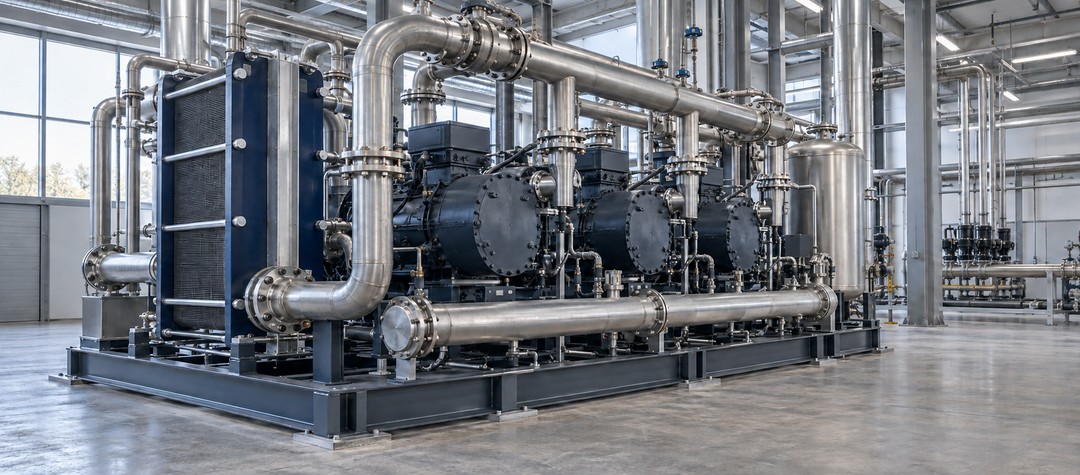
On industrial process lines, the need for a heat exchanger can cover a function far broader than cooling; the same project often calls for cooling, heating and recovery functions together. Typical examples include:
- Process cooling lines where a hot fluid or gas on a production line must be brought down to a specific temperature.
- Heat recovery systems where waste heat is reclaimed and reused in another process step.
- Heating coils operating with steam or hot oil.
- Specially engineered coils in chemical processes exposed to corrosive fluids.
- Non-standard cooling or heating coils machine manufacturers need to integrate into their own equipment.
What these applications share is that the fluid type, temperature range or pressure class exceeds the design limits of catalogue products. Once the project engineer identifies early on which parameter exceeds that limit, the conversation with the manufacturer moves far more efficiently.
What Design Differences Arise In Water And Glycol Coils?
Refrigerant coils transfer heat through evaporation or condensation, whereas water or glycol coils exchange sensible heat while the fluid stays in liquid phase. That difference means in-tube flow velocity, circuit count and the entering-leaving temperature difference must all be calculated on a different basis.
The glycol mixing ratio also shapes the design directly. Glycol, used to lower the freezing point, increases fluid viscosity and lowers the heat transfer coefficient compared with plain water. Consequently, a selection made without sharing the glycol ratio, entry temperature, leaving temperature and flow rate with the manufacturer can result in insufficient capacity on site. Since common ethylene and propylene glycol blends reduce the heat transfer coefficient by different amounts depending on ratio, clarifying the blend type is advisable as well.
What Do High-Pressure And High-Temperature Applications Change?
Standard evaporator and condenser coils are manufactured to a defined test pressure. Steam coils or high-pressure process lines can require a design pressure above that limit. Similarly, coils working with high-temperature fluids may need a different tube and fin material than standard products, based on temperature resistance.
Core data that needs to reach the manufacturer includes maximum operating pressure, design temperature, the chemical properties of the fluid, and any certification expected under a relevant pressure equipment regulation. Whether the process fluid exhibits sudden pressure spikes should also be shared, since transient surges are factored separately into the test pressure decision.
How Does Duct Cross-Section And Mounting Orientation Shape Coil Design?
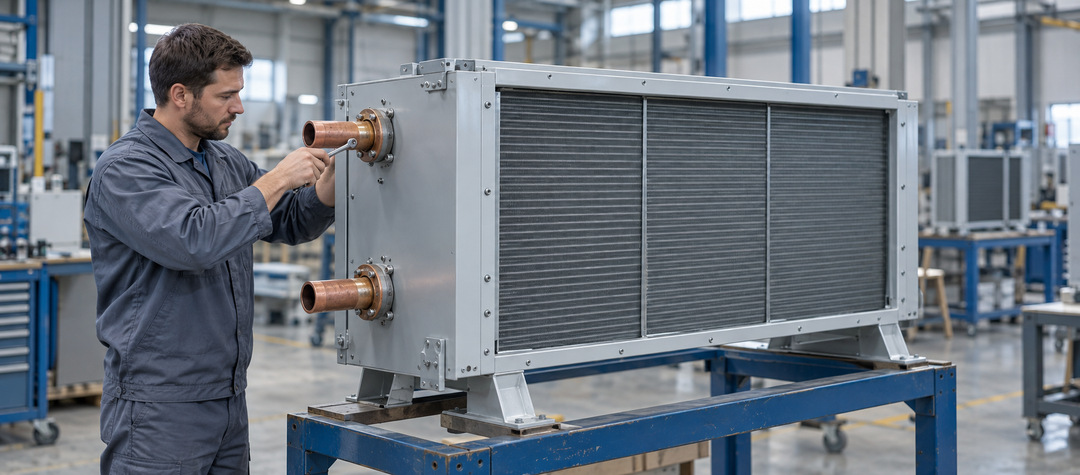
The external dimensions of a coil installed inside an air handling unit must match the casing's duct cross-section to the millimetre. Mounting orientation, in turn, determines both airflow direction and whether condensate drainage functions correctly. The table below sets out common mounting scenarios.
| Mounting Scenario | Point To Consider |
|---|---|
| In-duct horizontal mounting | Slope of the condensate drain pan and the drainage point |
| In-duct vertical mounting | Need for a droplet eliminator and prevention of water carryover |
| Multiple coils in series | Spacing between coils and service access |
| Casing with limited depth | An expanded design that increases surface area rather than row count |
How Is Material Chosen For Corrosive Environments?
In process environments carrying chemical vapour, salt-laden air or high humidity, standard copper tube and aluminium fin may not offer an adequate service life. Alternatives such as coated aluminium fins, copper-nickel tubing or a fully stainless-steel coil can be considered for such applications. Since material choice directly affects both capital cost and maintenance frequency, the ambient chemical profile should be shared with the manufacturer in detail. In coastal facilities or chemical-sector process lines, that choice can raise the initial investment yet offset overall cost over time by reducing maintenance and replacement frequency; even seasonal variation in chemical concentration can affect material life and is worth mentioning.
What Extra Data Do Heat Recovery Applications Require?
Heat recovery coils generally handle two separate air or fluid streams at once, a hot side and a cold side, rather than a single fluid path; that dual structure sets the design apart from a standard single-circuit coil. Data that must reach the manufacturer includes the entering and leaving temperatures of both streams, their flow rates, allowable pressure losses, and the targeted recovery efficiency. Since different recovery principles, such as heat pipe or cross-flow design, can call for different coil geometries, the operating logic of the application should be clarified from the start.
How Do You Decide Between A Standard Product And A Custom Design?
Not every AHU or process project automatically calls for a custom design. The following questions can guide the decision:
- Does the required capacity and airflow fall within a standard serial product's capacity range?
- Does the unit casing's duct cross-section match a standard coil size?
- Do the fluid type and pressure class fall within standard products' design limits?
- Do ambient conditions meet the expected service life of standard material?
- Can the project schedule accommodate the lead time custom production requires?
A "no" answer to even one of these questions is enough of a signal to evaluate the custom design option. When more than one question draws a "no" at the same time, moving straight to a custom design process is generally less risky than forcing a standard product to fit.
How Does The Process Work With Günay On AHU And Process Projects?
Günay Heat Exchangers has supplied evaporators, condensers and heat exchangers in both serial and custom production since 1986. For a request tied to an AHU or process application, the evaluation process can start by sharing air or fluid flow rate, entering and leaving temperatures, pressure class, duct cross-section and ambient conditions with the Günay technical team. Since the factory in Arnavutköy, Istanbul houses both serial and custom production lines under one roof, intermediate solutions, such as revising a standard coil design for a specific project, can also be considered. Technical discussions with project teams can be requested through the Istanbul, Antalya and Izmir branches; setting up that contact early on speeds up the quotation and production process considerably.
Frequently Asked Questions
Can A Standard Evaporator Be Used For An Air Handling Unit Coil?
In some small, low-airflow units, a standard product may suffice. Since duct cross-section, pressure-drop budget and mounting orientation are specific to the unit's design, however, most projects require the coil dimensions to be custom-engineered. On medium and large projects, requesting a custom design from the outset, rather than forcing a standard product into the duct cross-section, reduces both installation time and the risk of a mismatch on site.
Why Does Capacity Change In Systems Using Glycol?
Glycol raises fluid viscosity and lowers the heat transfer coefficient relative to plain water. As a result, a selection made without sharing the glycol ratio and operating temperatures with the manufacturer can fall short of the expected capacity on site.
Is A Heat Recovery Coil The Same As A Standard Coil?
No. A heat recovery coil typically handles two separate fluid or air streams at once and requires a different geometry depending on the recovery principle used. On such projects, the data for both streams must be assessed together.
Can Standard Copper Tube Be Used In A Corrosive Environment?
It can, but its service life may shorten depending on the ambient chemical profile. Coated fins or alternative tube materials can prove more advantageous from a long-term cost perspective.
Do Pressure Fluctuations In A Process Line Affect Coil Selection?
Yes. Sudden pressure spikes or surge-like flow conditions can require an additional safety margin in the coil's test pressure selection. Whether such fluctuations occur on the process line should be shared with the manufacturer at the design stage.
How Far In Advance Should A Custom-Designed Coil Be Ordered?
Lead time varies with design complexity and material availability. Contacting the manufacturer early in the project schedule reduces uncertainty around the delivery date, and for coils using special materials, raw-material lead time can be more decisive than production time itself, so material requirements should be clarified as early as possible.