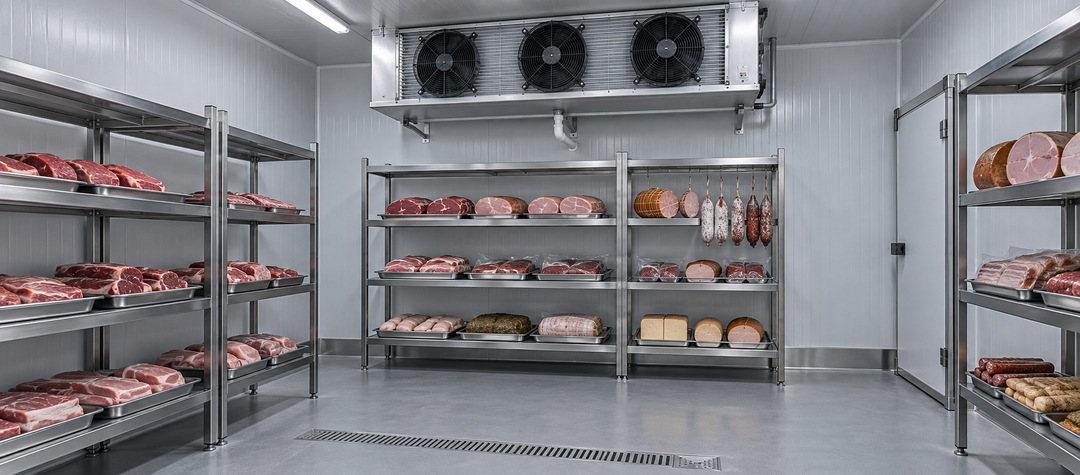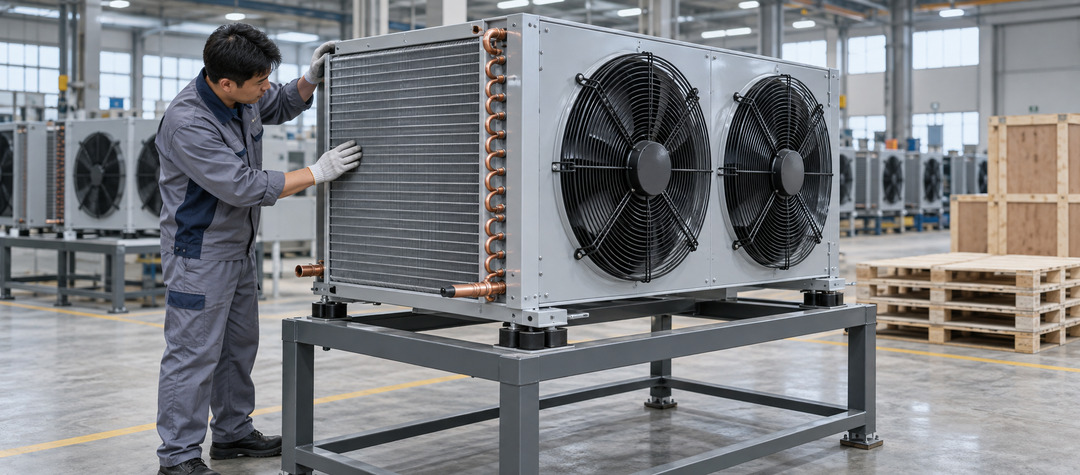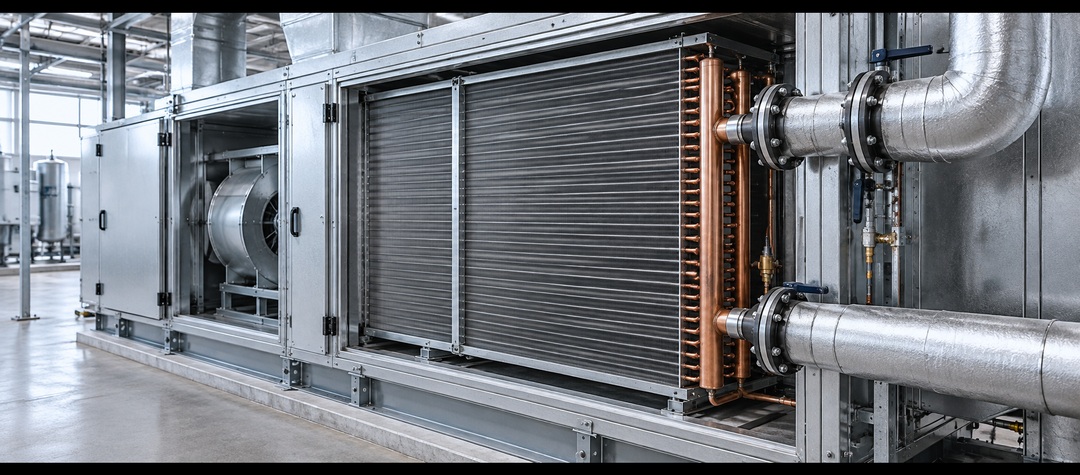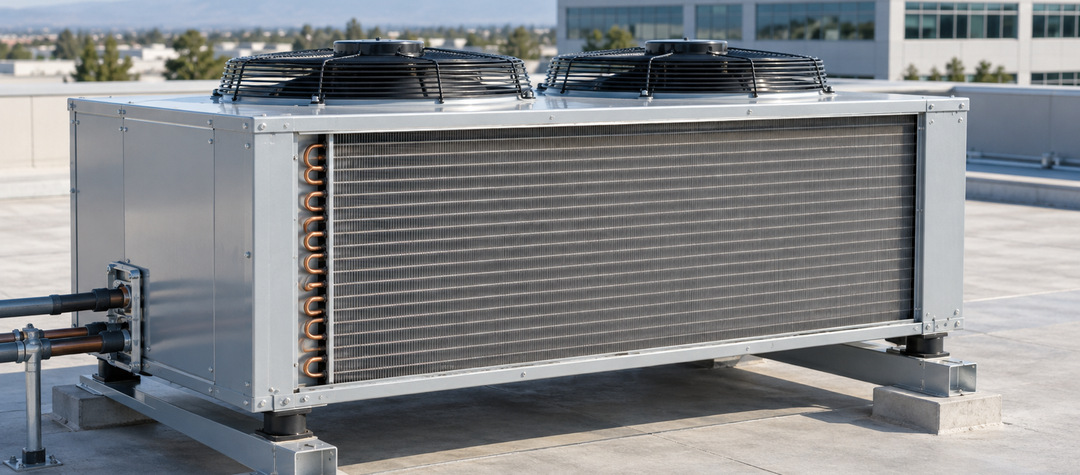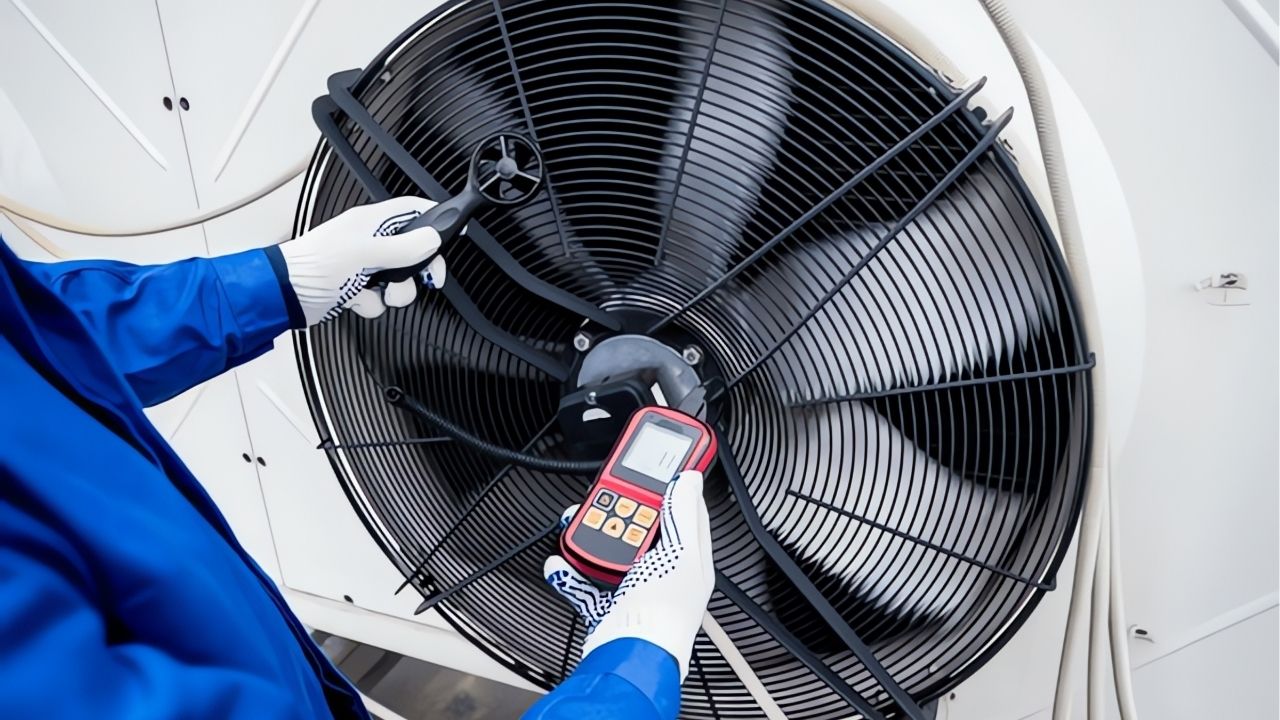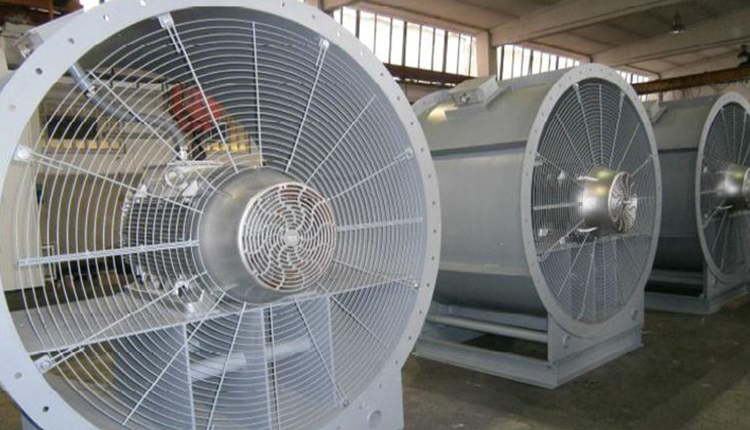


Dairy products are a highly sensitive product category when it comes to temperature fluctuations, humidity changes, and odor transfer. Items such as cheese, yogurt, butter, and fresh milk can quickly lose both flavor quality and shelf life if the right temperature and humidity conditions are not maintained. The sections below cover the specific cooling characteristics of dairy products, the temperature and humidity criteria to evaluate during evaporator selection, the role of air distribution in preventing odor transfer, the importance of hygienic design, the differences between approaches for packaged and unpackaged products, and the steps to follow to select the right evaporator. Reach out to our team for an assessment tailored to your facility.
Table Of Contents
- What Are The Specific Cooling Characteristics Of Dairy Products?
- Which Temperature And Humidity Criteria Should Be Evaluated In Evaporator Selection?
- What Role Does Air Distribution Play In Preventing Odor And Flavor Transfer?
- Why Is Hygienic Design Important For Dairy Product Storage?
- Do Packaged And Unpackaged Dairy Products Require Different Approaches?
- What Steps Should Be Followed To Select The Right Evaporator?
- Frequently Asked Questions
What Are The Specific Cooling Characteristics Of Dairy Products?
Dairy products are biologically active and prone to microbiological development. Fresh milk, fermented products such as yogurt, and cheeses undergoing ripening can experience rapid changes in acidity, texture, and flavor when exposed to temperature swings. This sensitivity requires storage temperature to be maintained continuously within the defined range, without fluctuation.
Dairy products also have a strong tendency to absorb and transfer odors; high-fat products such as butter and cream, in particular, can easily pick up the smell of other nearby food items. This characteristic makes it necessary to plan air circulation design for dairy storage areas with a different approach than a general-purpose warehouse.
Which Temperature And Humidity Criteria Should Be Evaluated In Evaporator Selection?
The following criteria are worth evaluating together when selecting an evaporator for dairy product storage:
- Product-specific temperature range: Fresh milk generally requires 2-4°C, while hard cheeses may need a different range depending on the ripening process.
- Low temperature-fluctuation design: Capacity should be planned so no noticeable deviation occurs even during a defrost cycle.
- Balanced humidity management: Excessively low humidity can cause surface drying in products such as unpackaged cheese, while excessively high humidity can increase mold risk.
- Moderate air velocity: Since very strong airflow can create unwanted drying at the product surface, a balanced design should be preferred.
Overlooking these criteria can lead to a deterioration in product quality that is not immediately visible but accumulates over time, posing a serious risk particularly for long-term stored products such as ripened cheese.
What Role Does Air Distribution Play In Preventing Odor And Flavor Transfer?
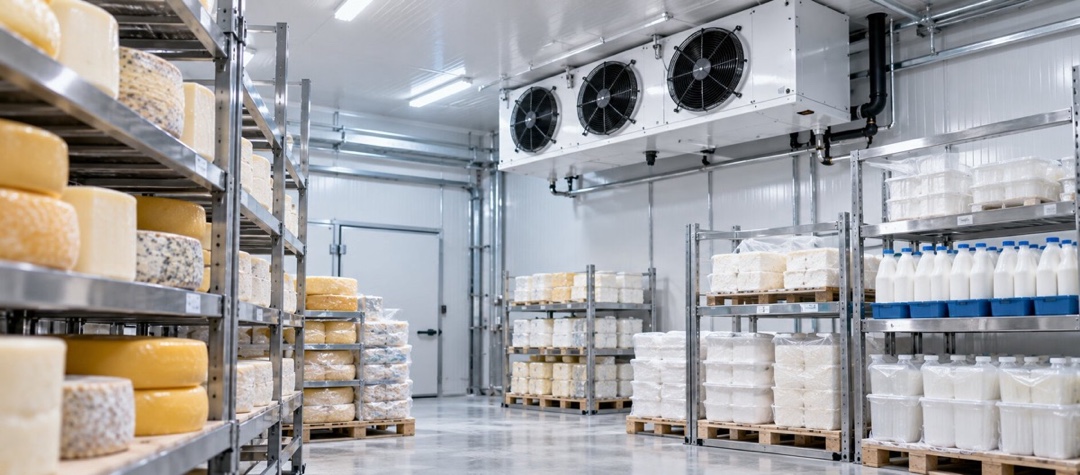
The odor-absorbing tendency of dairy products is a factor that directly affects air circulation design within a warehouse. Non-uniform air distribution can cause odors from different product groups to mix, leading to unwanted flavor transfer, particularly in butter, cream, and certain cheese varieties. Elements worth considering to limit this risk include:
- Holding product groups in separate compartments: Physically separating strongly scented products from other dairy items limits odor transfer.
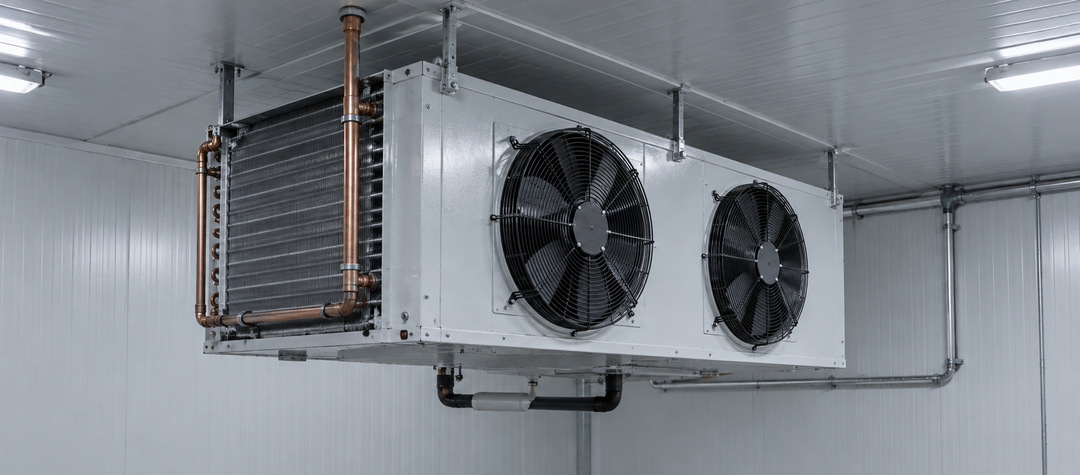
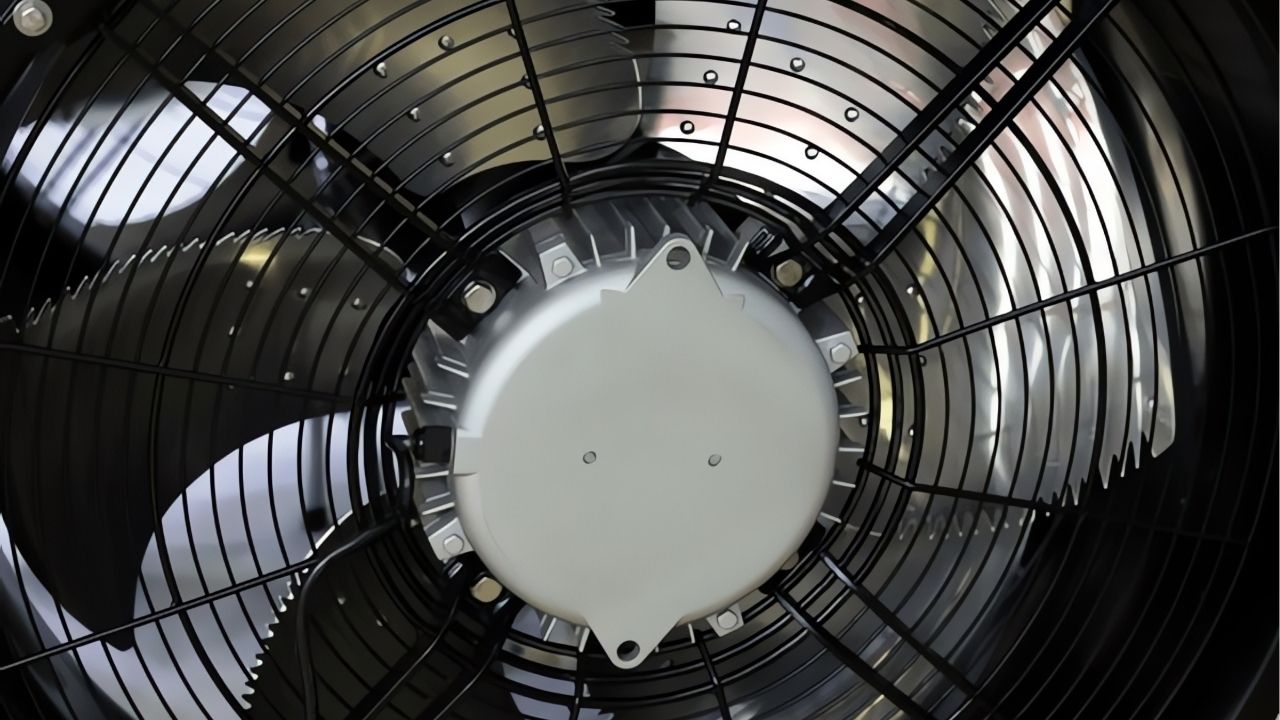
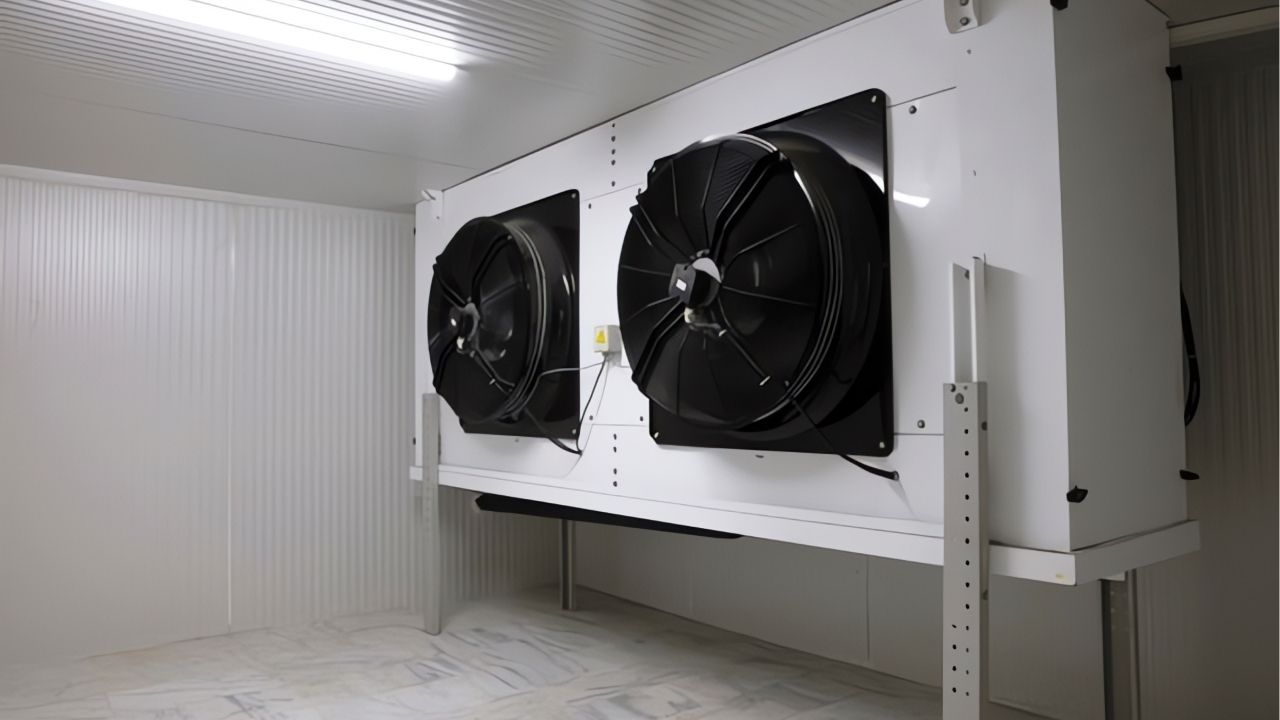
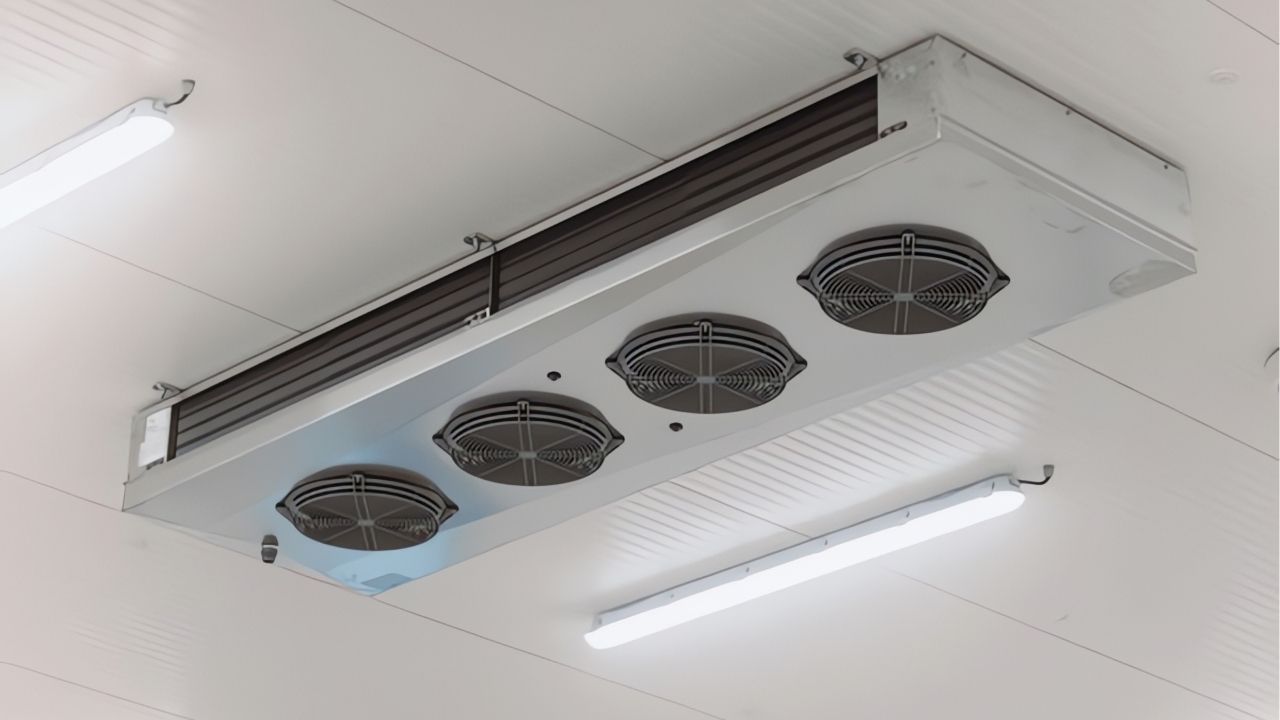
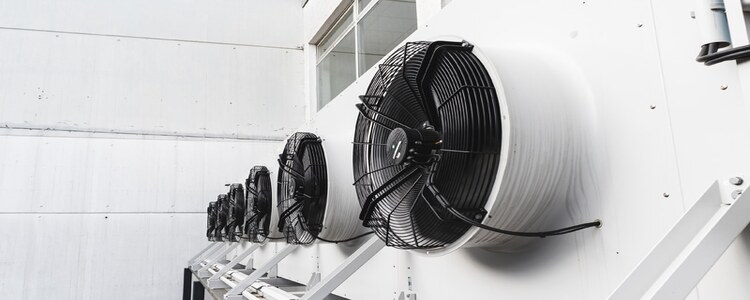
- Fan positioning and throw angle: Ensuring airflow reaches every point of the room evenly prevents local odor buildup.
- Fresh air circulation: Periodic air exchange can prevent accumulated odors from becoming permanently trapped within the storage area.
In warehouses where odor management does not receive sufficient attention, products can experience a noticeable decline in flavor quality even when they appear visually unaffected.
Why Is Hygienic Design Important For Dairy Product Storage?
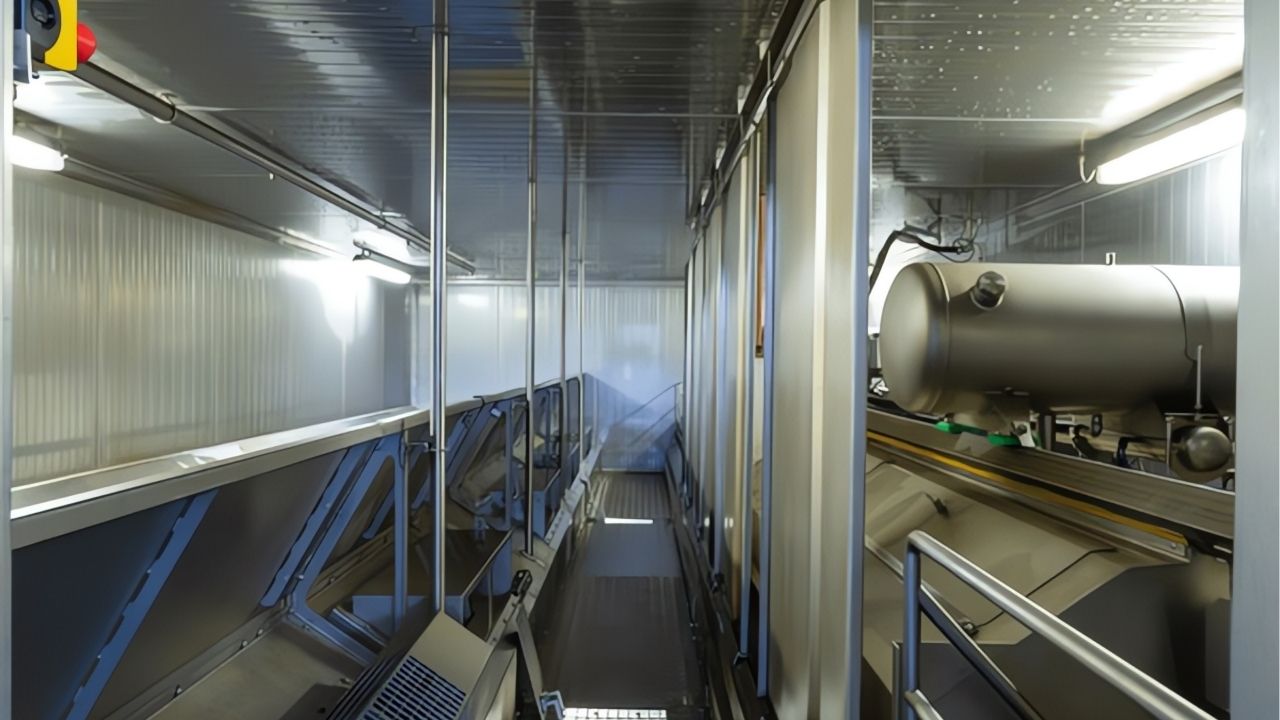
Equipment in direct or indirect contact with dairy products following hygienic design principles is a critical food safety requirement. Notable elements include:
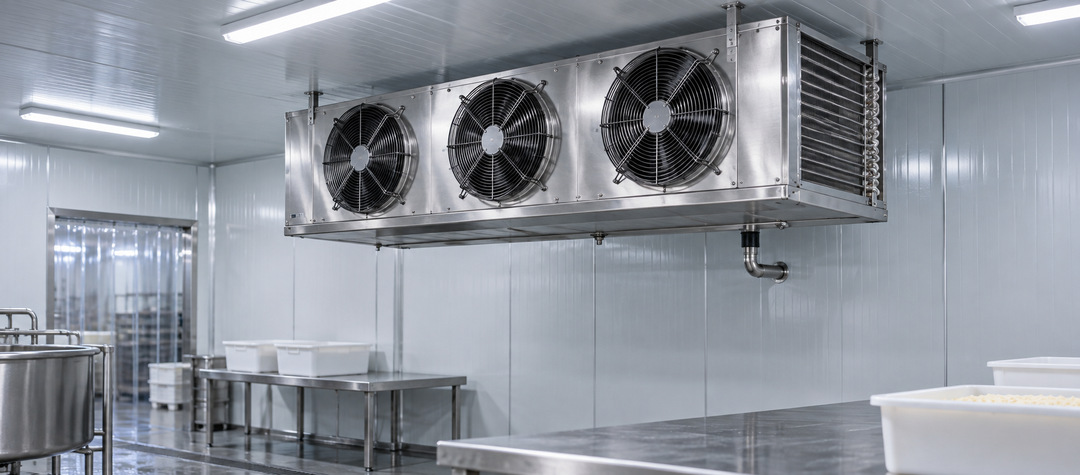
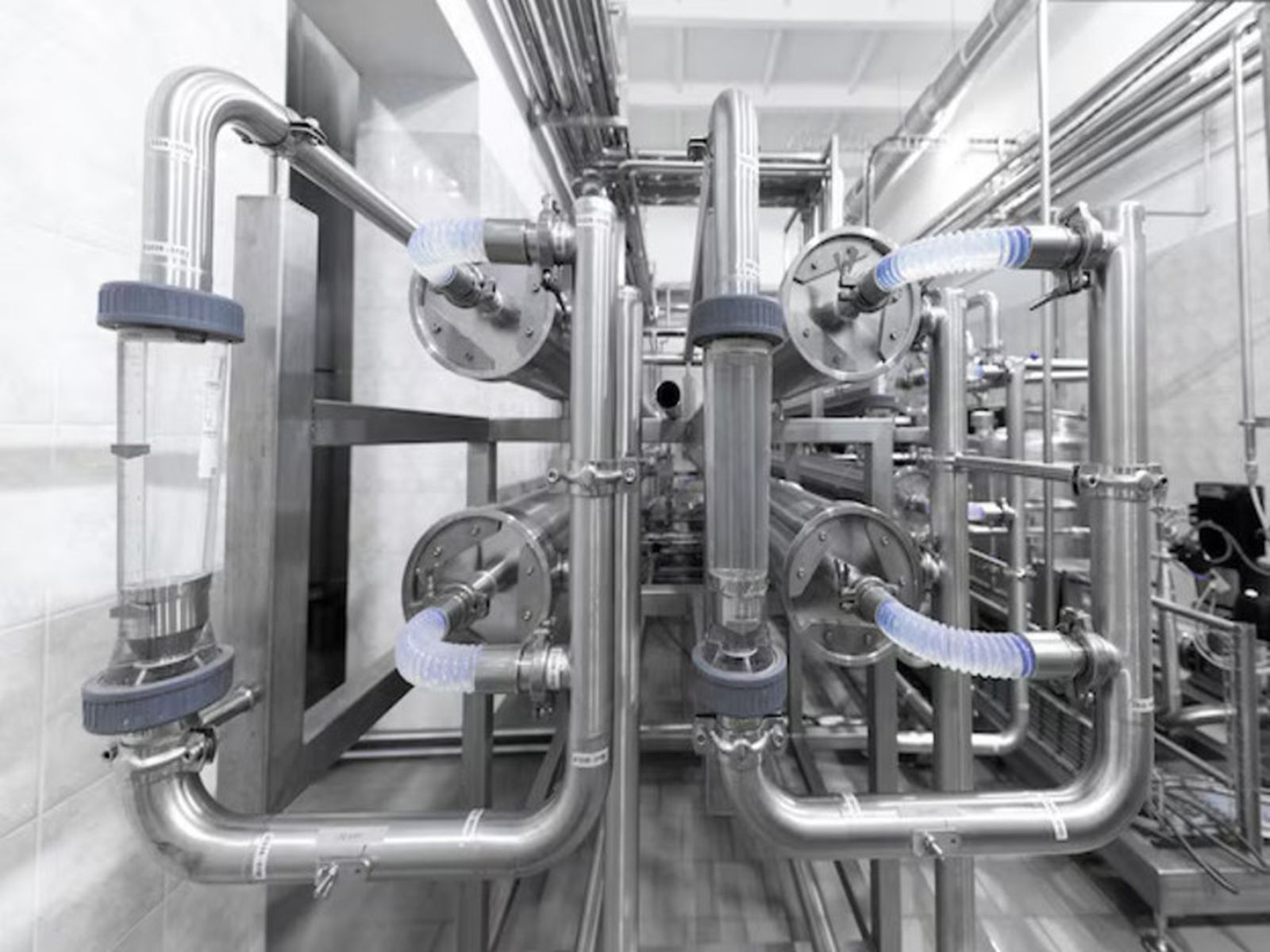
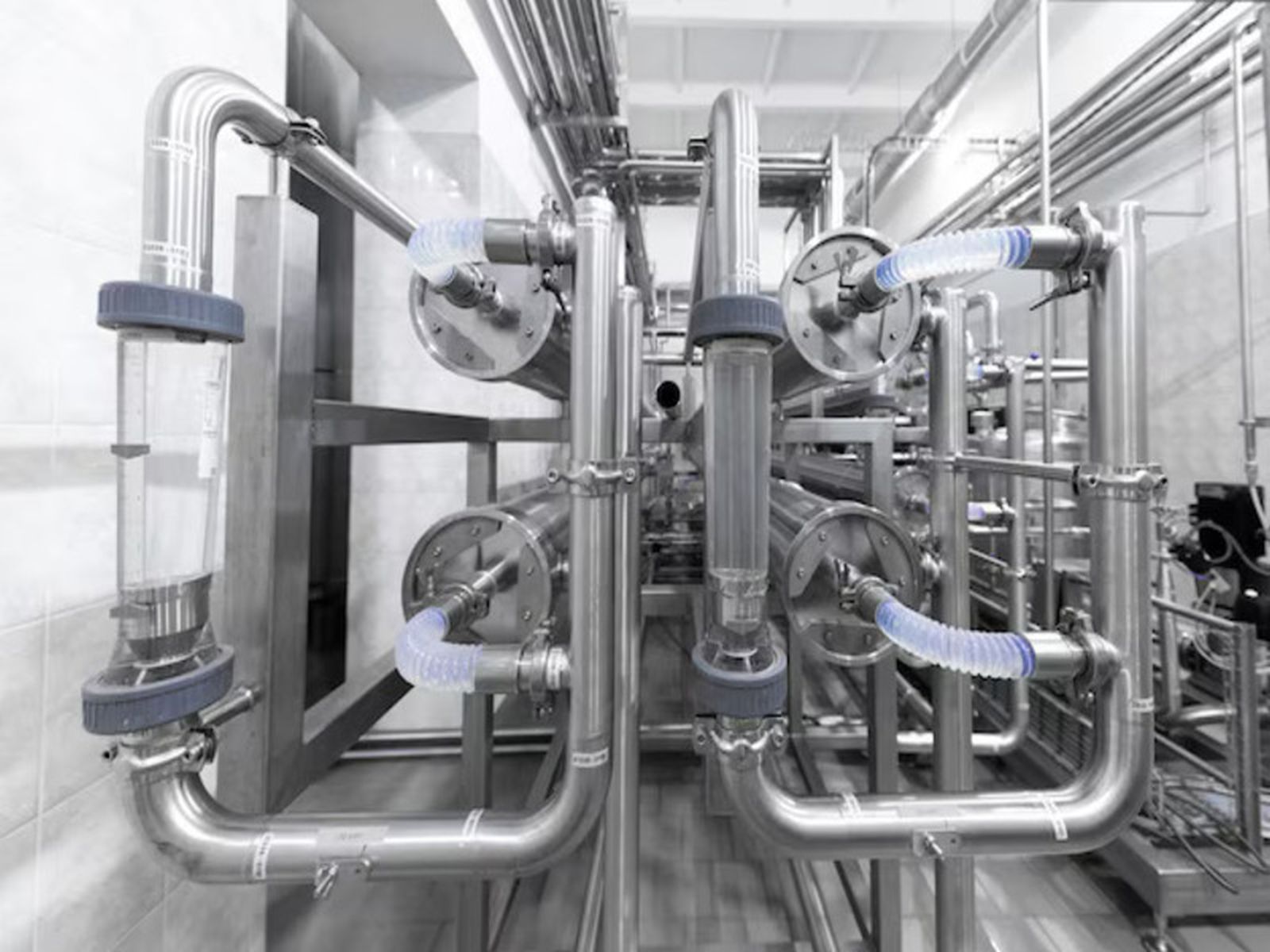
- Stainless surface material: Corrosion-resistant, easily disinfected surfaces are frequently preferred in dairy storage areas.
- Debris-free drip trays: A design that quickly drains condensation water reduces the risk of microbial growth.
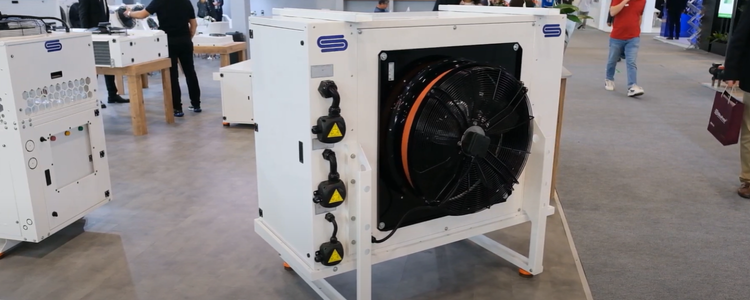
- Easily accessible maintenance points: Components such as the fan and drip tray being easy to clean supports regular hygiene procedures.
An evaporator built to hygienic design principles serves as a positive reference during food safety audits while also strengthening product safety.
Do Packaged And Unpackaged Dairy Products Require Different Approaches?
Packaged products are somewhat protected from direct air contact, so odor and humidity sensitivity are relatively less prominent; however, the temperature stability requirement remains unchanged. For unpackaged or partially packaged products, particularly cheeses in the ripening stage, humidity and airflow control become far more decisive.
For this reason, if a facility stores both packaged and unpackaged products, it is advisable to support these areas with separate evaporator circuits, or at least position them in separate compartments. Meeting two different sensitivity levels optimally with a single evaporator circuit is generally not achievable.
What Steps Should Be Followed To Select The Right Evaporator?
Practical steps that can be followed in the evaporator selection process for dairy product storage can be summarized as follows:
- Clarify the product category and target temperature: Separate temperature requirements should be determined for fresh milk, yogurt, cheese, and other categories.
- Plan the humidity management strategy: Humidity control should be prioritized based on whether the product will be stored packaged or unpackaged.
- Assess odor transfer risk: The need for a separate compartment or circuit should be determined for strongly scented products.
- Clarify the hygiene standard: Material selection should be made in line with the food safety regulations the business is subject to.
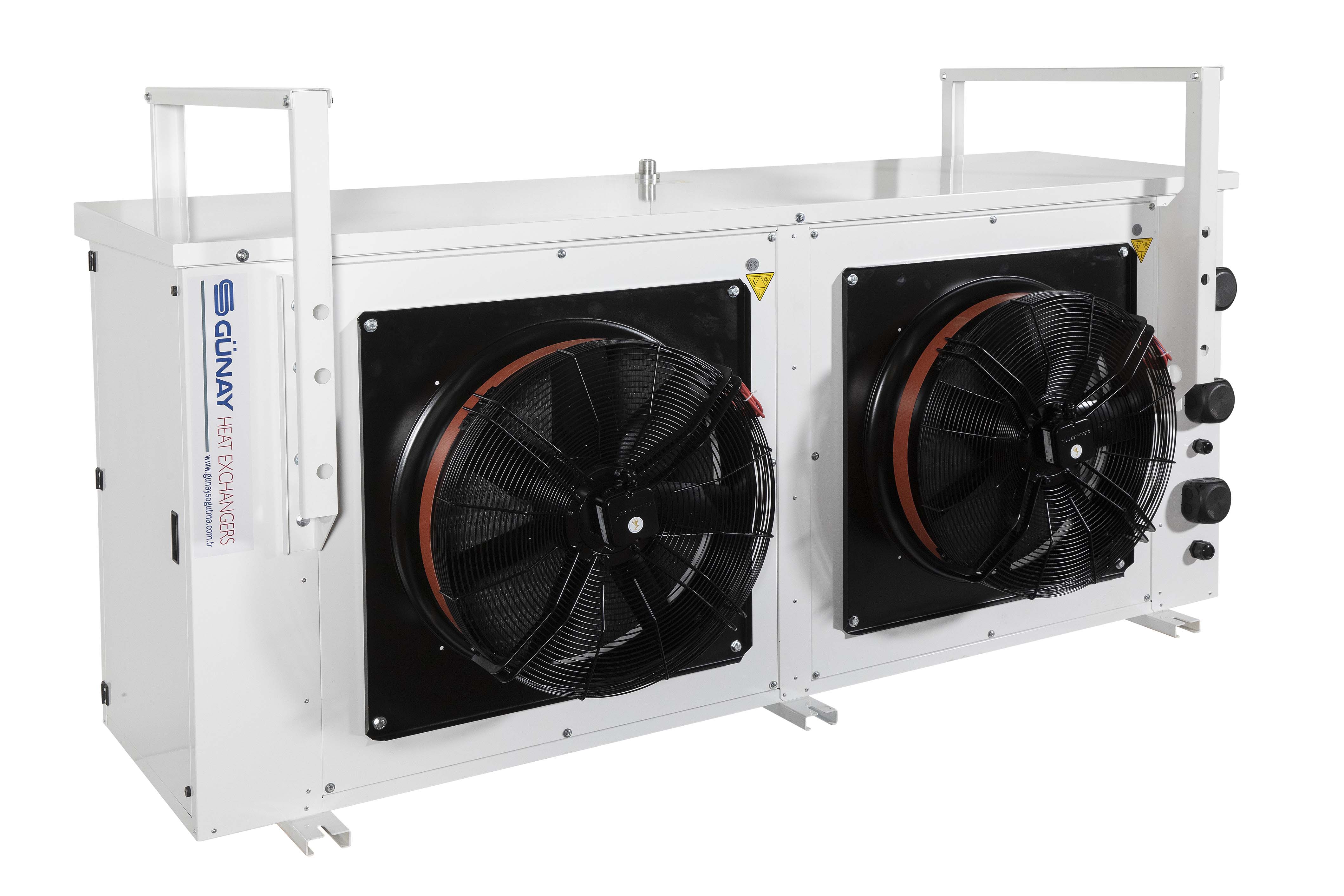
Günay Soğutma offers different capacity and stainless material options suited to the dairy sector, helping determine a solution matched to your facility's requirements. Share your product category and site conditions with our team to request a project-specific recommendation.
Frequently Asked Questions
Can Fresh Milk And Cheese Be Stored In The Same Warehouse?
Even when temperature ranges are close, separate compartments or separate evaporator circuits are recommended to reduce the risk of odor transfer.
What Humidity Range Should Be Targeted In Cheese Ripening Rooms?
The exact range varies by cheese type; a balanced humidity level should generally be the target, avoiding both excessively dry and excessively humid conditions.
How Is Odor Transfer In Dairy Products Noticed?
If an unexpected change in flavor or odor is observed in the products, reviewing the air circulation design and product placement is recommended.
Is A Stainless Evaporator Required In Every Dairy Storage Facility?
Whether it is required depends on the hygiene standard the business is subject to and on site conditions; stainless material is generally preferred in areas with high humidity and frequent disinfection.
Does Humidity Control Matter Less For Packaged Products?
Not entirely; packaging offers the product some protection from direct air contact, but the temperature stability requirement remains unchanged.
How Can I Determine The Right Evaporator For My Facility?
Share your product category, storage conditions, and hygiene standard with our team to request a project-specific technical assessment.