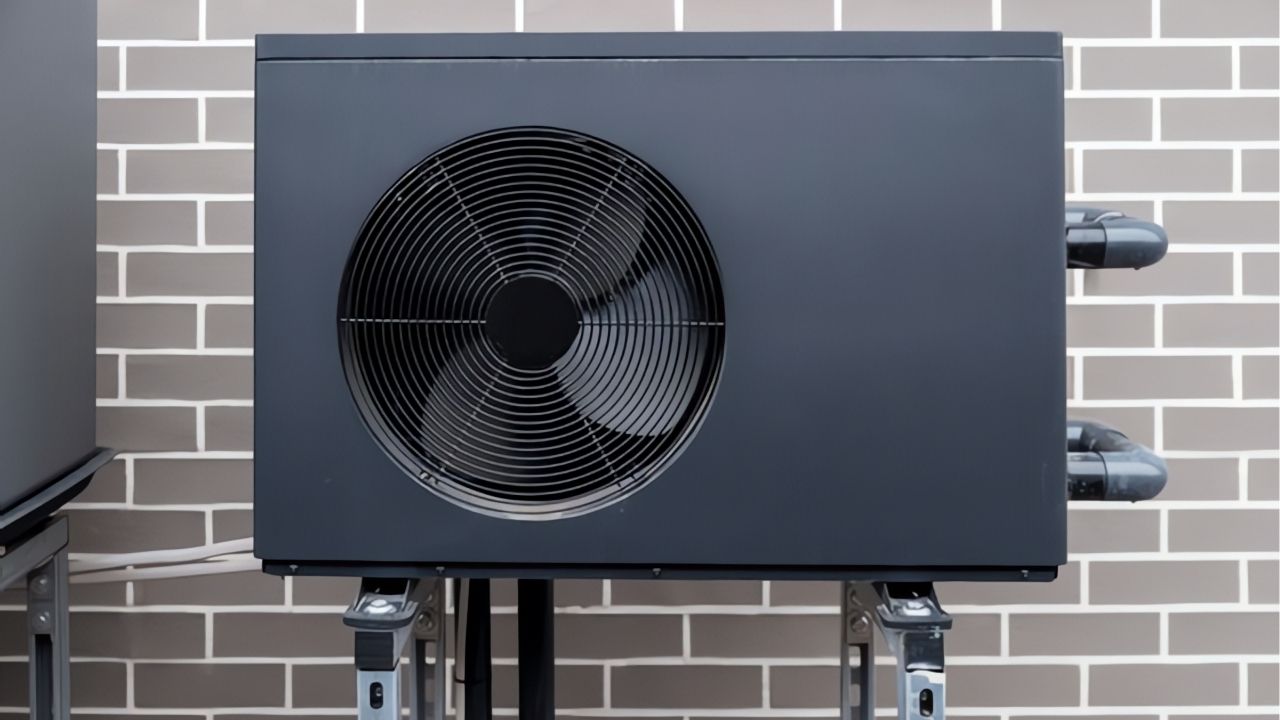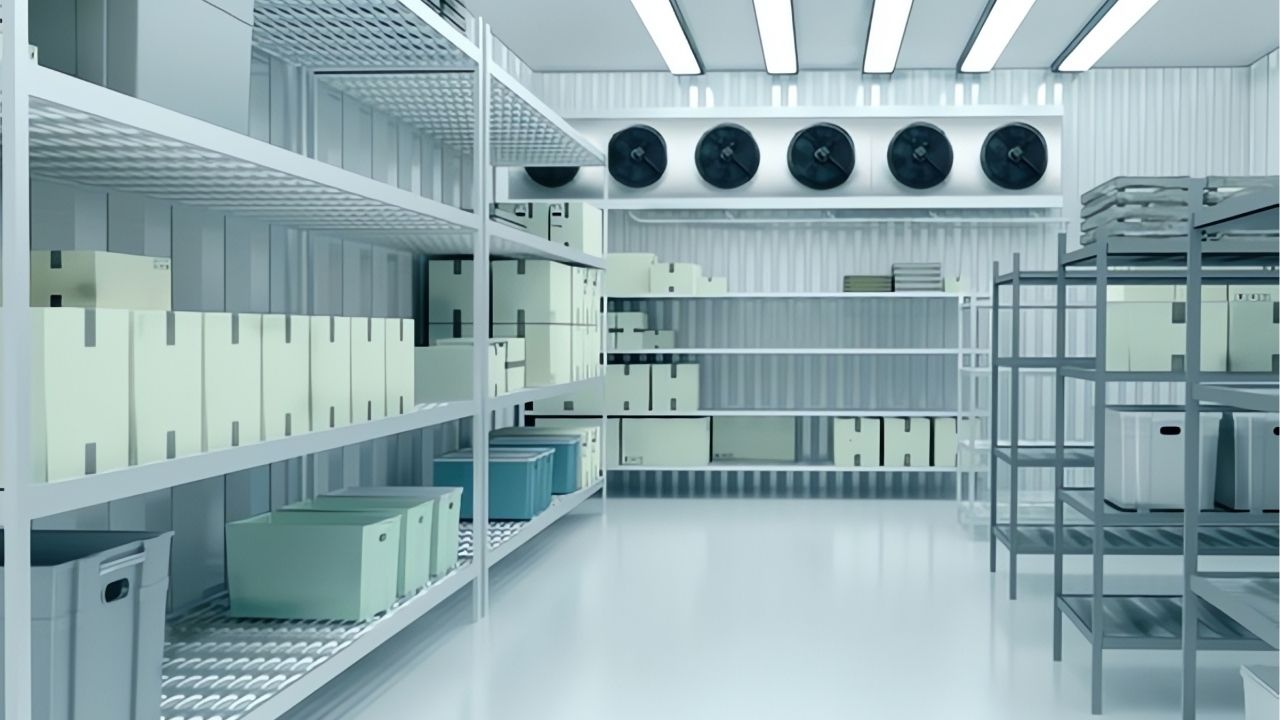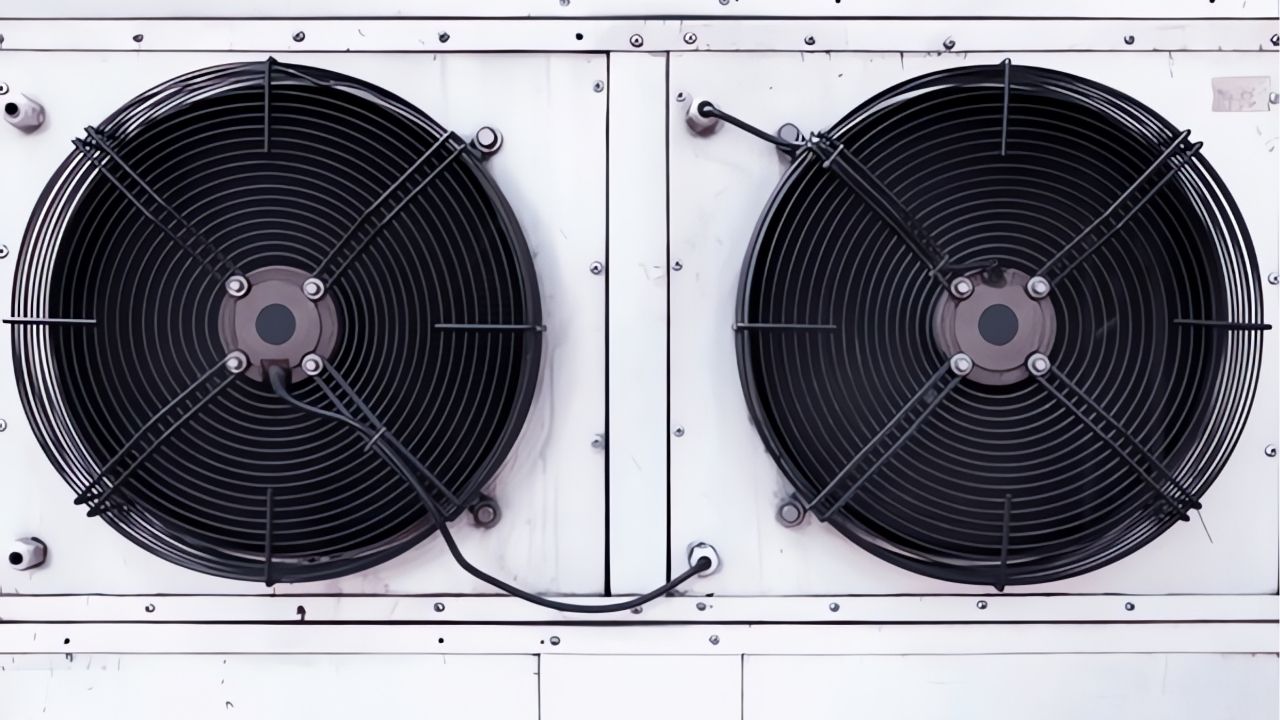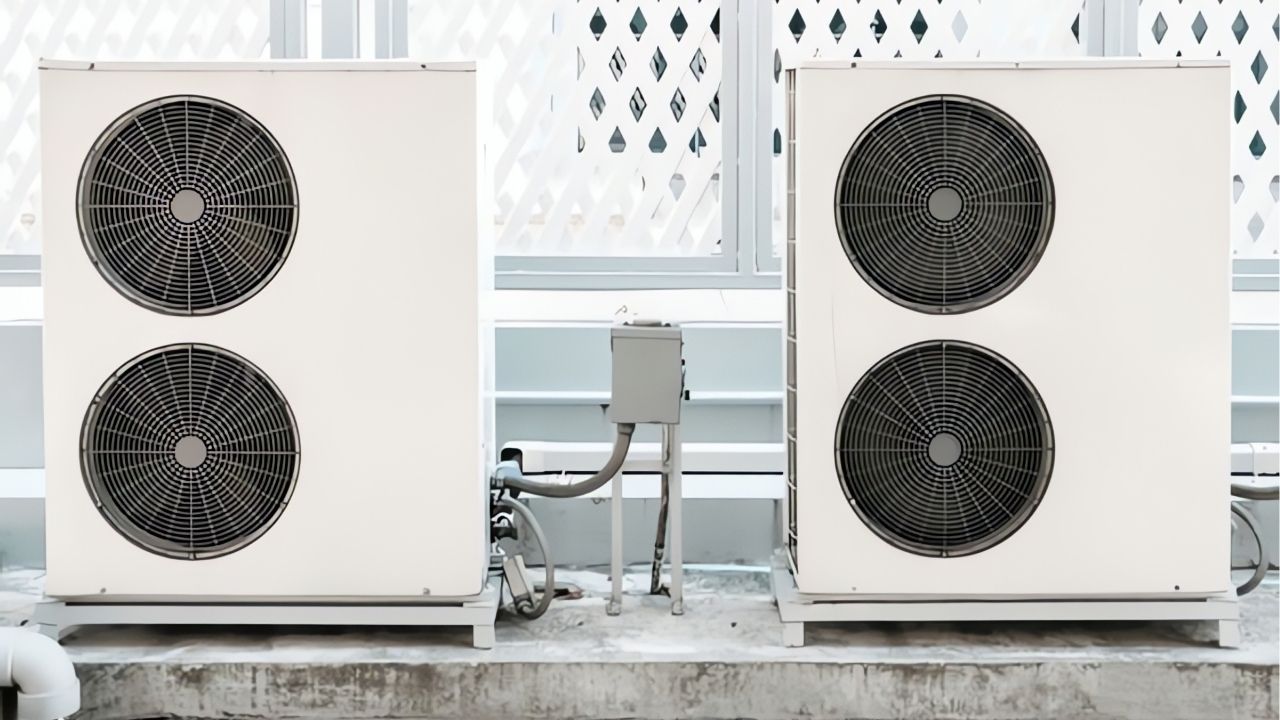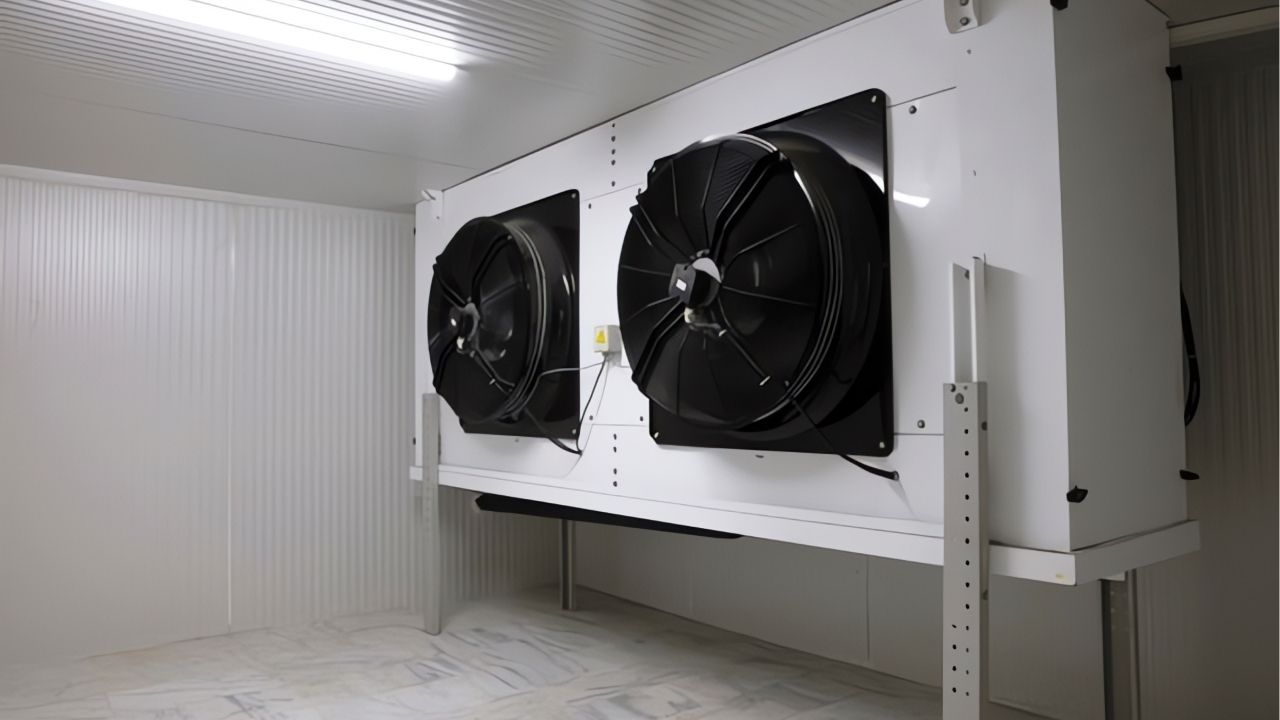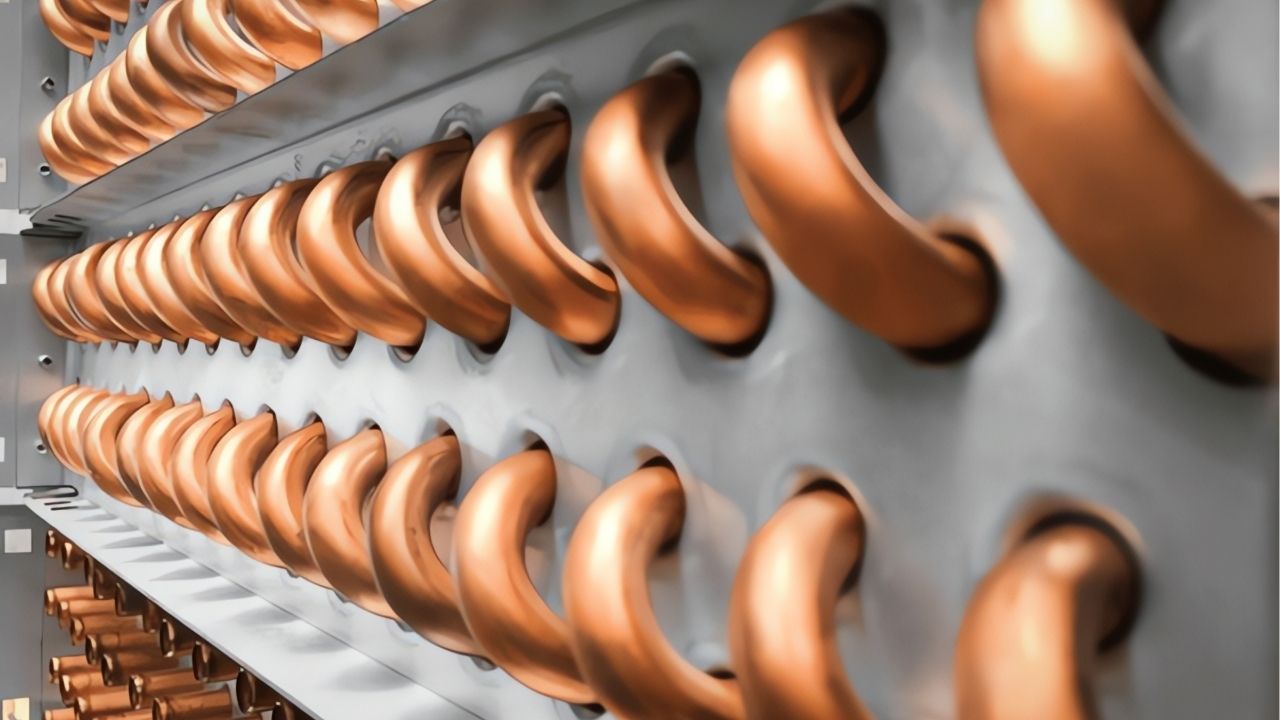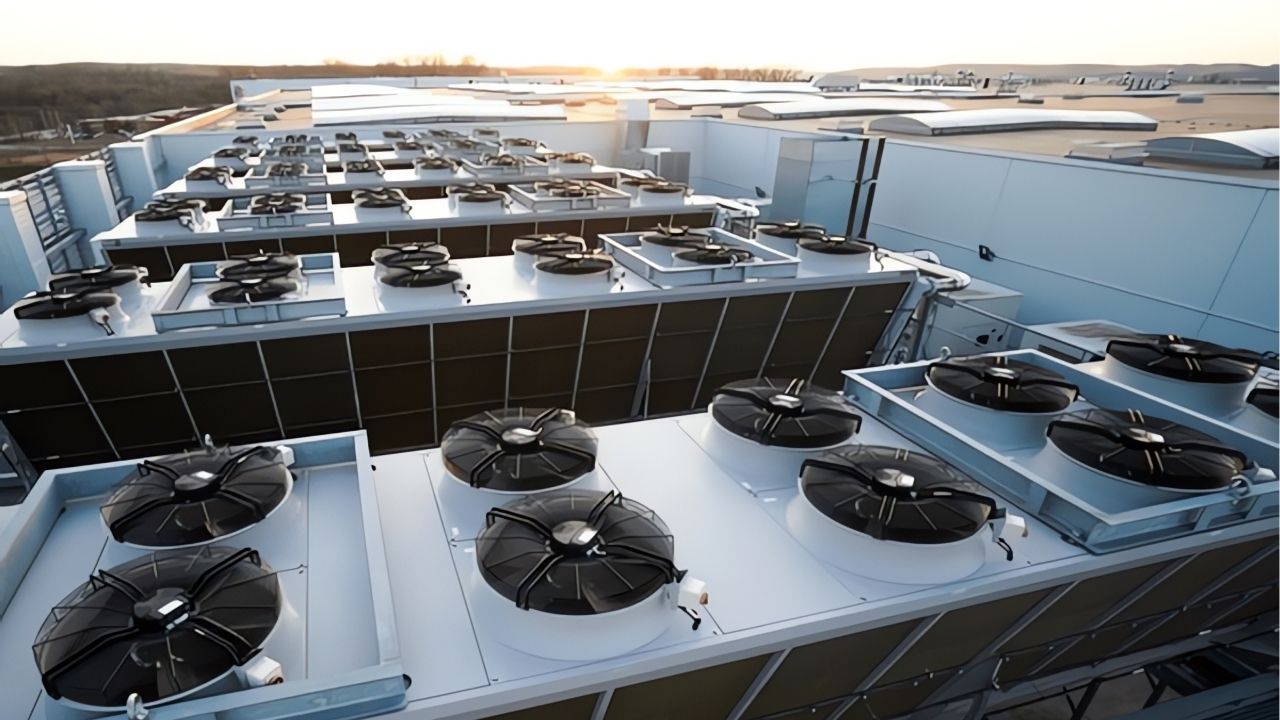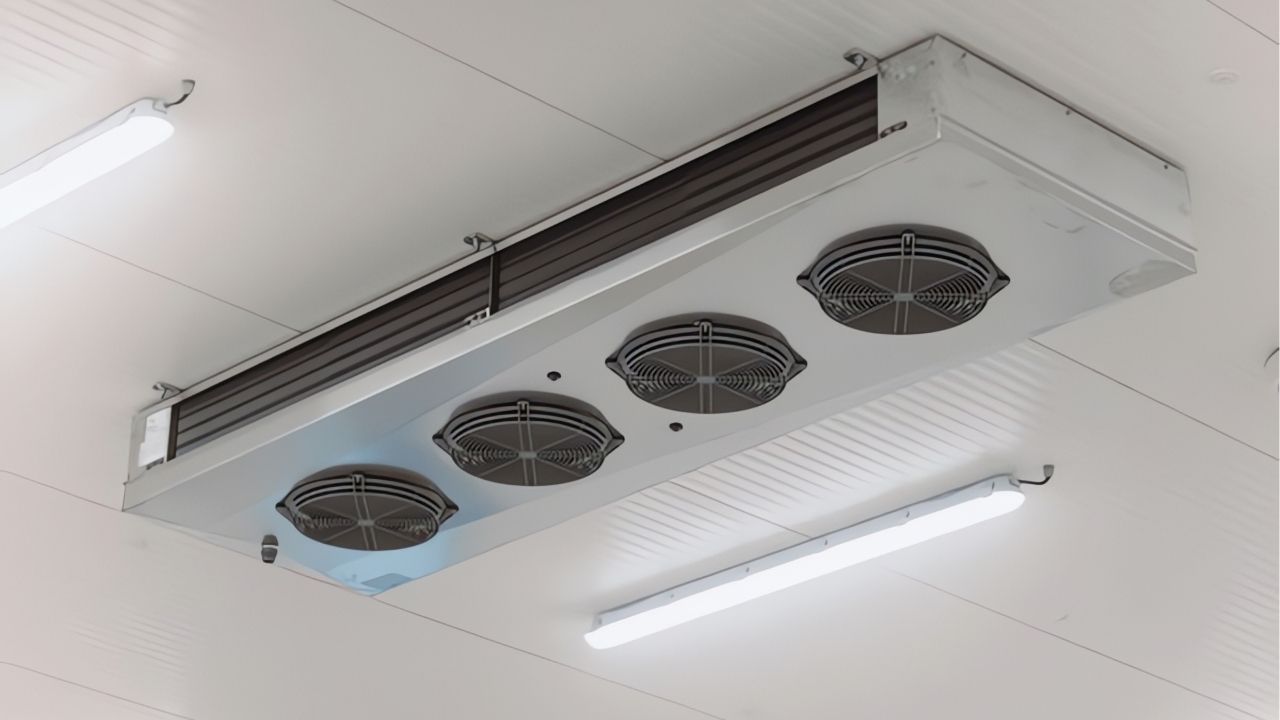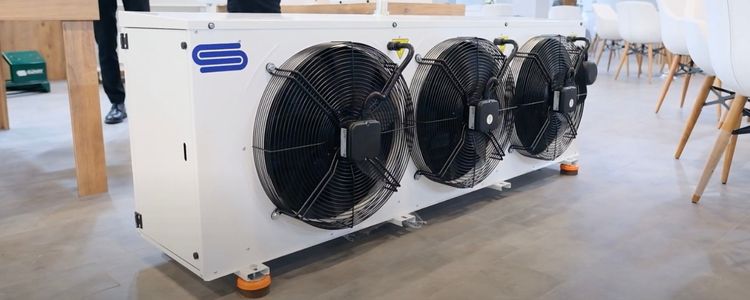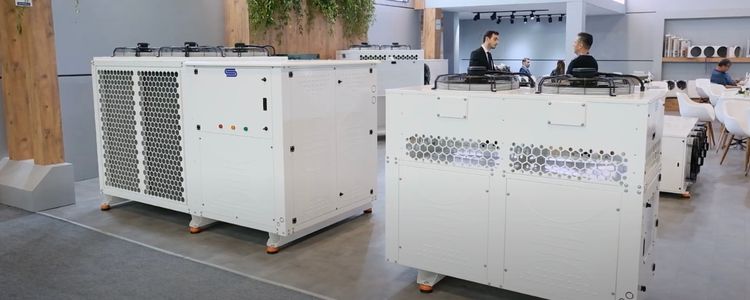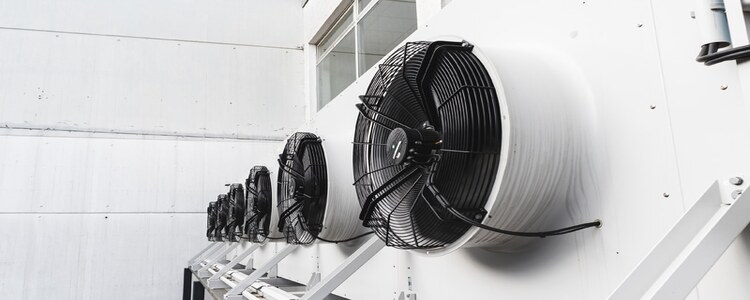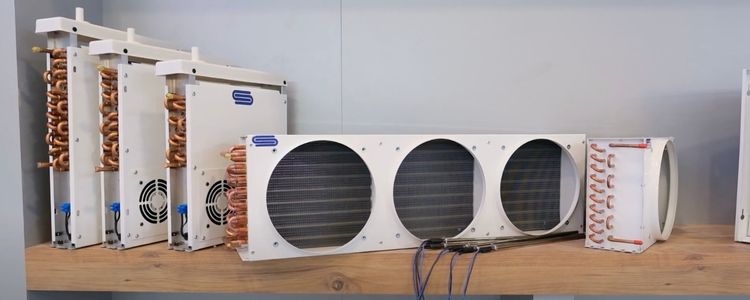


When you see a figure such as "5.0 kW" in an evaporator catalogue, it does not mean the unit will deliver 5.0 kW of cooling in every cold room. A catalogue capacity is a reference value defined for a specific air inlet temperature, evaporating temperature, relative humidity, refrigerant and fan condition. Operate the same unit at a different room temperature, with a different refrigerant or at a different temperature difference, and its capacity changes significantly.
Selecting equipment without understanding these conditions can leave a cold room unable to reach its set point, lead to oversized and unnecessarily expensive equipment, or cause stored products to dry out. This guide explains, step by step, how to read catalogue capacities, which standards they are based on and how to adapt them to your own project. It is written for project engineers, refrigeration contractors, mechanical installation companies and technical purchasing managers.
Table Of Contents
- What Exactly Does The Capacity In An Evaporator Catalogue Show?
- What Does The EN 328 Standard Define For Capacity Rating?
- What Are The SC1, SC2, SC3 And SC4 Standard Conditions?
- How Does DT1 Affect Evaporator Capacity?
- What Is The Difference Between Dry And Wet Capacity?
- How Does The Refrigerant Type Change Catalogue Capacity?
- How Do Fans, Power Supply And Airflow Affect Capacity?
- How Do Frost, Fouling And Installation Reduce Capacity On Site?
- How Do You Adapt A Catalogue Value To Your Own Project?
- How Do You Compare Catalogues From Different Manufacturers Correctly?
- How Should Capacity Data In Günay Catalogues Be Read?
- Frequently Asked Questions
What Exactly Does The Capacity In An Evaporator Catalogue Show?
Evaporator capacity is the amount of heat the unit can remove from the cold room air over a given period, usually expressed in watts (W) or kilowatts (kW). However, it is not a fixed property of the unit. Capacity depends on design features such as coil surface area, tube and fin geometry and airflow, but it also depends directly on the conditions in which the unit operates.
That is why manufacturers always state capacity together with a reference condition. The number in the catalogue is shorthand for a longer sentence: "the stated evaporator removes the stated amount of heat at the stated air temperature, at the stated evaporating temperature, with the stated refrigerant and with the stated fan." Looking only at the number without reading the conditions is like comparing two prices without checking the currency.
To interpret a catalogue capacity correctly, you need answers to four questions:
- For which air inlet temperature and which evaporating temperature is the capacity given?
- Is the value calculated for dry or for humid (wet) conditions?
- Which refrigerant is used as the reference?
- Which fan, which speed and which power supply are assumed?
What Does The EN 328 Standard Define For Capacity Rating?
In Europe and in markets that follow European standards, the performance of forced convection unit air coolers, in other words fan-assisted evaporators, is defined according to EN 328. The standard sets out the test method and the standard conditions under which the capacity of these units is determined. Such alignment allows products from different manufacturers to be compared against the same reference point.
The standard fixes parameters such as air inlet temperature, evaporating temperature, relative humidity and superheat at specific values. When a manufacturer states "according to EN 328" in its catalogue, it indicates that the capacity is given for one of these standard conditions.
There is one distinction worth noting. Some manufacturers determine capacity with calculation software based on EN 328 conditions, while others have their products tested and certified by independent laboratories. Both approaches refer to EN 328 conditions. Knowing how a value was obtained gives decision makers additional assurance when comparing catalogues, particularly on large projects.
What Are The SC1, SC2, SC3 And SC4 Standard Conditions?
EN 328 defines standard conditions, referred to as "SC", for evaporators operating with refrigerants. The four most widely used conditions are shown in the table below:
| Standard Condition | Air Inlet Temperature | Evaporating Temperature | DT1 | Relative Humidity | Typical Application |
|---|---|---|---|---|---|
| SC1 | +10 °C | 0 °C | 10 K | 85% | Air-conditioned processing areas, high temperature storage |
| SC2 | 0 °C | -8 °C | 8 K | 85% | Fresh produce storage, chilled cold rooms |
| SC3 | -18 °C | -25 °C | 7 K | 95% | Frozen product storage |
| SC4 | -25 °C | -31 °C | 6 K | 95% | Deep frozen storage |
The table also reveals the most common mistake made when reading catalogues. The capacity of the same evaporator at SC1 is much higher than its capacity at SC3. At low temperatures, the air carries less heat, the DT1 difference is smaller and the coil works under more demanding conditions.
For example, looking at the SC1 capacity when selecting equipment for a freezer room running at -20 °C will make the unit appear far more powerful than it really is. For sub-zero applications, SC3 or SC4 values provide a more realistic starting point, while SC2 is more appropriate for chilled cold rooms.
How Does DT1 Affect Evaporator Capacity?
DT1 is the difference between the temperature of the air entering the evaporator and the evaporating temperature of the refrigerant. Expressed as a formula: DT1 = Air inlet temperature − Evaporating temperature. That difference is one of the most important factors determining how much heat the coil can remove from the air.
For refrigerants with no glide or only a small glide, capacity is generally accepted to vary roughly in proportion to DT1. A hypothetical example illustrates the point:
- Assume an evaporator has a capacity of 5.0 kW at SC2 (DT1 = 8 K).
- If the same unit operates at a similar room temperature with DT1 = 6 K, its capacity will be approximately 5.0 × 6 / 8 = 3.75 kW.
- At DT1 = 10 K, capacity rises to approximately 6.25 kW.
Such a calculation is a pre-selection tool; for a definitive result, the manufacturer's selection software or correction tables should be used. Even so, the example clearly shows why DT1 matters so much.
DT1 affects not only capacity but also humidity inside the room. A higher DT1 allows the same capacity to be achieved with a smaller evaporator, but more of the moisture in the air condenses and freezes on the coil. That effect lowers the relative humidity in the room, increases moisture loss from unpackaged products and leads to more frequent defrosting. Lower DT1 values are usually preferred for moisture-sensitive products such as fruit, vegetables and unwrapped meat. For packaged products, operating with a higher DT1 can be an economical option.
What Is The Difference Between Dry And Wet Capacity?
When an evaporator cools air, it removes two types of heat. The first is sensible heat, which lowers the air temperature. The second is latent heat, released when moisture in the air condenses or freezes on the coil. Dry capacity accounts only for sensible heat, while wet capacity also includes the moisture load.
That distinction matters most at positive temperatures. Based on coefficients commonly used in the industry, wet capacity at SC1 can be noticeably higher than dry capacity, by roughly one third. At SC2 the difference is smaller. At low temperatures such as SC3 and SC4, the air holds very little moisture, so dry and wet capacities are very close to each other.
In practice, the consequence is that if one catalogue gives wet capacity and another gives dry capacity, you will see different figures even for units of the same size. Always check the footnotes or technical notes of a catalogue to see which humidity condition the capacity is based on.
How Does The Refrigerant Type Change Catalogue Capacity?
Catalogue capacities are usually given for a single reference refrigerant. For many years that reference has been R404A, and many manufacturers' catalogues are still based on R404A values. When a different refrigerant is used, its thermodynamic properties differ, so the capacity changes as well.
The difference appears in two ways:
- Heat transfer properties of the refrigerant: Under the same conditions, some refrigerants deliver slightly lower capacity than R404A. Manufacturers show that difference through refrigerant-specific correction factors.
- Temperature glide: In refrigerant blends, evaporation does not take place at a single temperature but across a temperature range. In such cases, whether "evaporating temperature" refers to the mean temperature or to the dew point directly affects the calculated capacity.
If your project will use a refrigerant other than R404A, the safest approach is to ask the manufacturer for a selection carried out for that refrigerant, rather than using the catalogue value directly. With refrigerant transitions accelerating, such verification has become especially important when upgrading existing facilities.
How Do Fans, Power Supply And Airflow Affect Capacity?
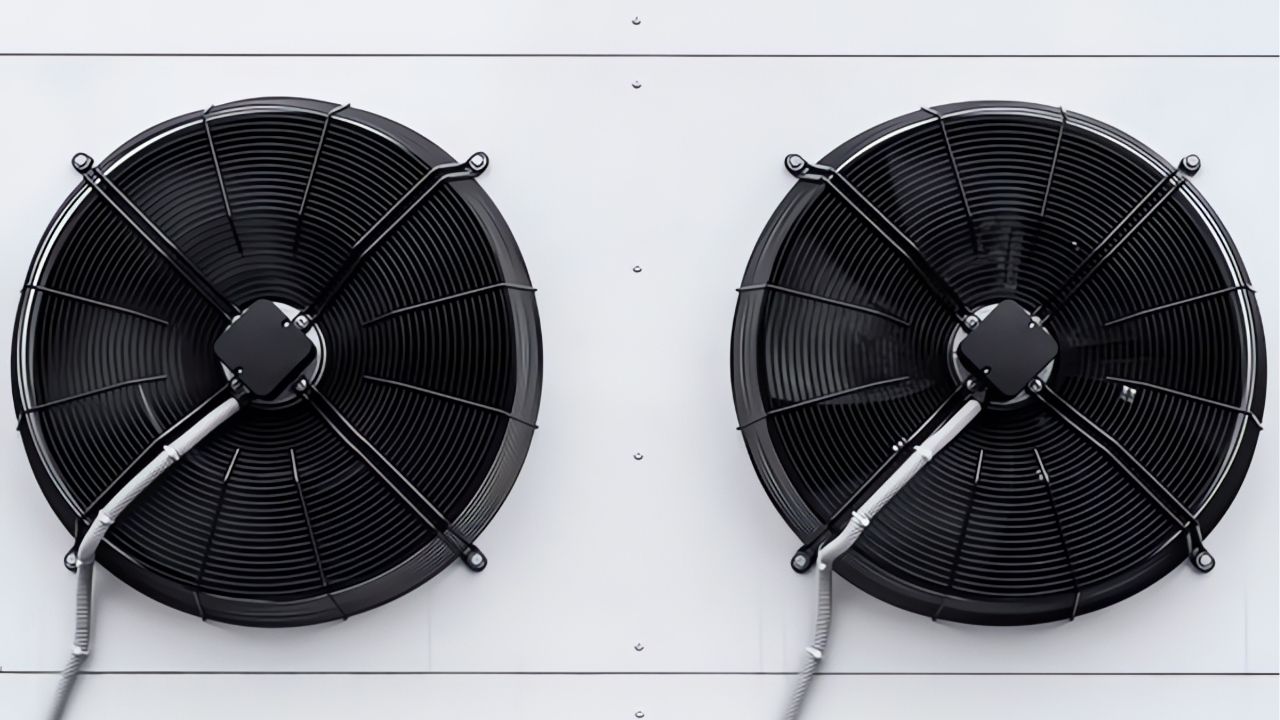
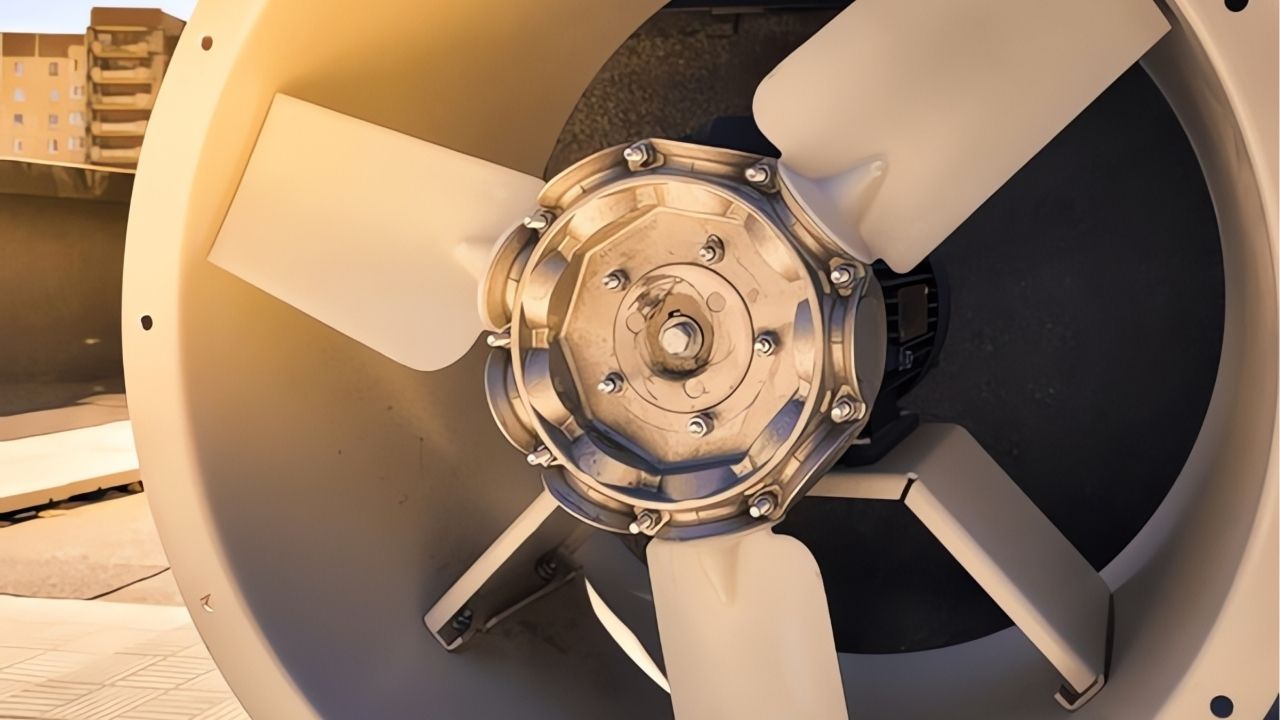
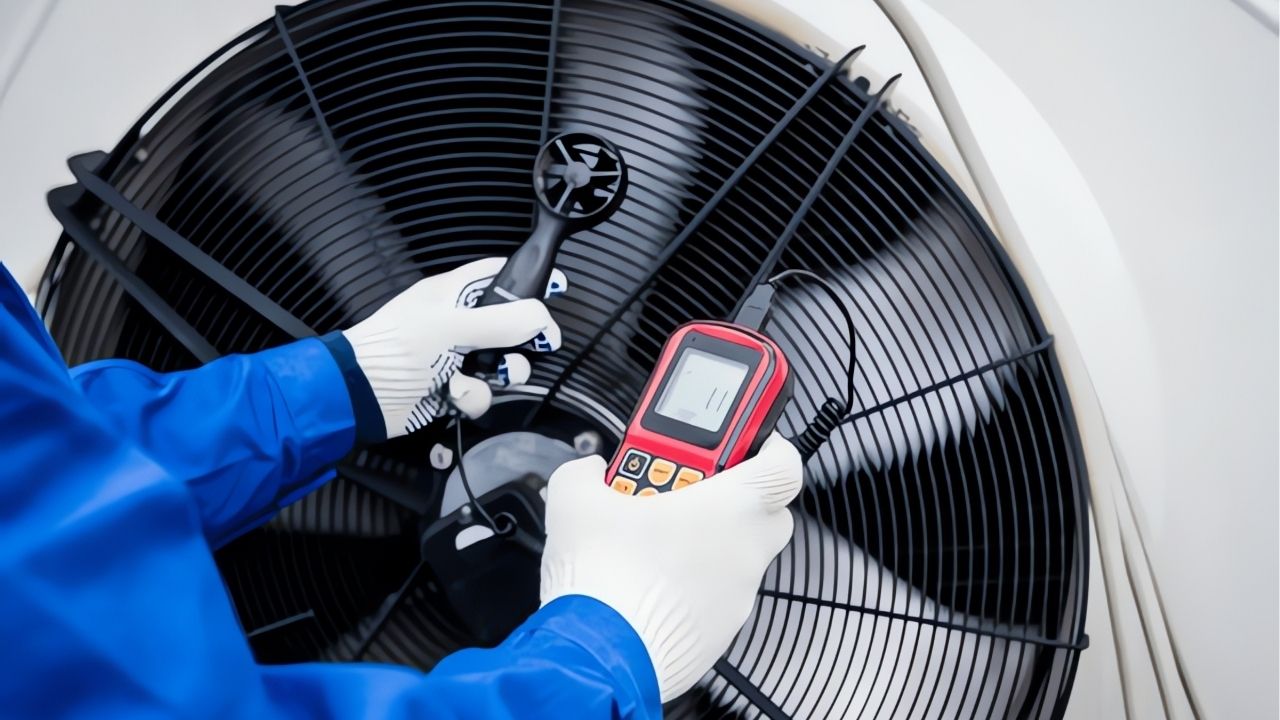
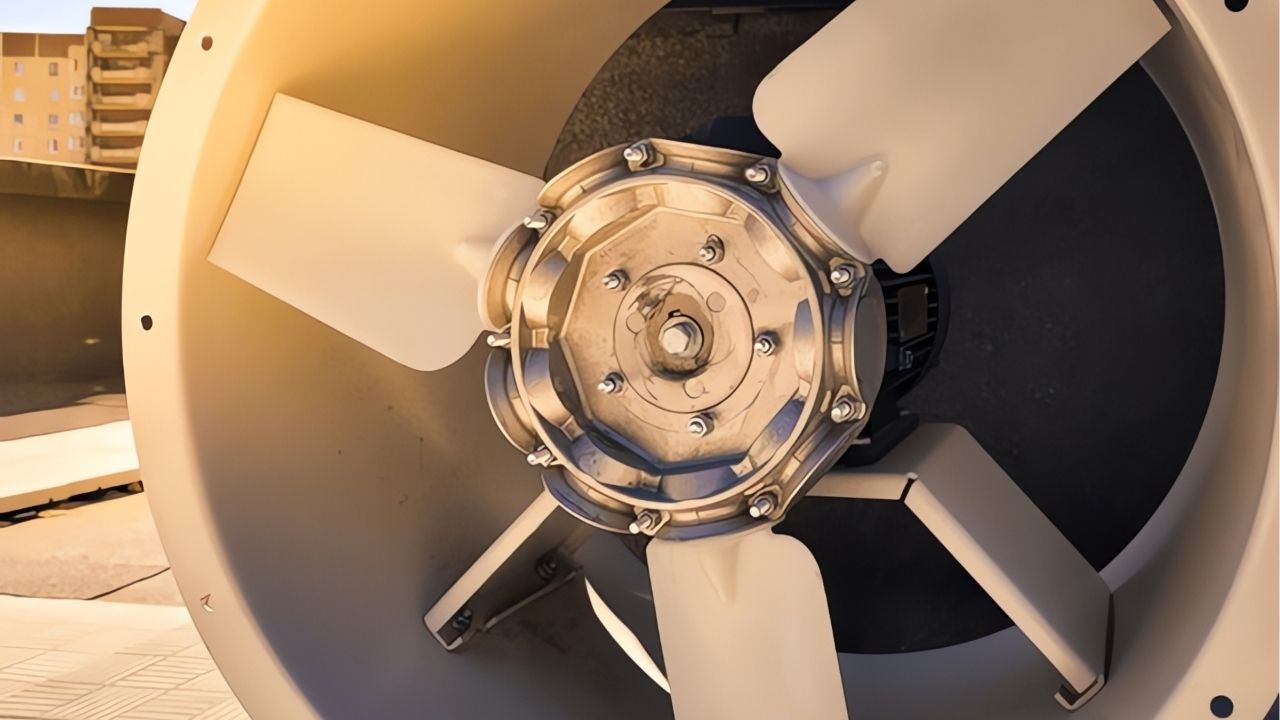
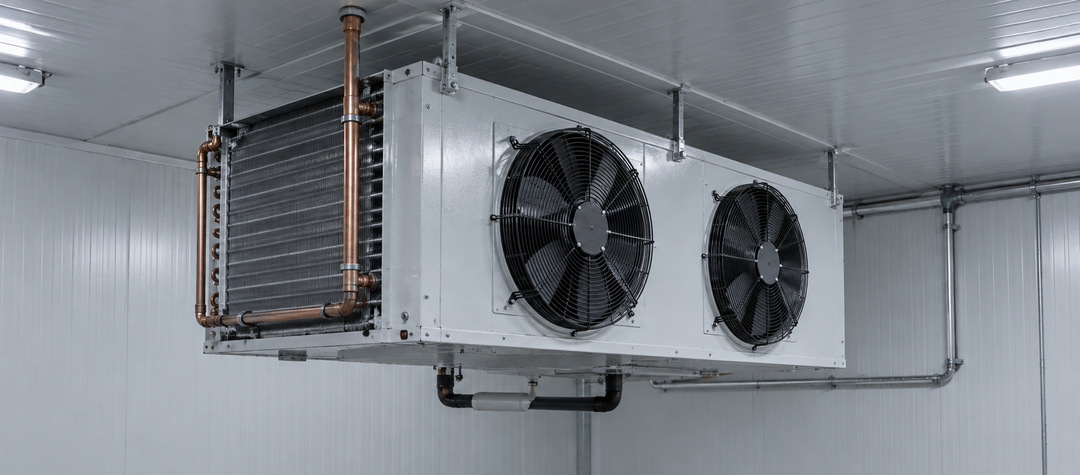
In a fan-assisted evaporator, capacity is directly linked to the volume of air passing through the coil. Catalogue values are calculated on the assumption of a specific fan model, fan diameter, speed and power supply. If any of those assumptions change, airflow changes, and so does capacity.
Common situations on site include:
- A different fan model: If a fan with different characteristics replaces the one specified in the catalogue, airflow and pressure change.
- A different mains frequency: When a unit rated for 50 Hz operates on a 60 Hz supply, fan speed changes. Such a shift affects airflow, sound level and motor load.
- Speed control: Reducing fan speed can bring energy and noise benefits, but capacity decreases accordingly.
- Obstructions in the air path: Racks, pallets or air ducts increase the resistance the fan must overcome, pushing actual airflow below the catalogue value.
Air throw is usually listed separately in the catalogue. Even if capacity is sufficient, warm spots will form if the air cannot reach the far corners of the room, and product temperatures will become uneven.
How Do Frost, Fouling And Installation Reduce Capacity On Site?
Catalogue values apply to a clean coil under standard laboratory conditions. Actual capacity on site can fall below that value over time for several reasons.
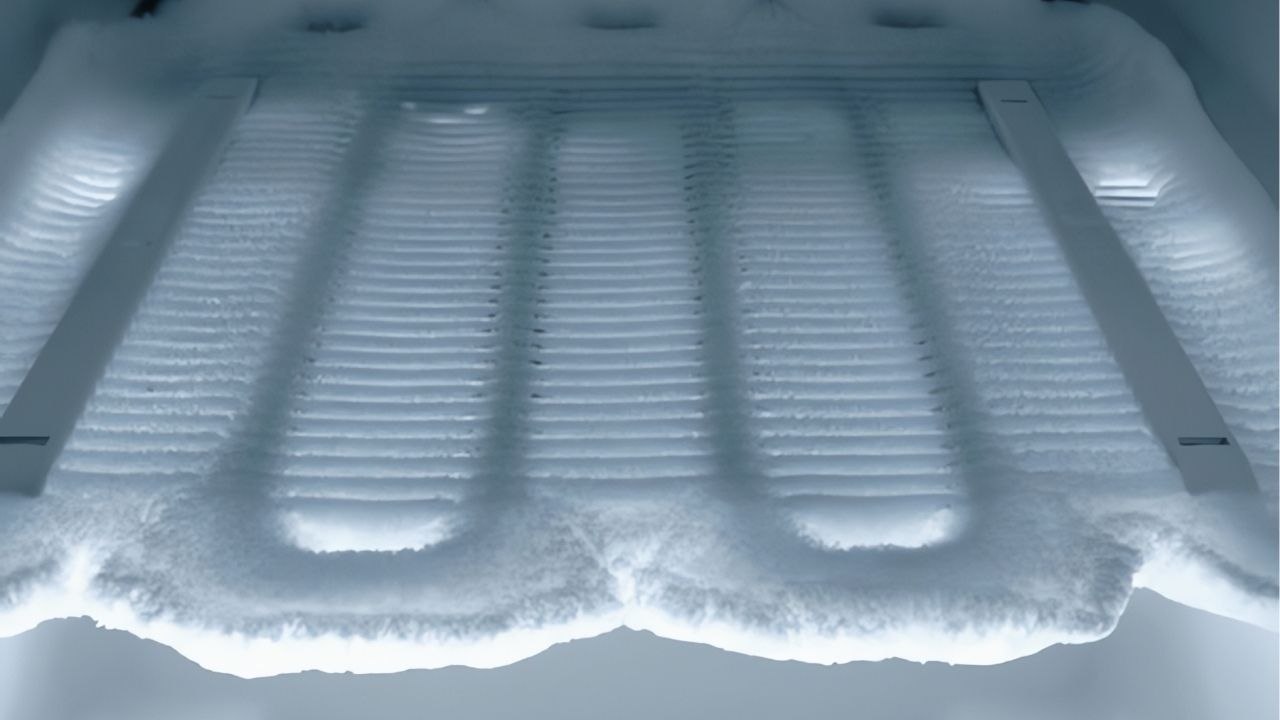
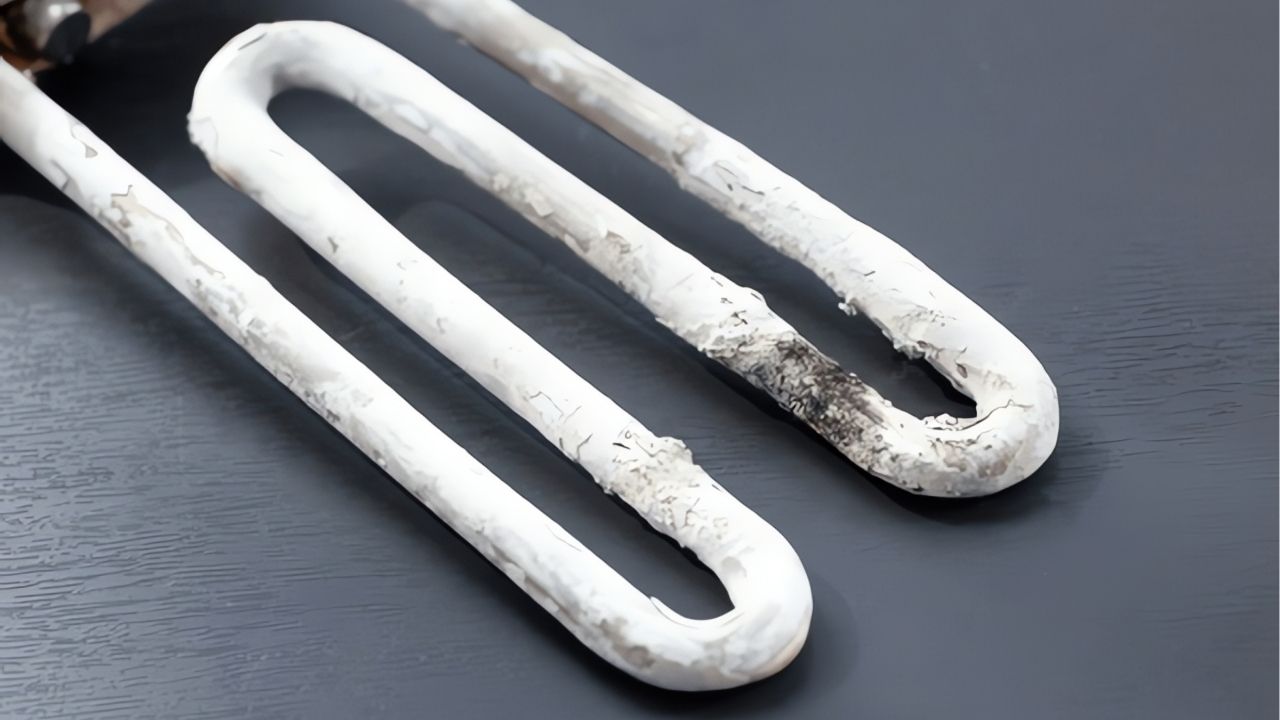
- Frost build-up: At sub-zero temperatures, the layer of frost that forms on the fins narrows the air passages and weakens heat transfer. The longer the interval between defrosts, the greater the capacity loss.
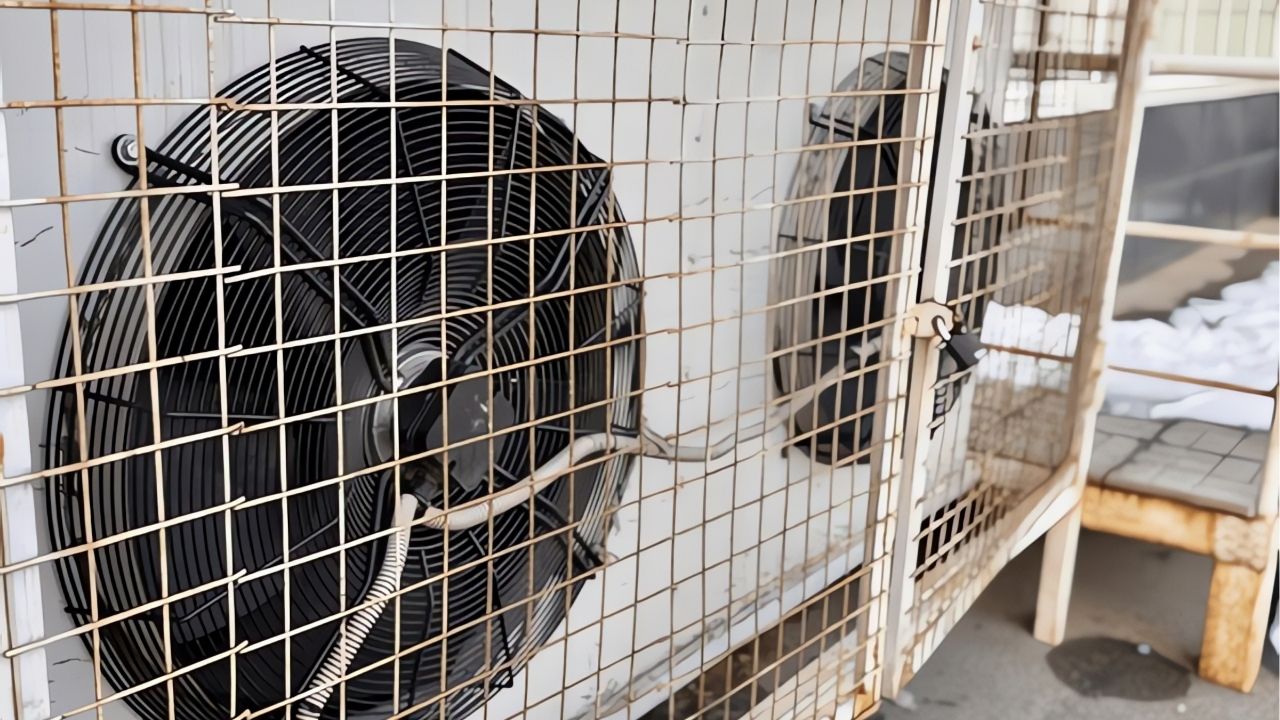
- Fouling and dust: Particularly in processing areas, dirt and grease that accumulate on the fins effectively reduce the heat transfer surface of the coil.
- Incorrect positioning: Placing an evaporator above a door, installing it with the suction side too close to a wall, or allowing racks to interrupt airflow prevents the unit from delivering its catalogue capacity.
- Piping and adjustment errors: An incorrectly set expansion valve, insufficient refrigerant charge or unsuitable pipe sizes reduce evaporator efficiency.
For that reason, selection should not aim merely for "enough" capacity but should include a safety margin suited to operating conditions. The size of that margin should depend on the product type, door opening frequency and defrost strategy.
How Do You Adapt A Catalogue Value To Your Own Project?
The following steps can be used to adapt a catalogue capacity to a project:
- Determine the heat load: Calculate the total cooling requirement based on room dimensions, insulation, product quantity and entry temperature, door openings, lighting and personnel.
- Define room temperature and target humidity: The stored product determines the required relative humidity and a suitable DT1 range.
- Set the evaporating temperature: Subtract the selected DT1 from the room temperature to find the evaporating temperature.
- Choose the closest standard condition: Use the SC condition that best matches your application as a reference.
- Apply corrections: Use the manufacturer's correction factors for DT1, refrigerant, dry or wet capacity and fan conditions.
- Add a safety margin: Leave a reasonable margin for frost, fouling and operational uncertainty.
- Verify the selection: Where possible, check the result with the manufacturer's selection program or technical team.
These steps significantly reduce the risk of incorrect selection, especially in projects where several evaporators serve the same room or where custom-sized units are required.
How Do You Compare Catalogues From Different Manufacturers Correctly?
The most common mistake in purchasing is placing capacity values from different catalogues side by side without checking their conditions. The checklist below supports a fair comparison:
| Checkpoint | Why It Matters |
|---|---|
| Standard condition (SC1, SC2, SC3, SC4) | Capacities given under different conditions cannot be compared directly. |
| DT1 value | Capacity changes roughly in proportion to DT1. |
| Dry or wet capacity | At positive temperatures, the difference can be large. |
| Reference refrigerant | Different refrigerants deliver different capacities. |
| Fan model, speed and power supply | Airflow directly affects capacity. |
| Coil surface area and fin spacing | These determine long-term performance and frosting behaviour. |
| Air throw | Shows whether uniform cooling will be achieved across the room. |
| How the capacity was obtained | Calculated and independently tested values offer different levels of assurance. |
If even one of these criteria differs, the capacity gap between two quotations may not reflect a real performance difference. For technical purchasing managers, the most practical approach is to ask every supplier to make a selection based on the same project conditions.
How Should Capacity Data In Günay Catalogues Be Read?
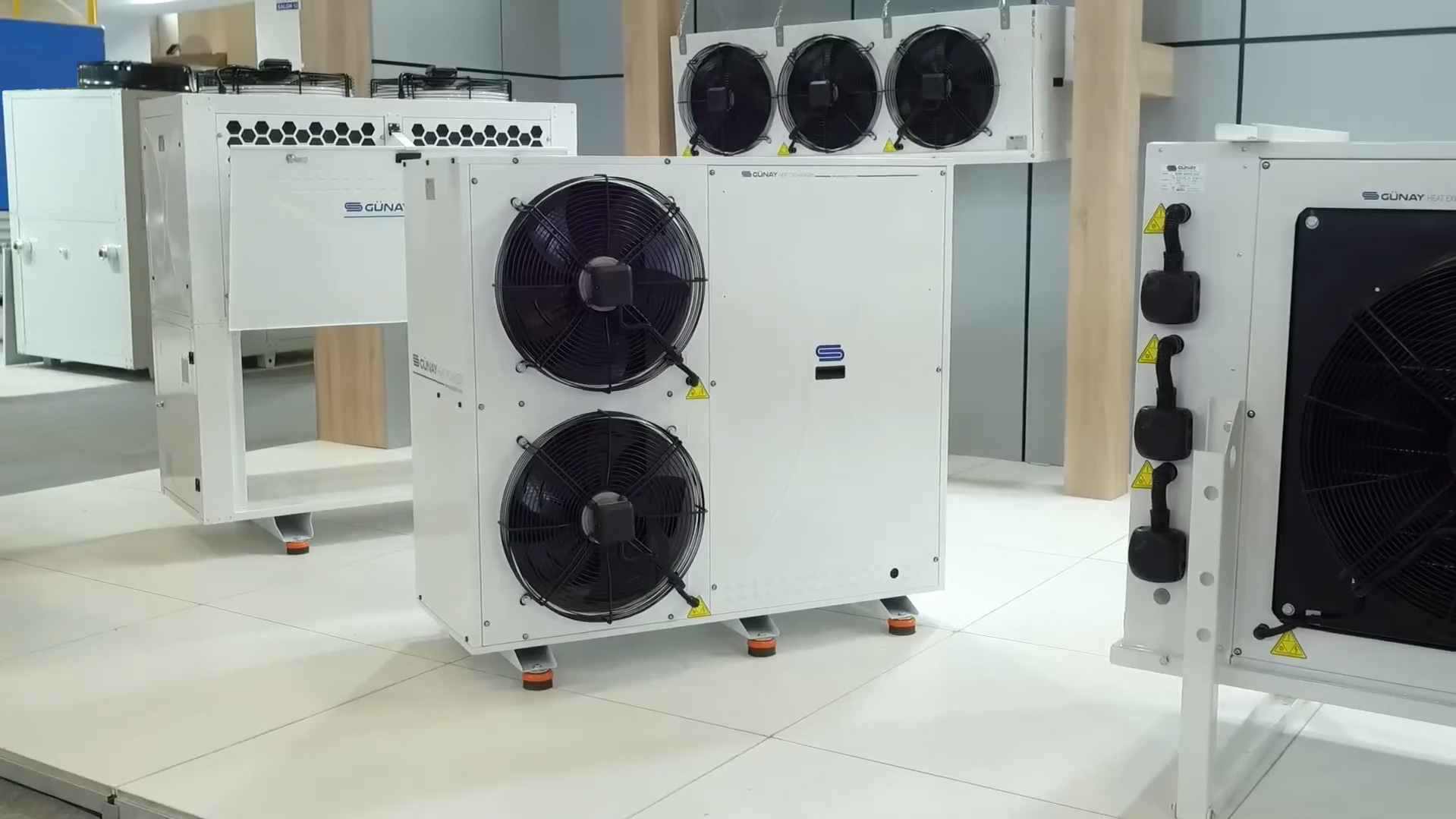
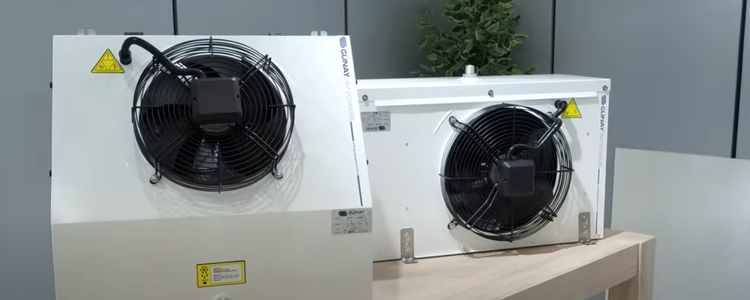
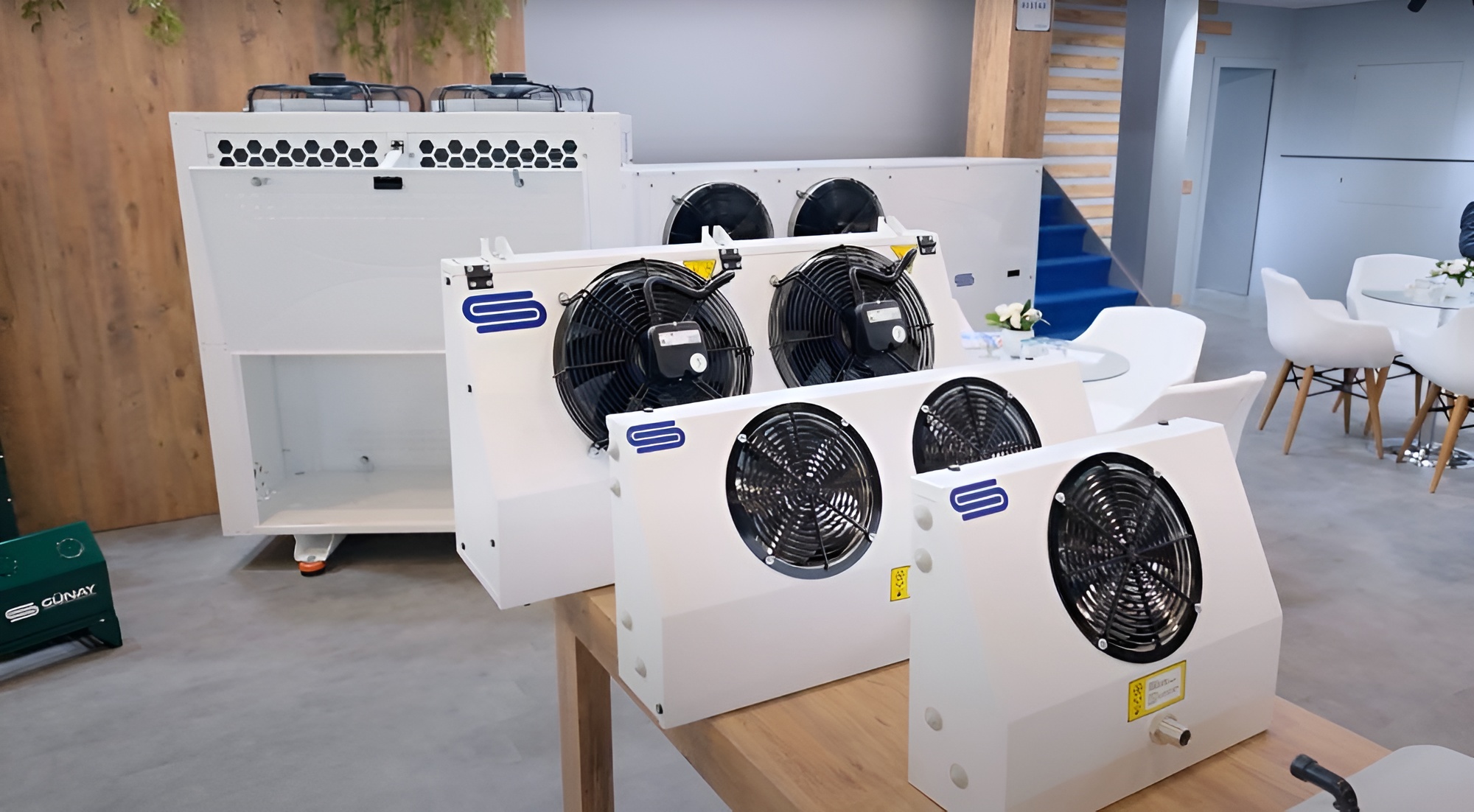
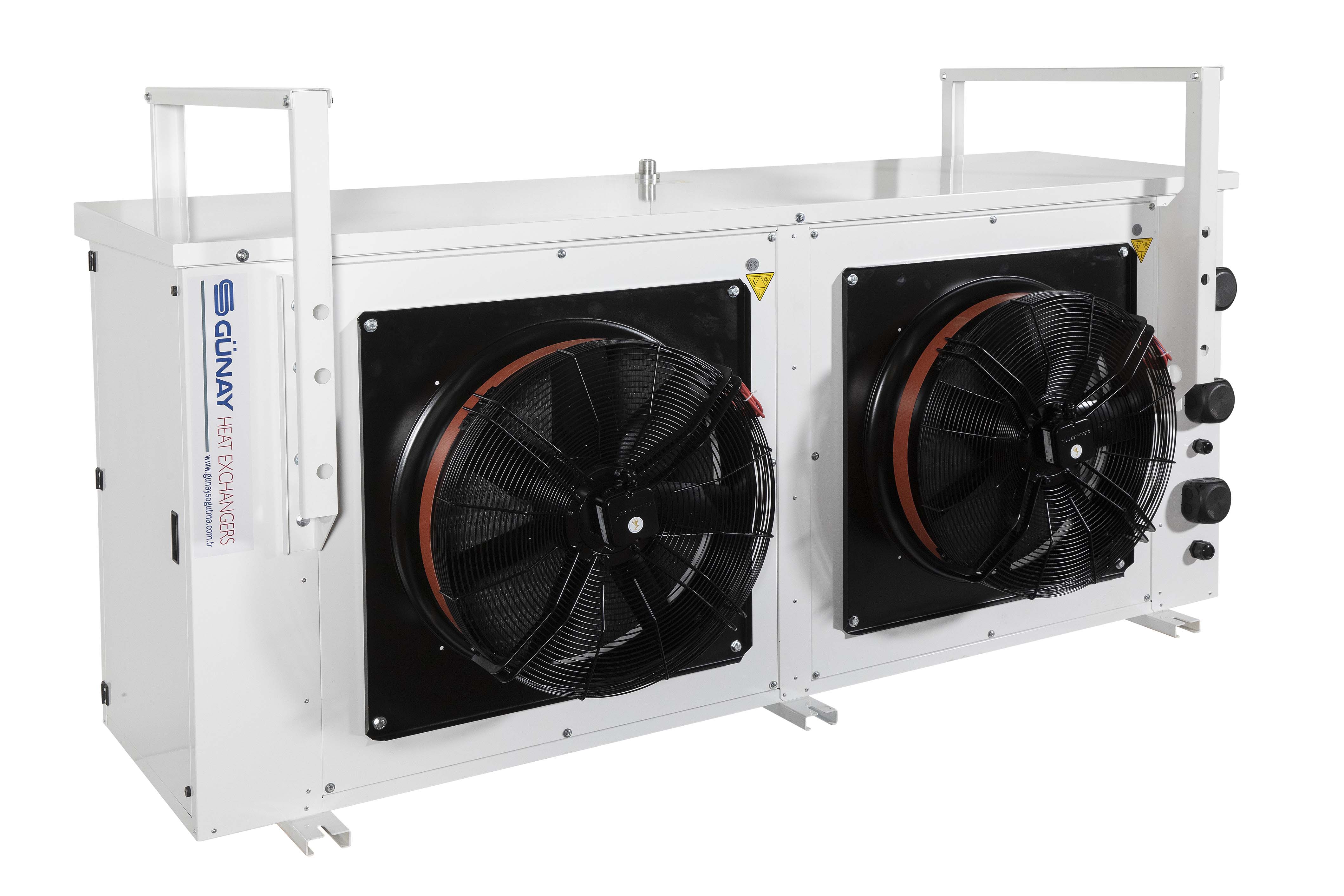
Since 1986, Günay Heat Exchangers has supplied evaporators, condensers and heat exchangers in both serial and custom production. The technical data for evaporator series such as the GNA and GND commercial types, the GNE standard type and the GNI industrial type state that capacities are calculated in accordance with EN 328 standards for R404A, based on European fans.
This means you should pay attention to the following when reading Günay catalogues:
- Check which standard condition (SC) the capacity in the model table refers to.
- If your project uses a refrigerant other than R404A, ask the Günay technical team for a refrigerant-specific evaluation.
- If you plan to request a different fan model, clarify its effect on capacity during selection. Optional fan model changes can be applied to Günay products.
- Choose the fin spacing that suits your room temperature. The GNE series, for example, offers fin spacing options of 4, 6, 8 and 10 mm.
Günay's product selection program helps you select evaporators, condensers and heat exchangers based on your project data. Where non-standard dimensions, special refrigerants or demanding ambient conditions are involved, a custom production option allows an application-specific solution to be developed. Technical support and quotations are available through the Istanbul, Antalya and Izmir branches and the factory in Arnavutköy, Istanbul.
Frequently Asked Questions
Why Is Capacity On Site Lower Than The Catalogue Value?
Catalogue values are given for a clean coil, standard air and evaporating temperatures, a specific fan and a reference refrigerant. A lower DT1 on site, frost, fouling, racks obstructing airflow or the use of a different refrigerant can all push capacity below the catalogue value.
Which Standard Condition Should I Use For A Freezer Room?
For frozen storage rooms at around -18 °C, SC3 provides a more realistic reference, and SC4 is more suitable for deep freeze applications at lower temperatures. Selecting a unit for a freezer room based on SC1 or SC2 values overstates its capacity.
Is A Higher DT1 Always An Advantage?
No. A higher DT1 allows the same capacity to be reached with a smaller evaporator, but it lowers room humidity, increases moisture loss from products and requires more frequent defrosting. For moisture-sensitive products, a lower DT1 is usually the better choice.
Are Condenser Capacities Also Given Under Similar Conditions?
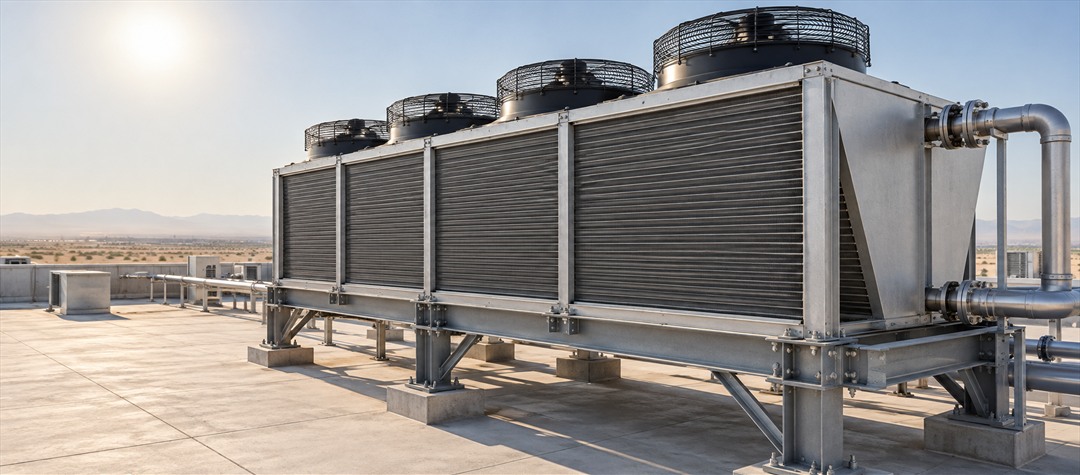
Yes, standard conditions are also defined for air-cooled condensers. Condenser capacity is usually given for the difference between the air inlet temperature and the condensing temperature, for example dT = 15 K. For Günay's GK series commercial condensers, capacities are calculated for R404A at dT = 15 K based on European fans.
How Can I Make Capacities In Different Quotations Comparable?
The most reliable method is to send every supplier a single technical brief that includes the room temperature, evaporating temperature, refrigerant, heat load and ambient conditions, and to ask each of them for a selection based on those conditions. This way, quotations can be compared against the same reference point.