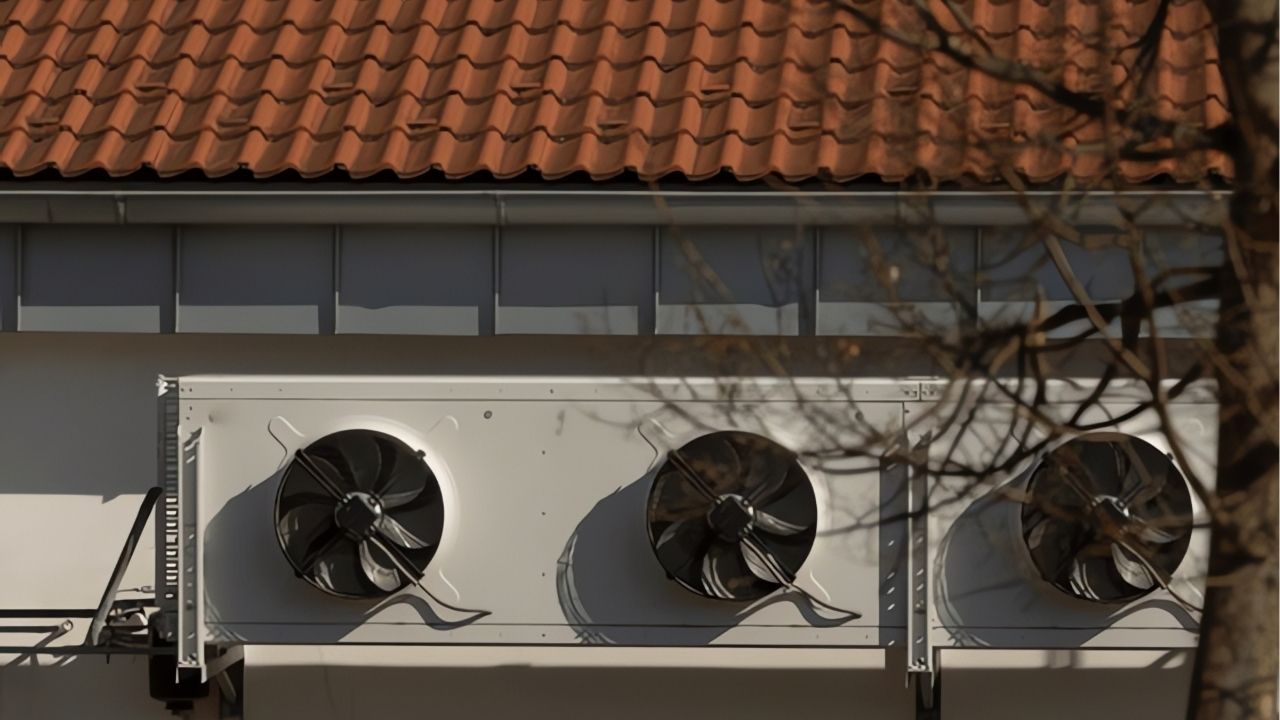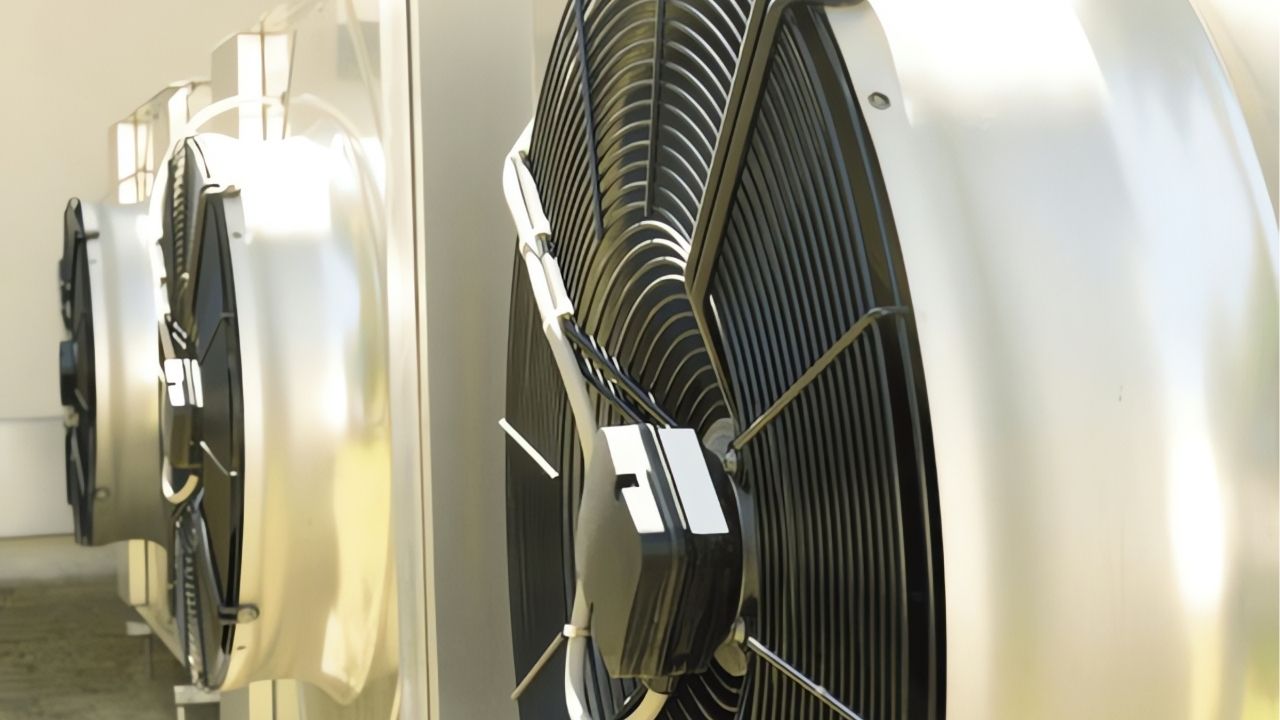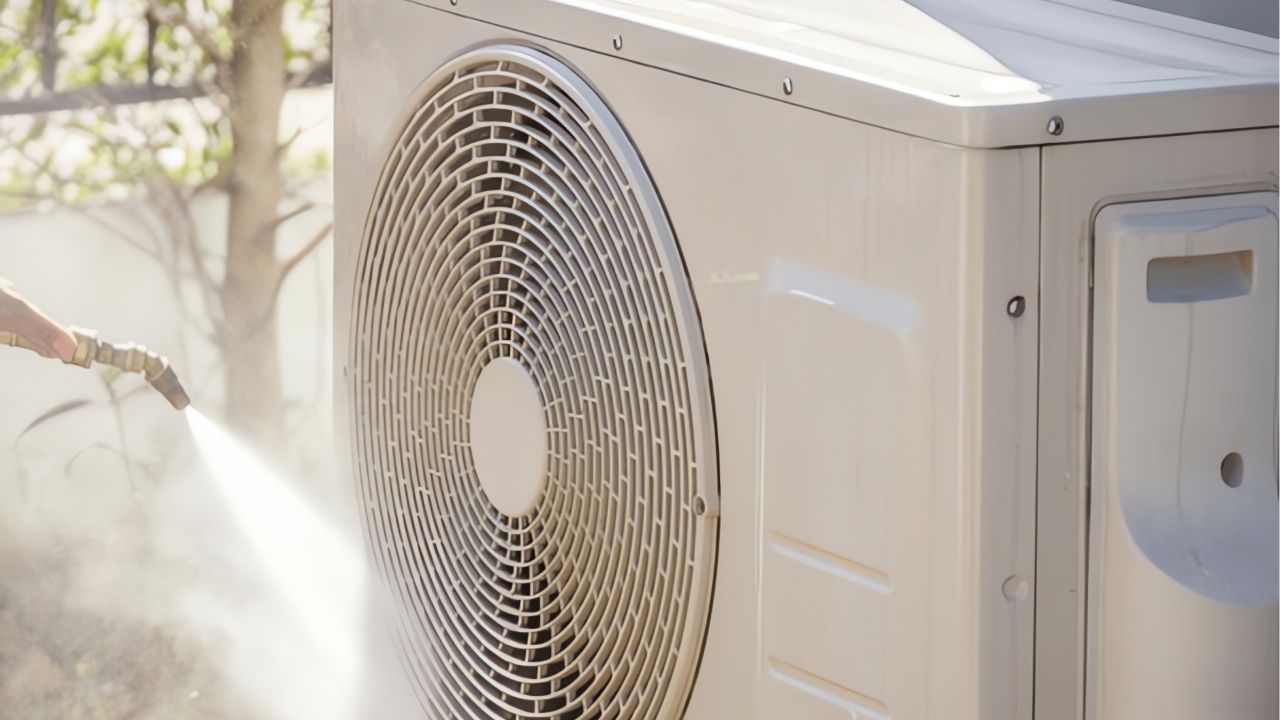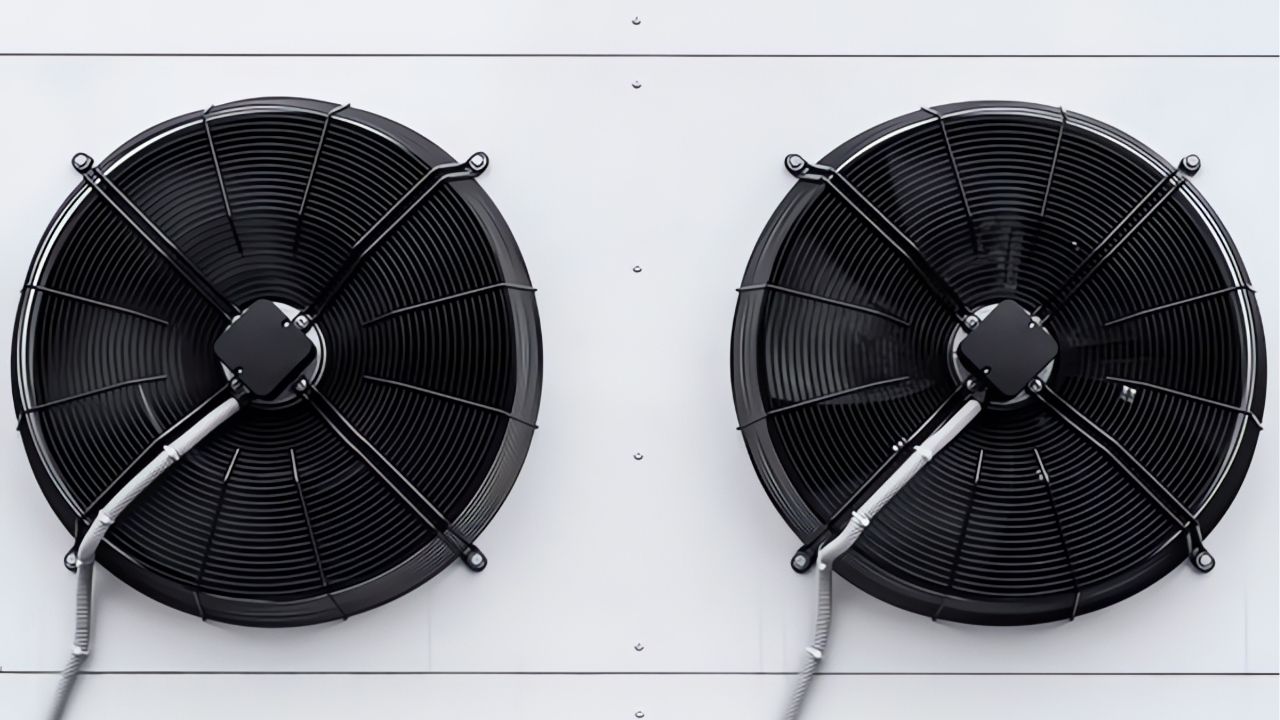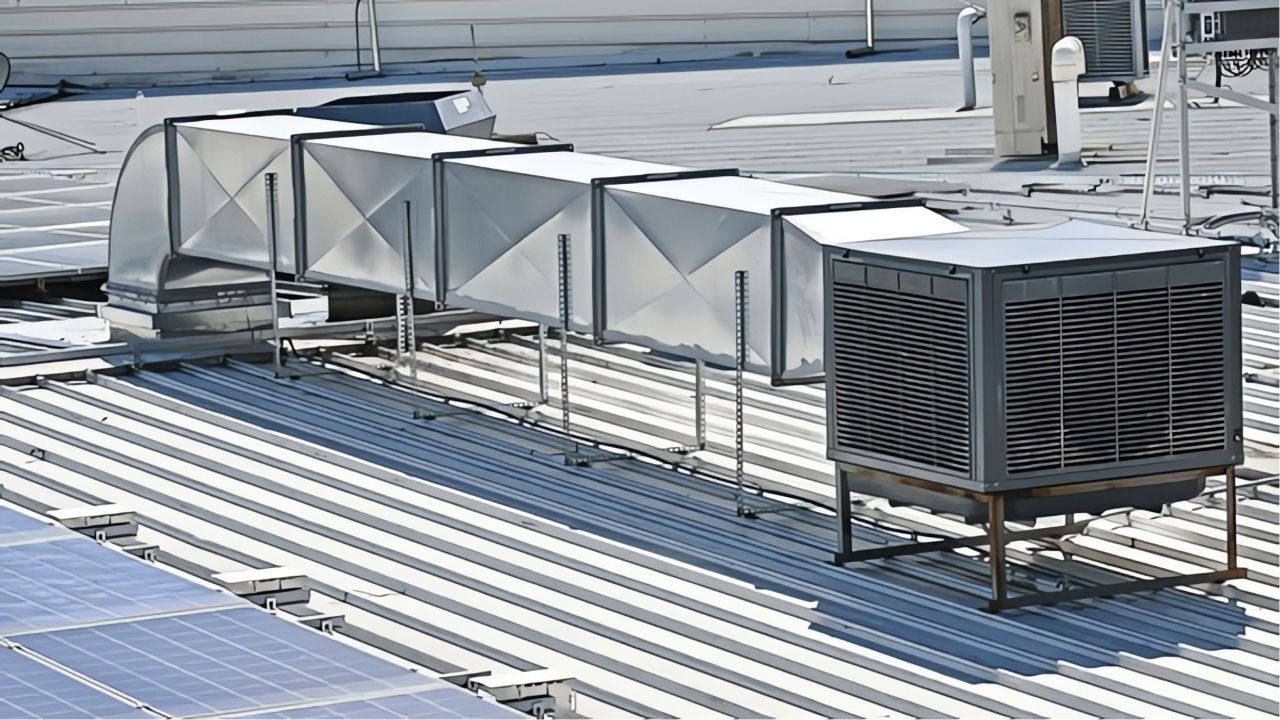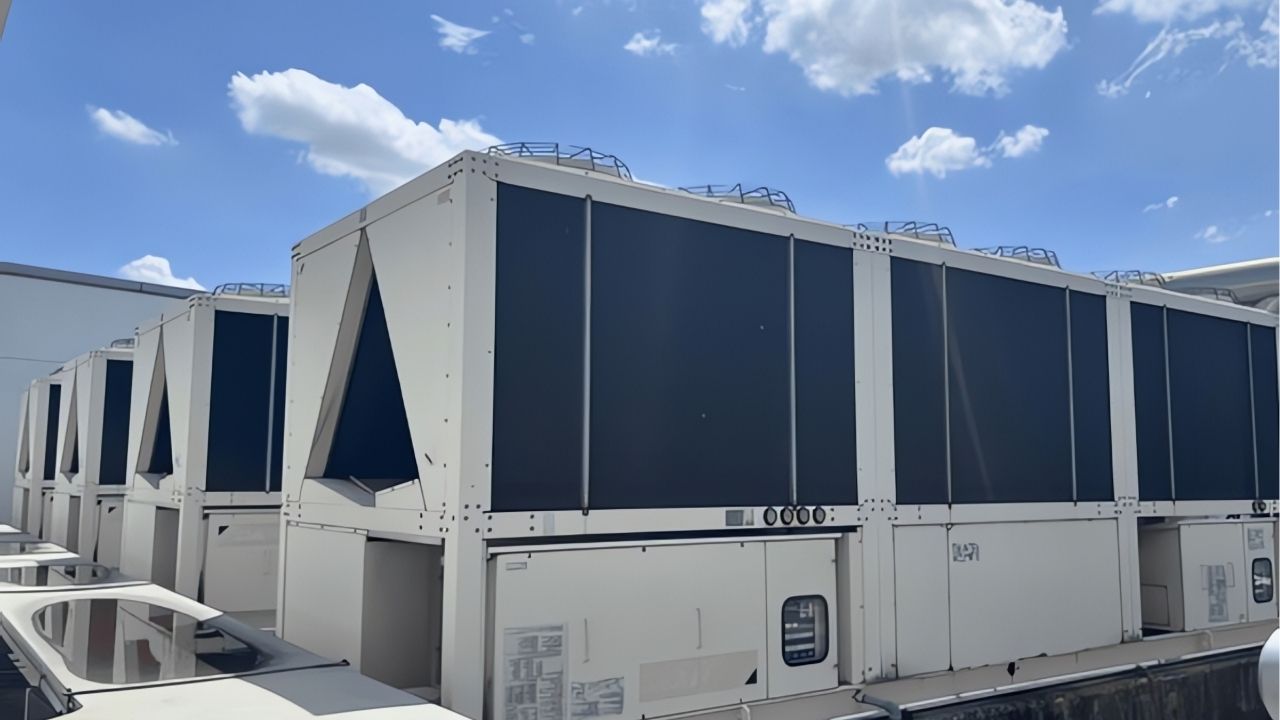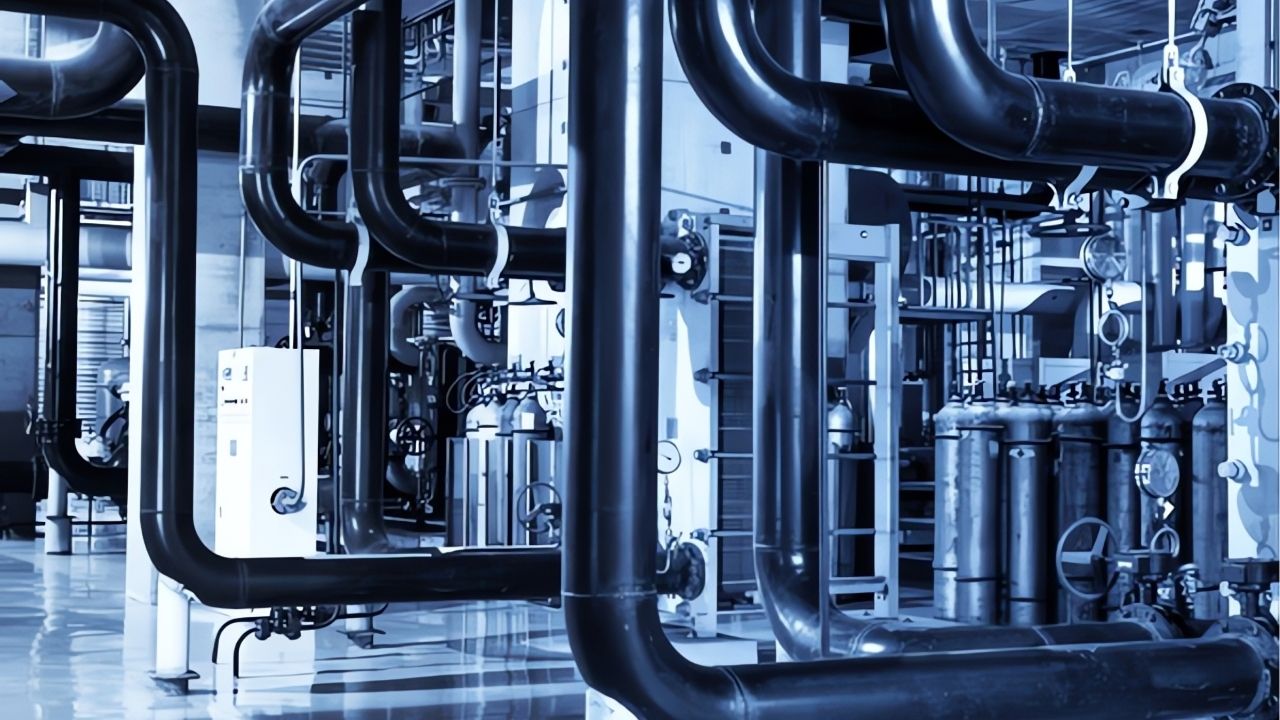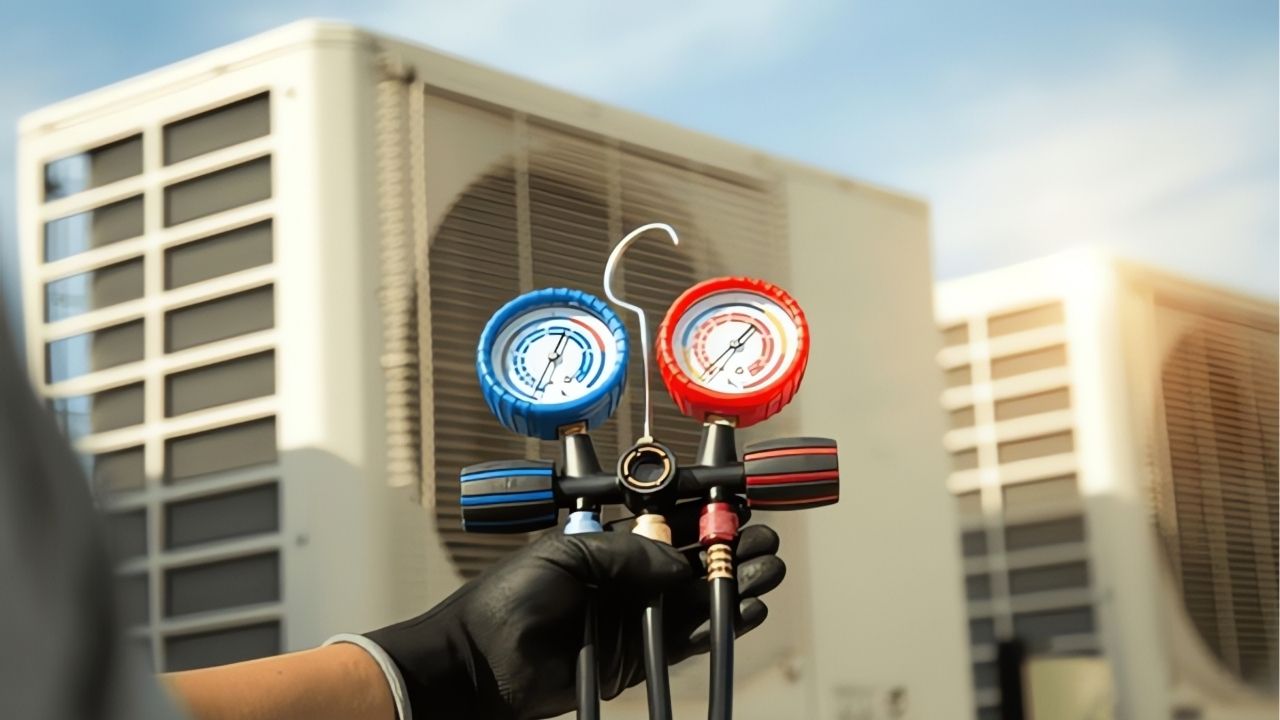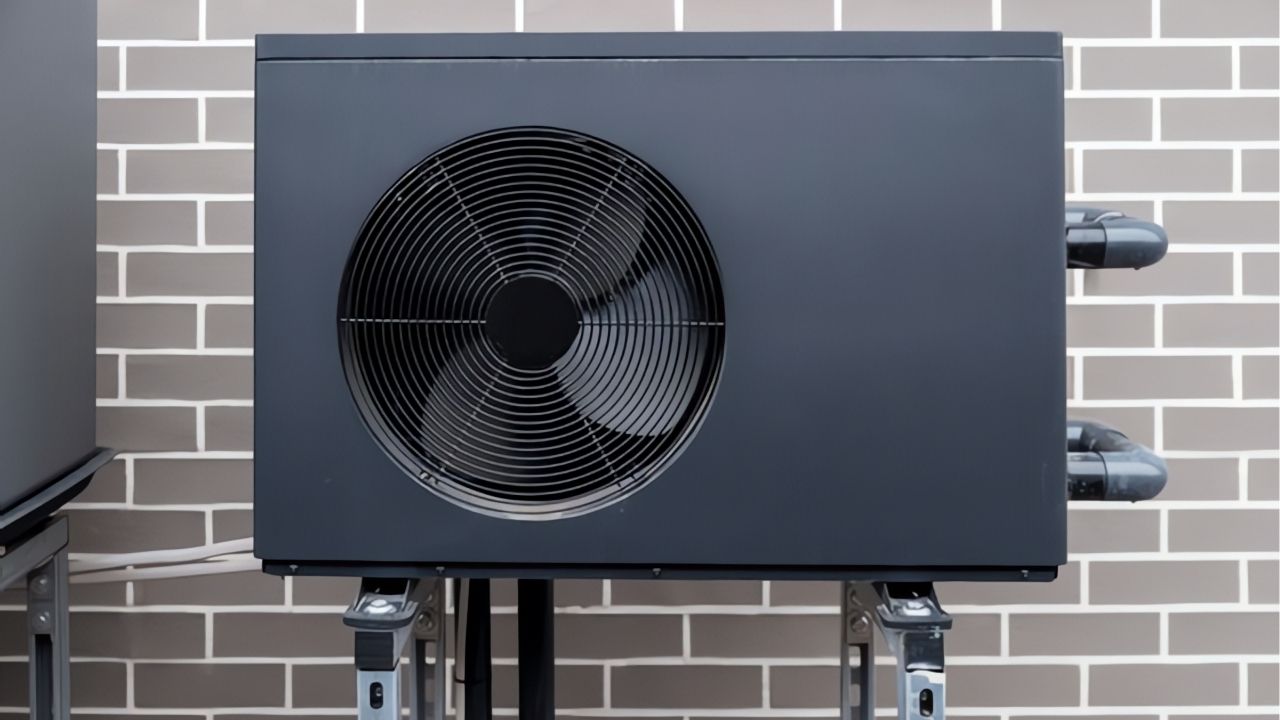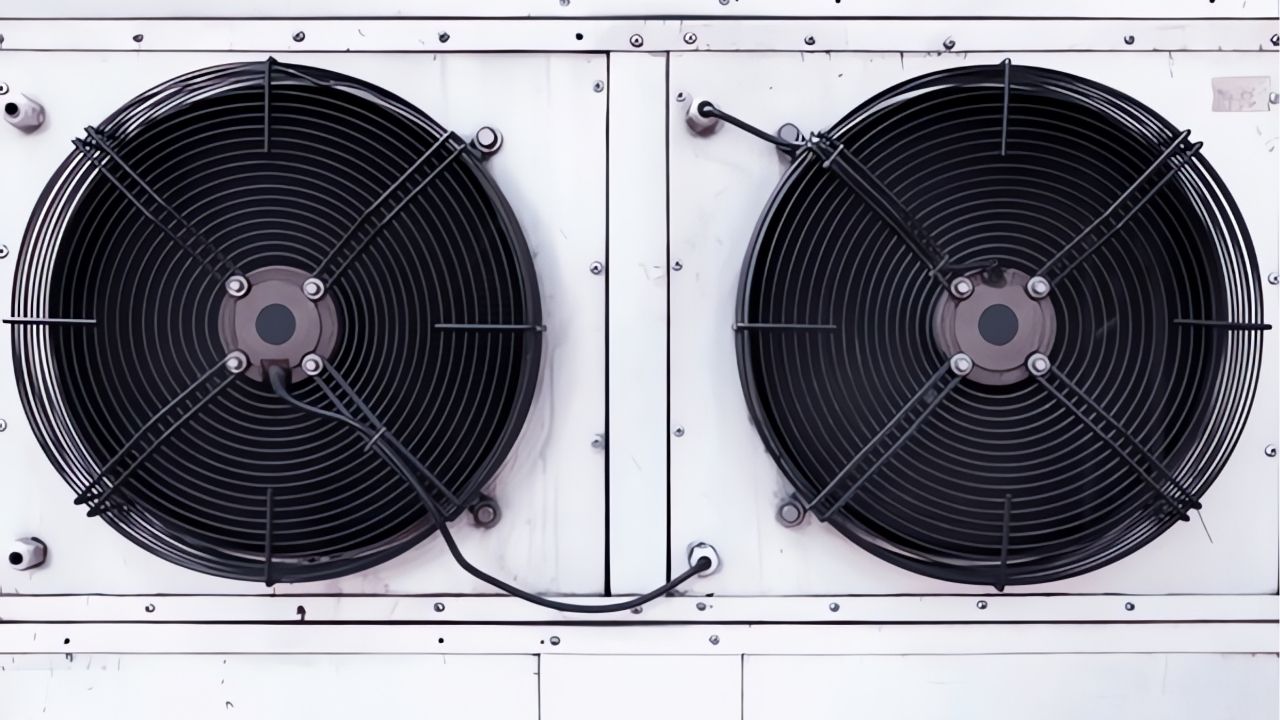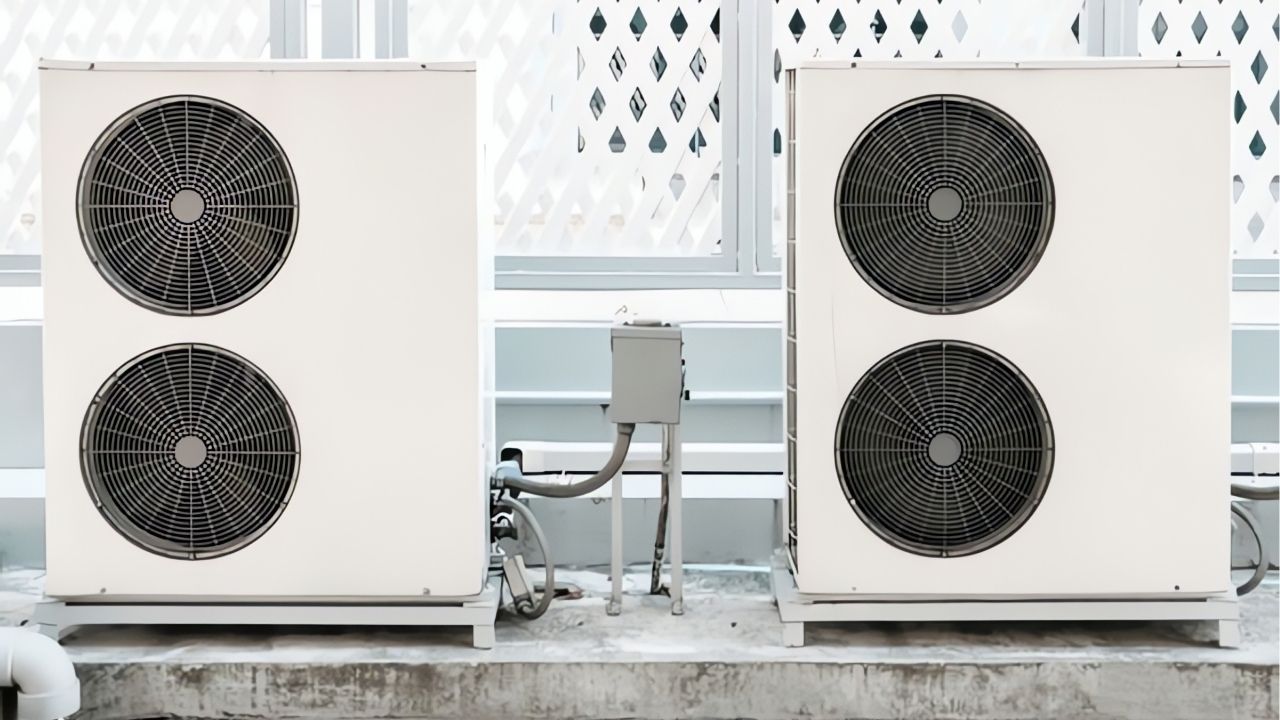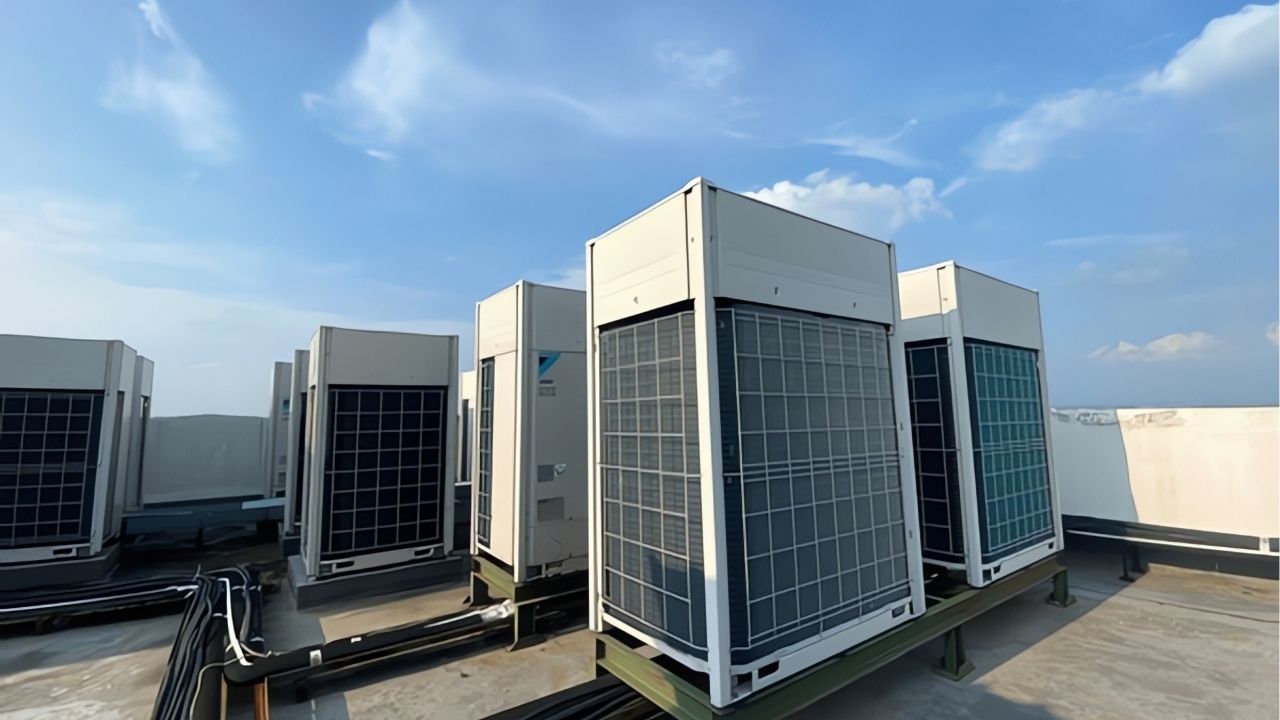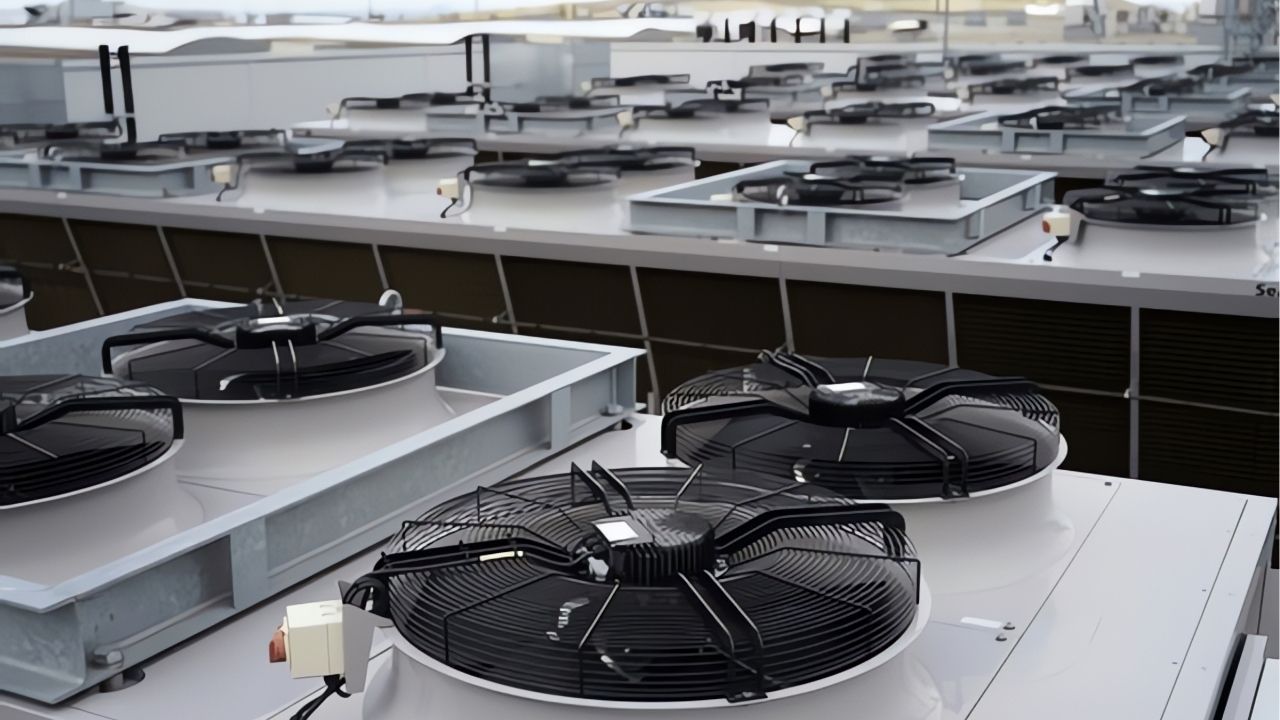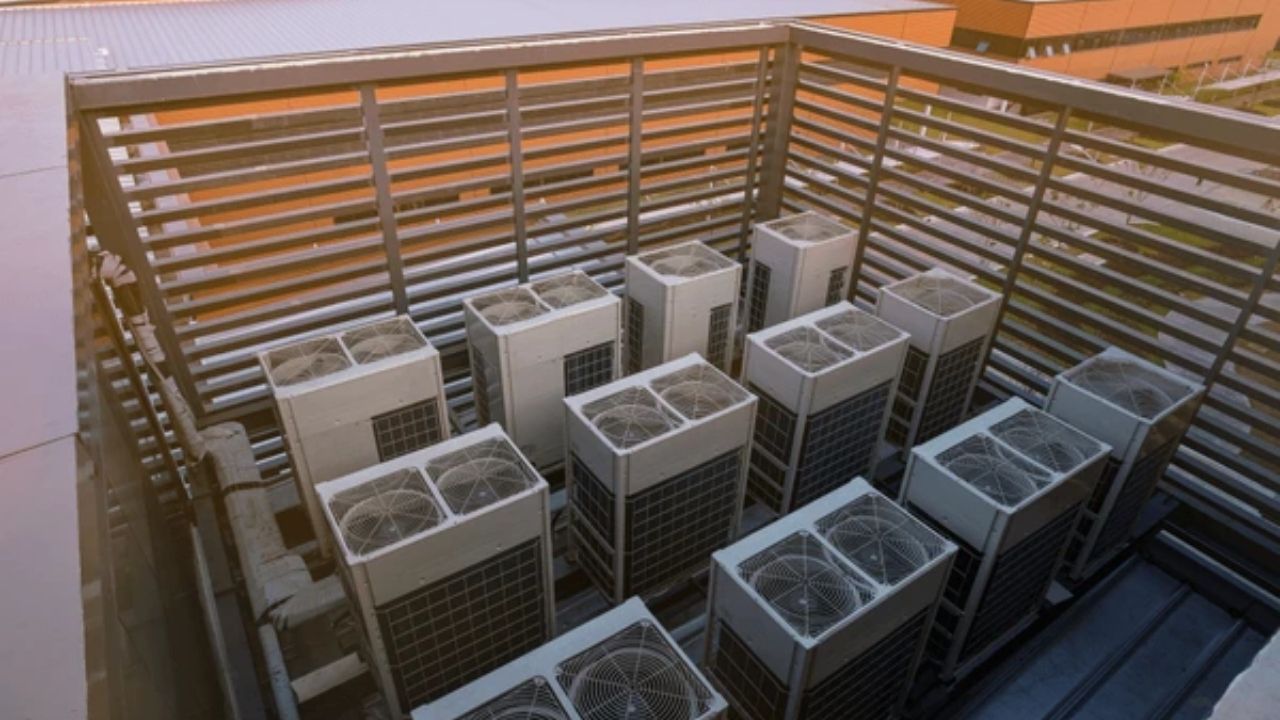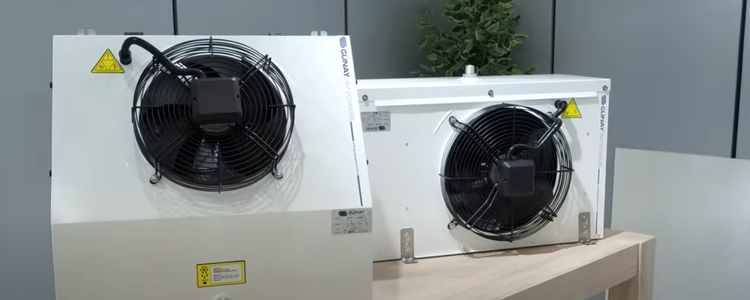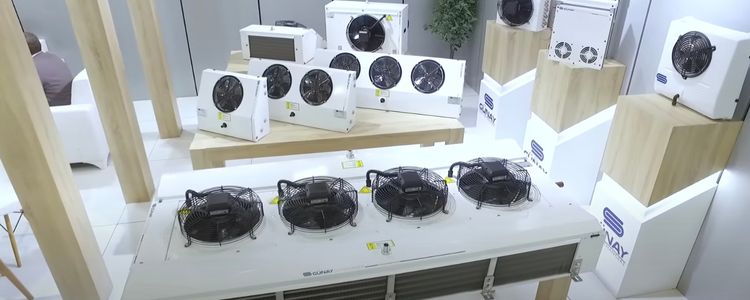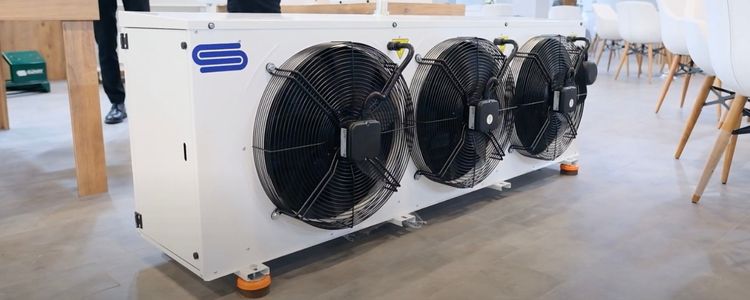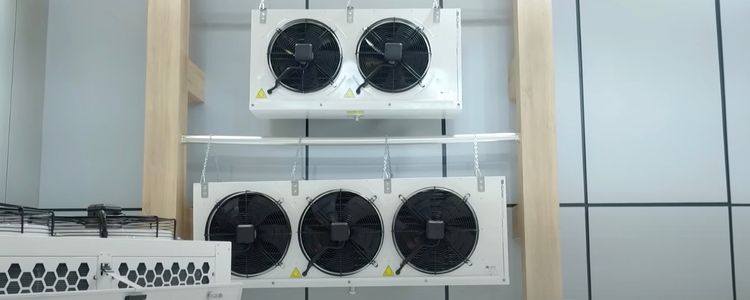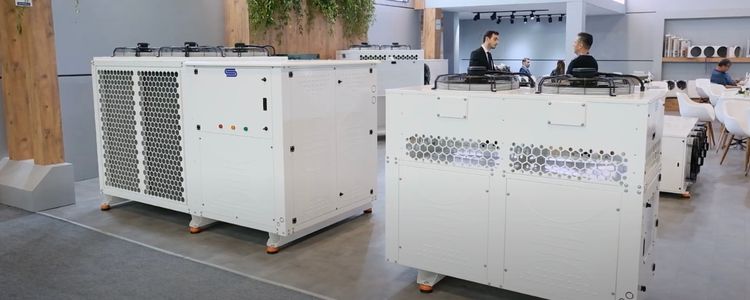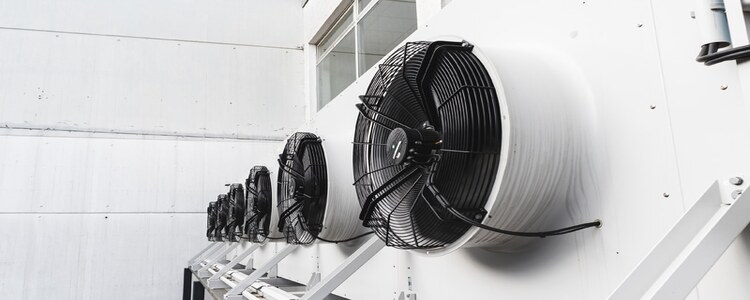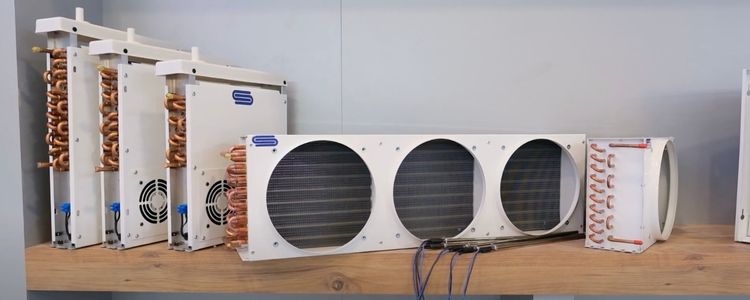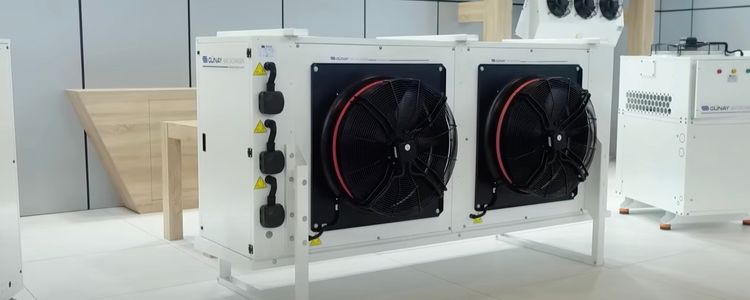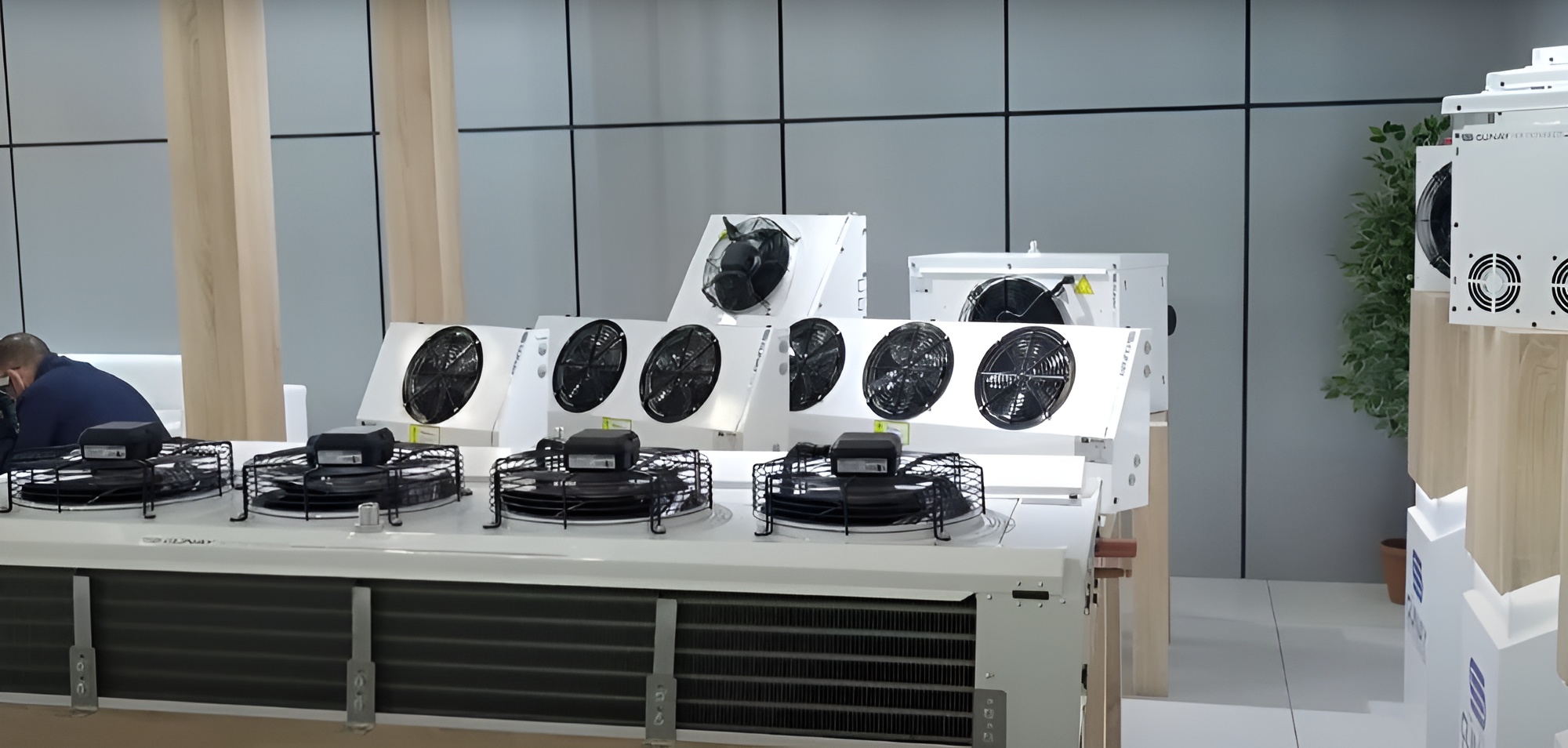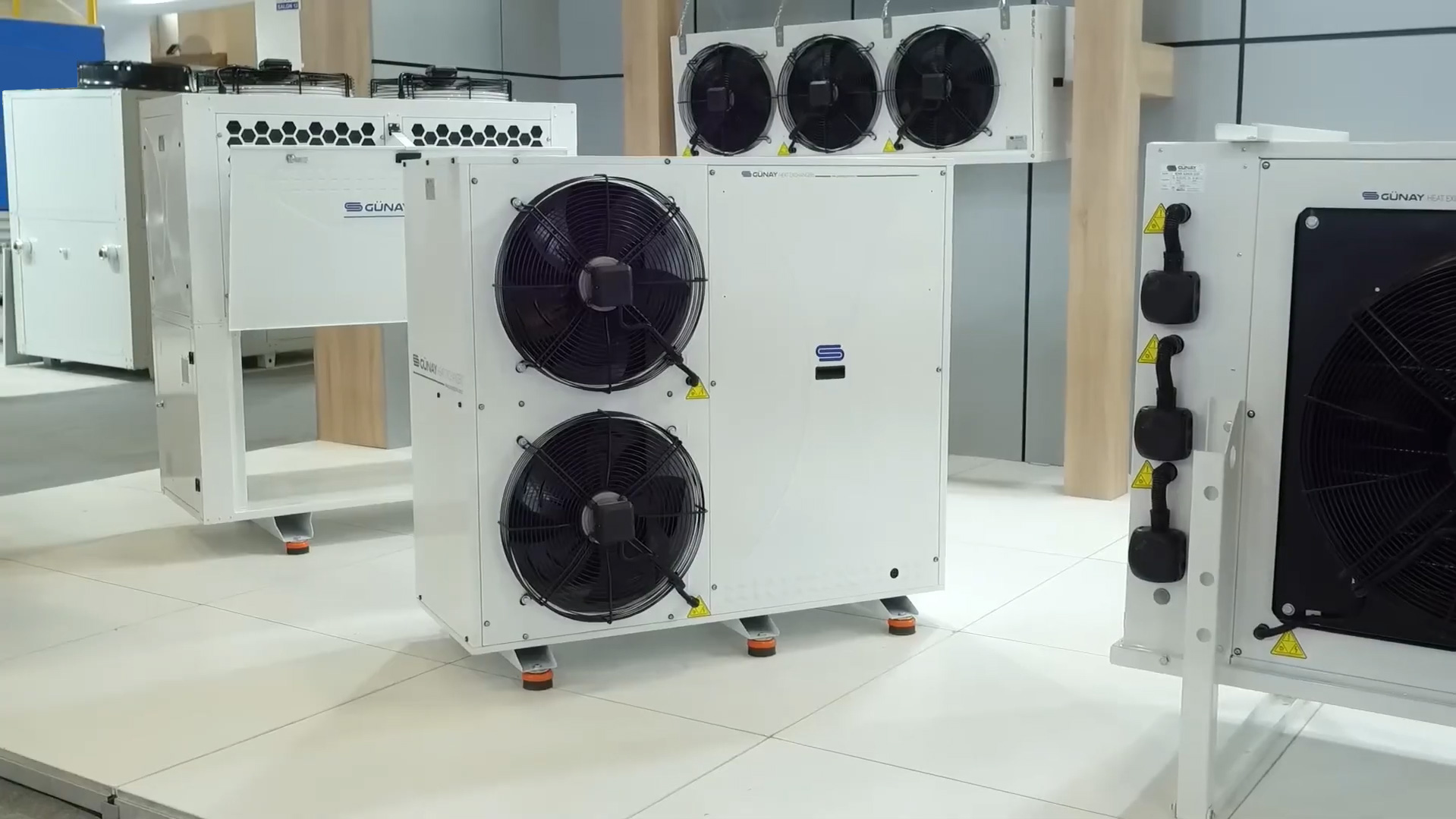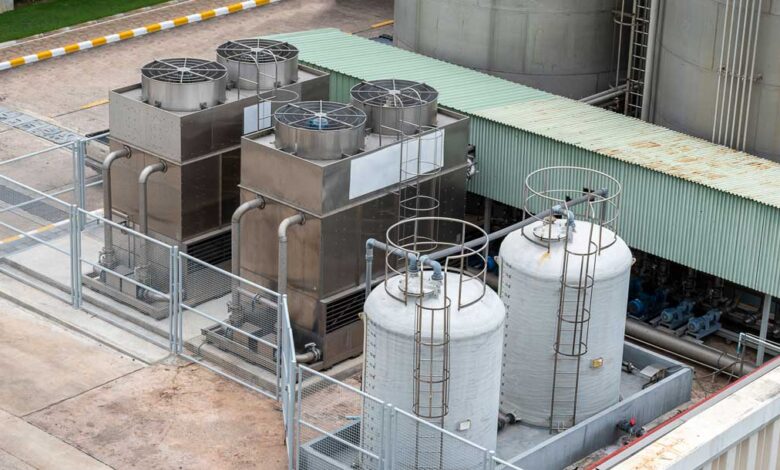


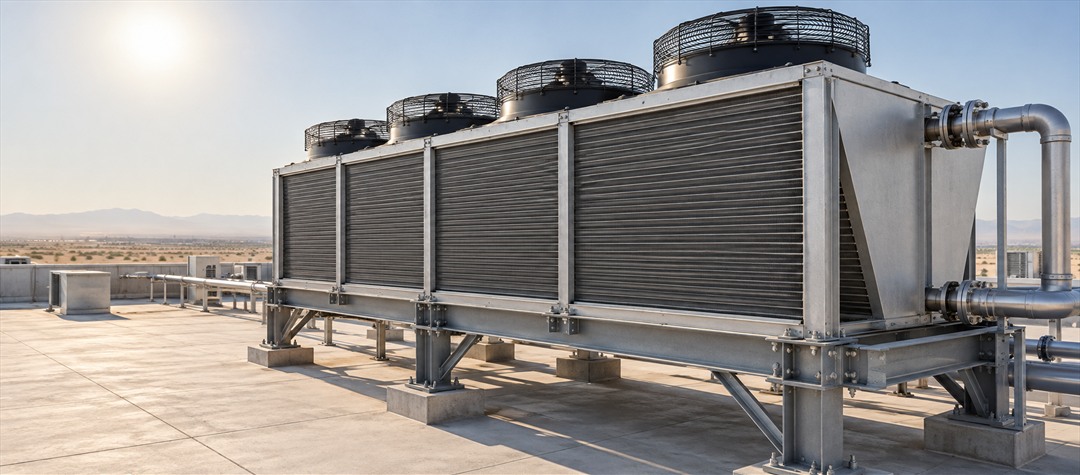
Refrigeration systems operating in regions with high ambient temperature require additional engineering consideration in condenser selection compared with standard projects designed for temperate climates. As ambient temperature rises, it directly affects a condenser's heat rejection capacity, putting the overall efficiency and reliability of the system at risk. The sections below examine how high ambient temperature affects condenser performance, the parameters to consider in capacity calculations, the condenser types that can be preferred in hot climates, and the steps to follow for the right selection.
Table Of Contents
- How Does High Ambient Temperature Affect Condenser Performance?
- How Should Condenser Capacity Be Calculated For A Hot Climate?
- Which Condenser Type Should Be Preferred In Hot Climates?
- Why Are Condenser Placement And Ventilation Critical In A Hot Climate?
- What Steps Should Be Followed When Selecting A Condenser For A Hot Climate?
- Frequently Asked Questions
How Does High Ambient Temperature Affect Condenser Performance?
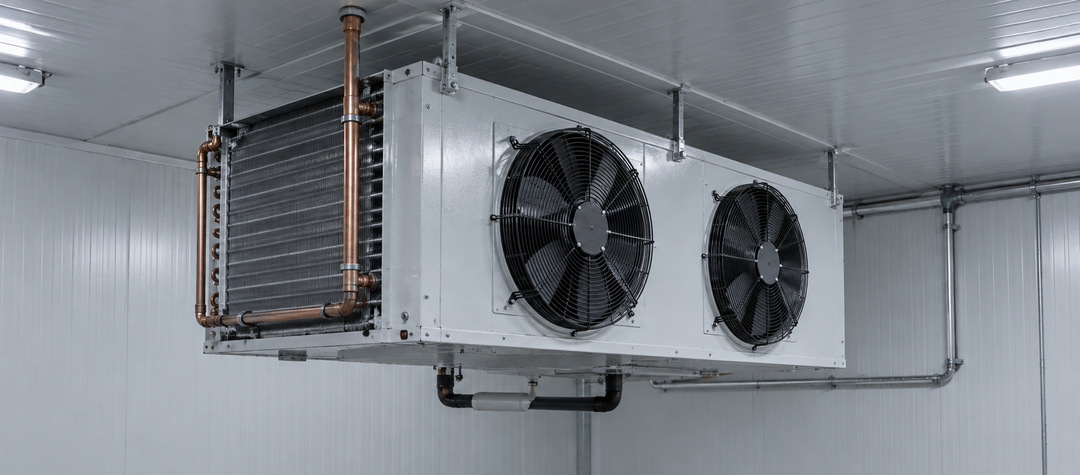
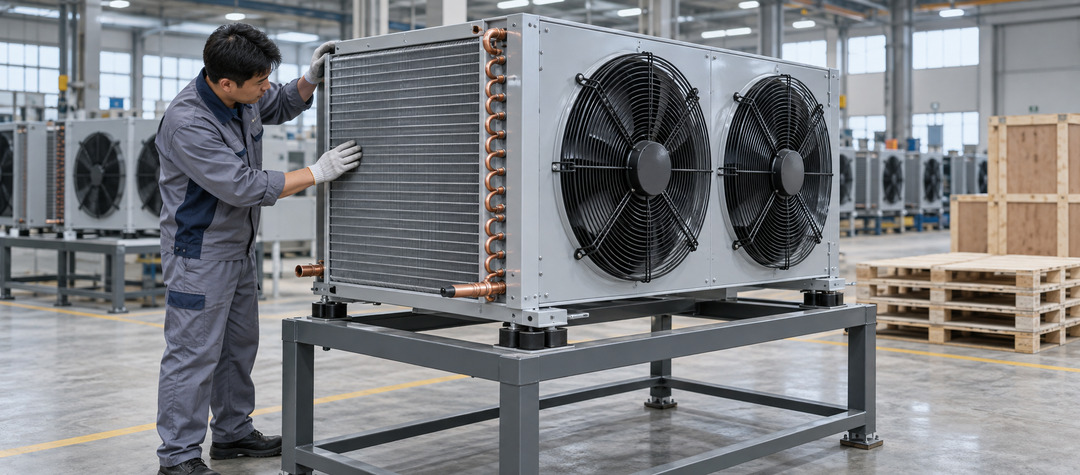
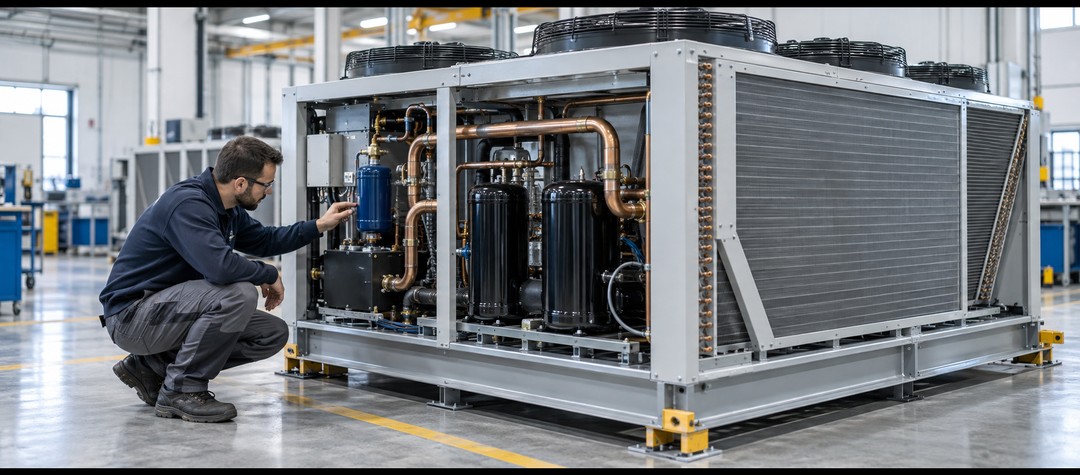
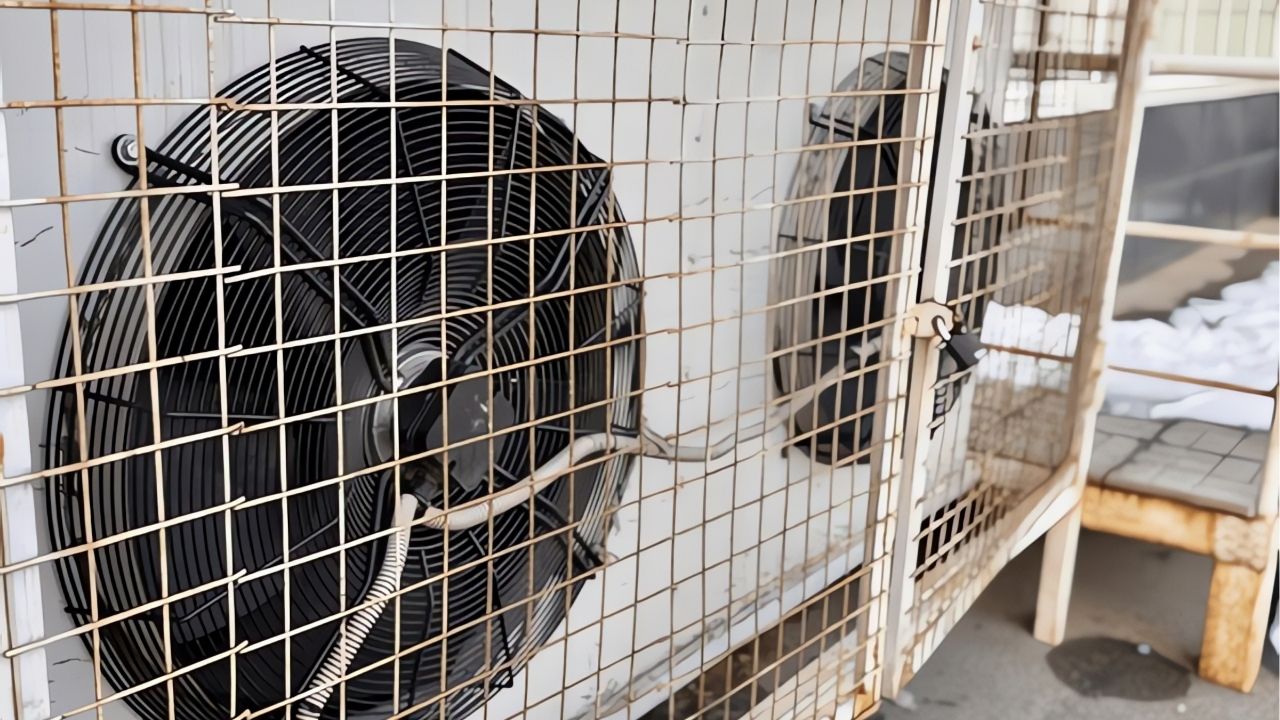
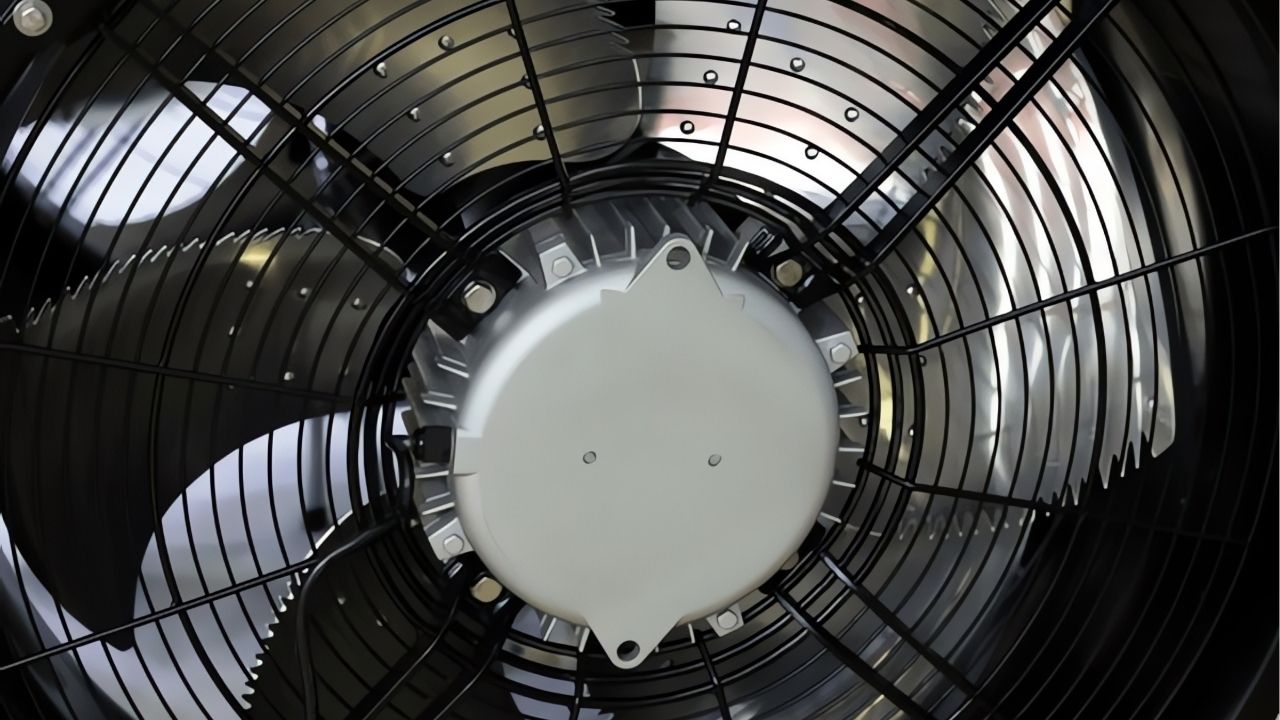
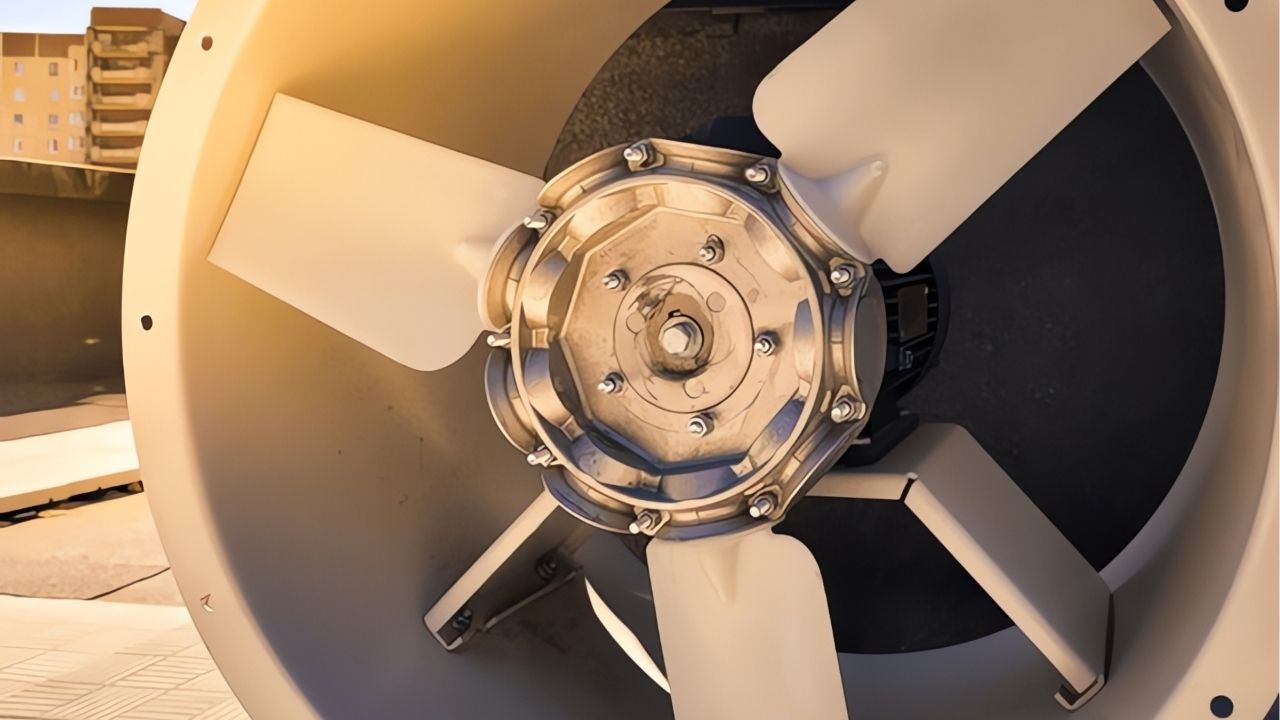
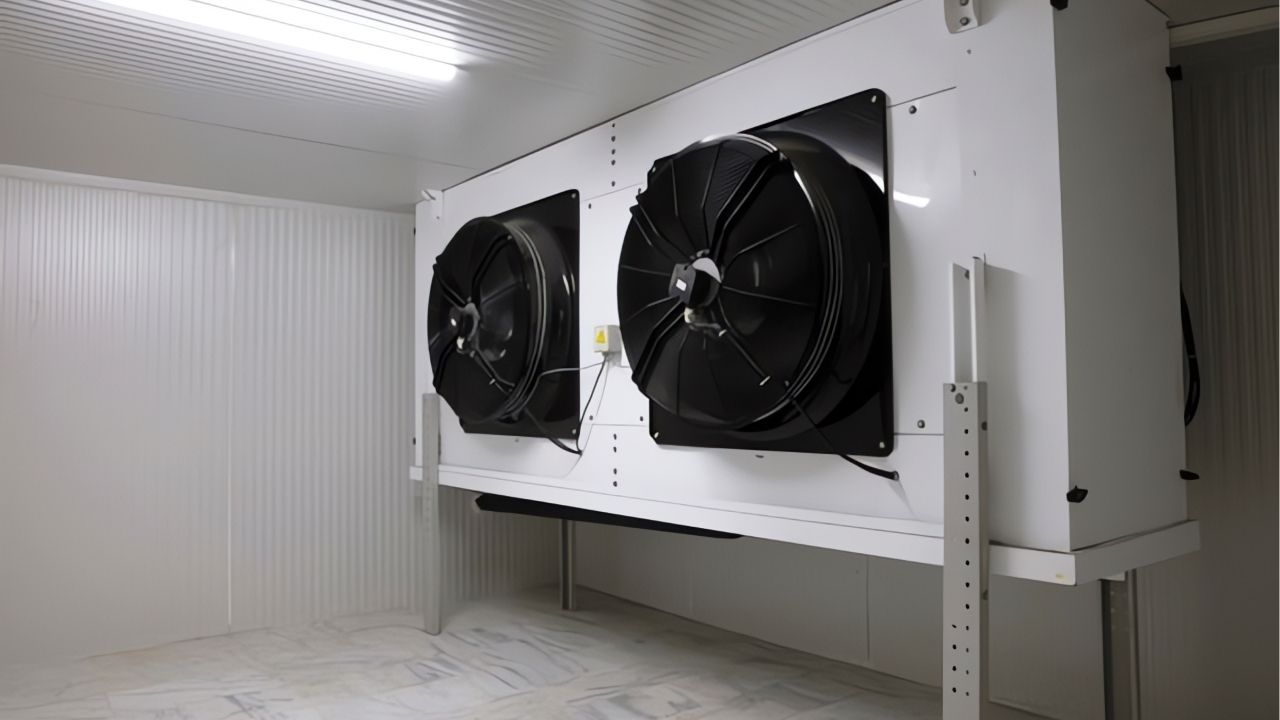
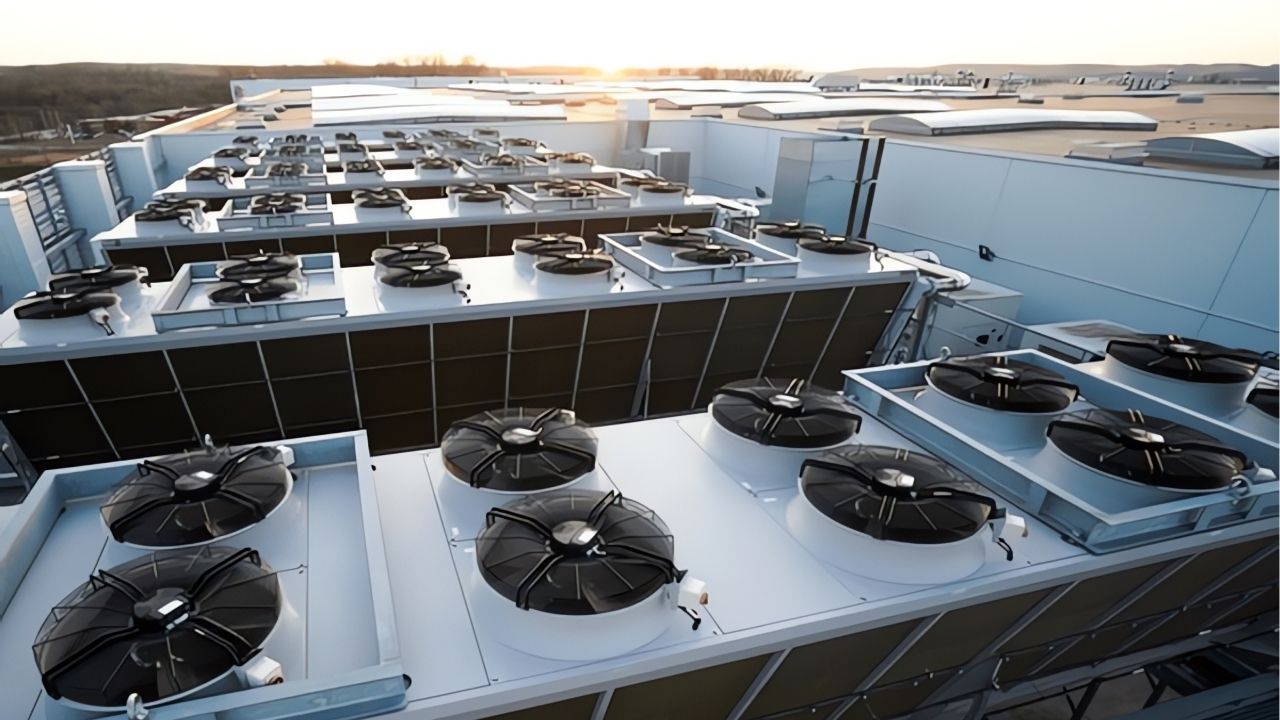
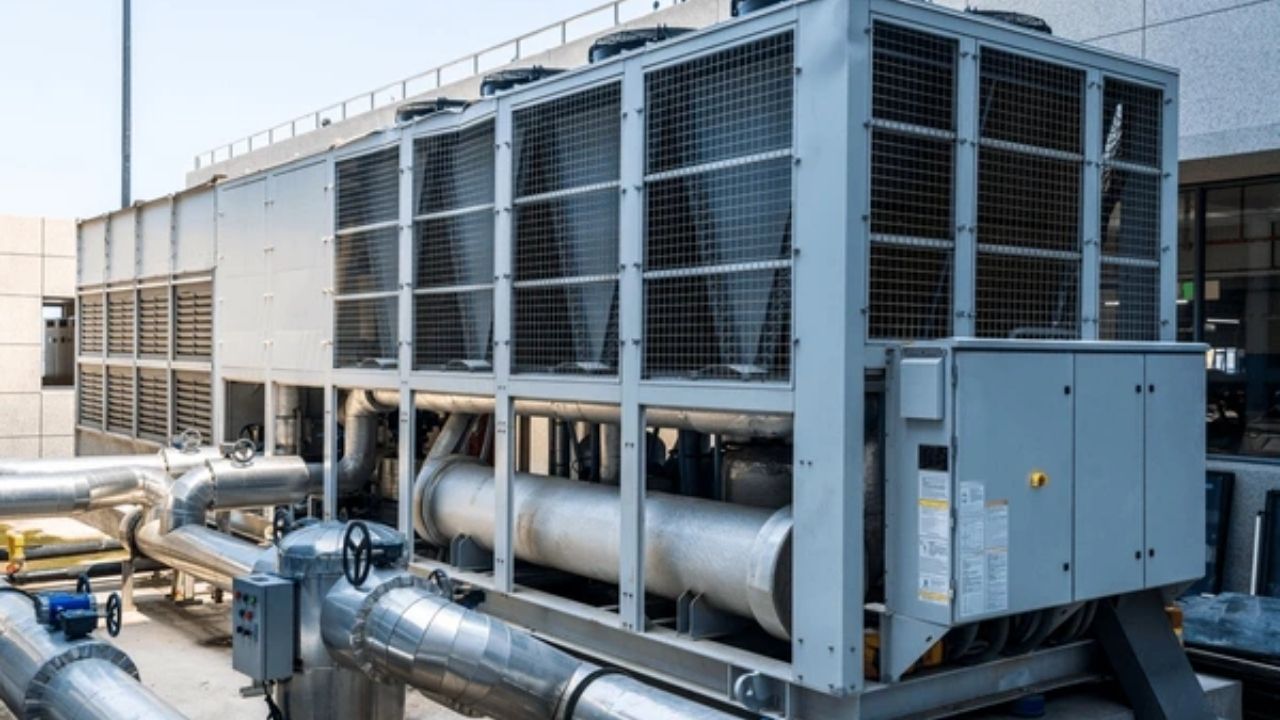
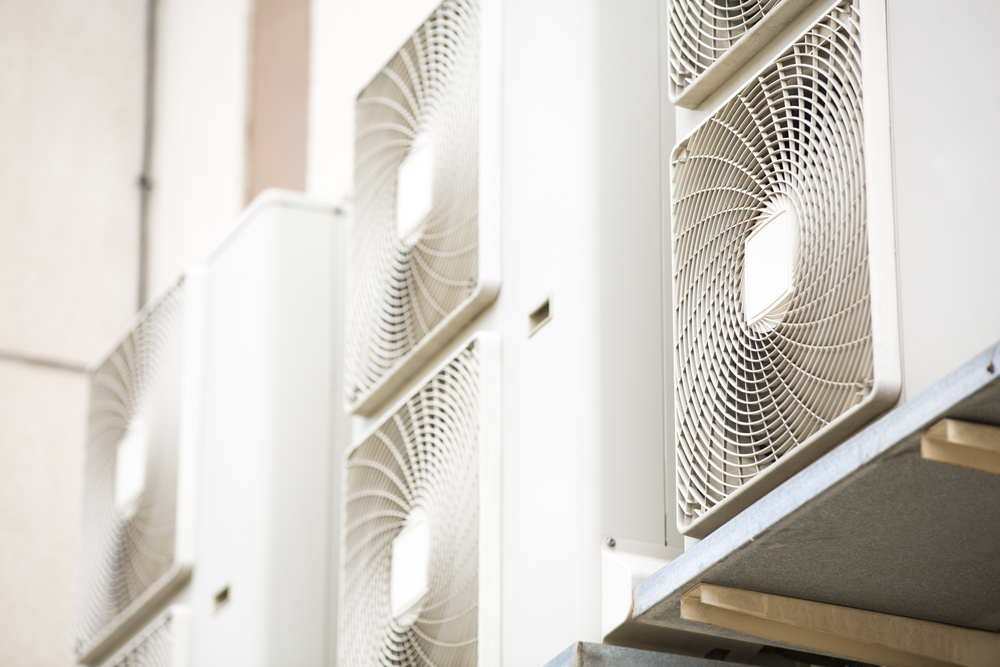
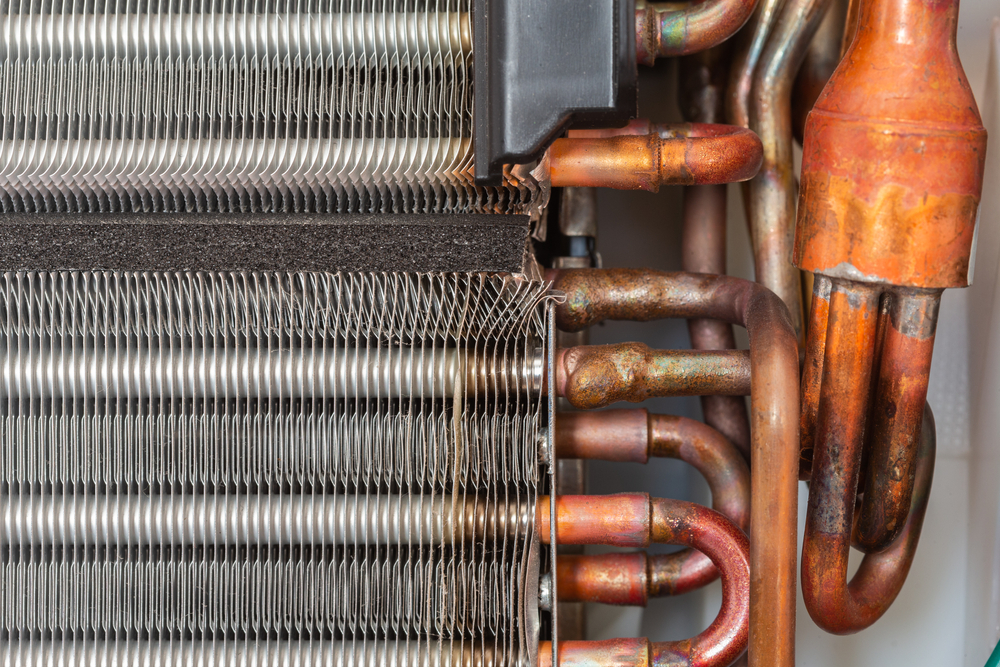
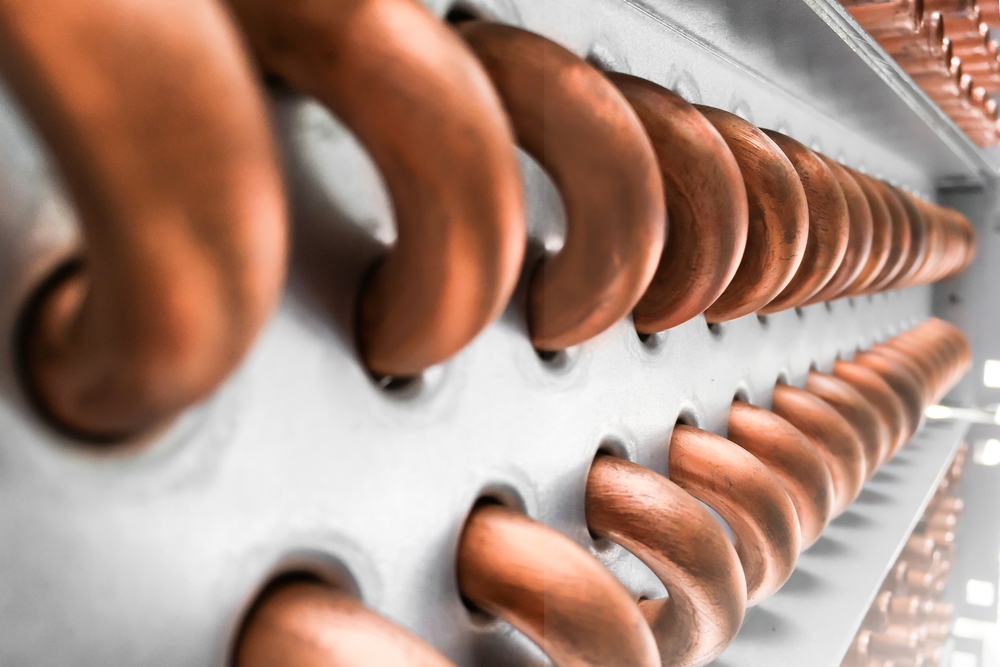
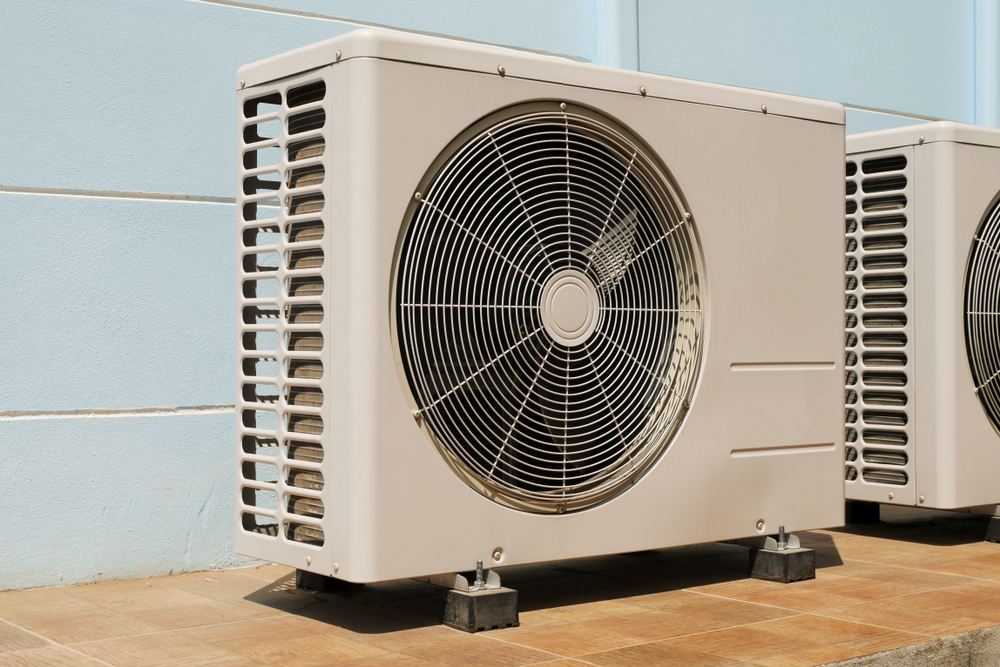
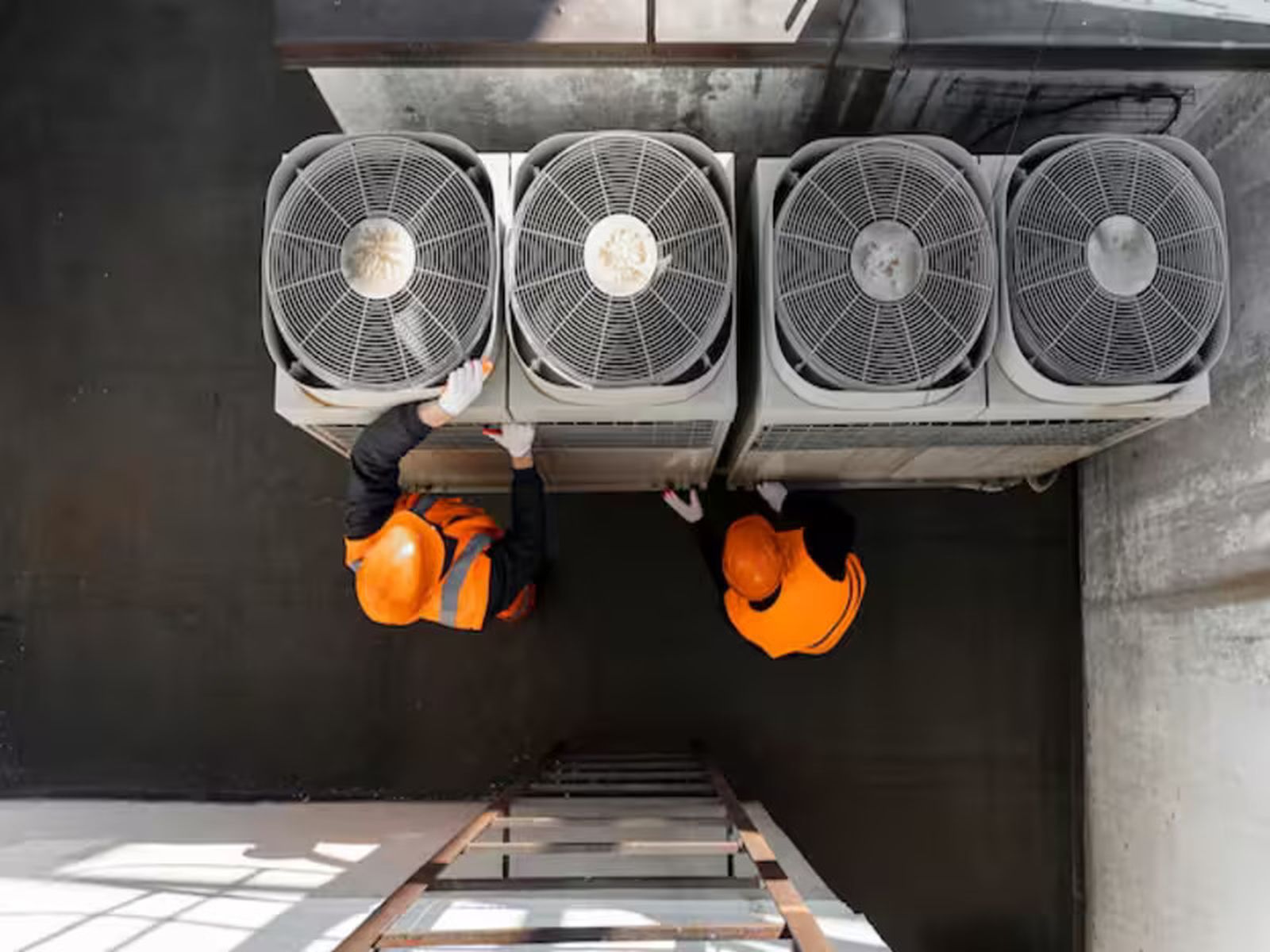
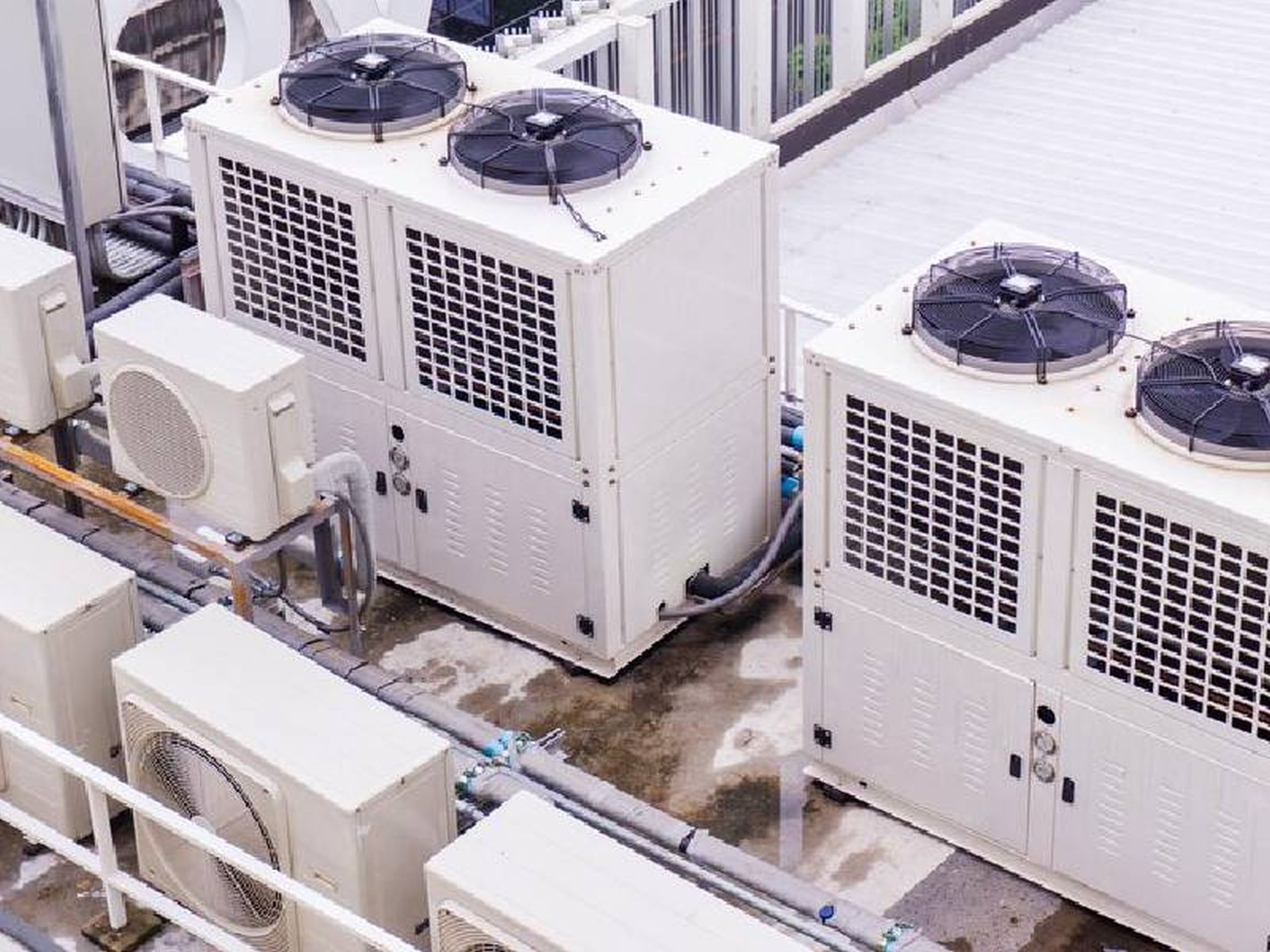
An air-cooled condenser's role is to transfer the heat of the refrigerant, which has evaporated and turned into a high-pressure gas during the refrigeration cycle, into the ambient air, returning the refrigerant to a liquid state. The efficiency of this heat transfer depends on the temperature difference between the condenser surface and the ambient air. As ambient temperature rises, the temperature difference available to maintain the same condensing temperature narrows, causing the condenser's heat rejection capacity to drop.
The direct result of this capacity drop is a rise in the system's condensing pressure. High condensing pressure forces the compressor to operate at a higher pressure ratio, which increases energy consumption, can shorten compressor life, and in extreme cases can trigger a high-pressure safety switch that shuts the system down. Using a condenser designed for standard climate conditions in a region with high ambient temperature significantly increases these risks.
For this reason, condenser selection for hot climate conditions should be based not just on the nominal capacity value, but on the product's actual performance curve at the specific ambient temperature of the application.
How Should Condenser Capacity Be Calculated For A Hot Climate?
When calculating condenser capacity for hot climate conditions, several specific parameters need to be considered in addition to the standard calculation method:
- Design ambient temperature: The design point should be based on the region's recorded peak temperature values, not its average summer temperature.
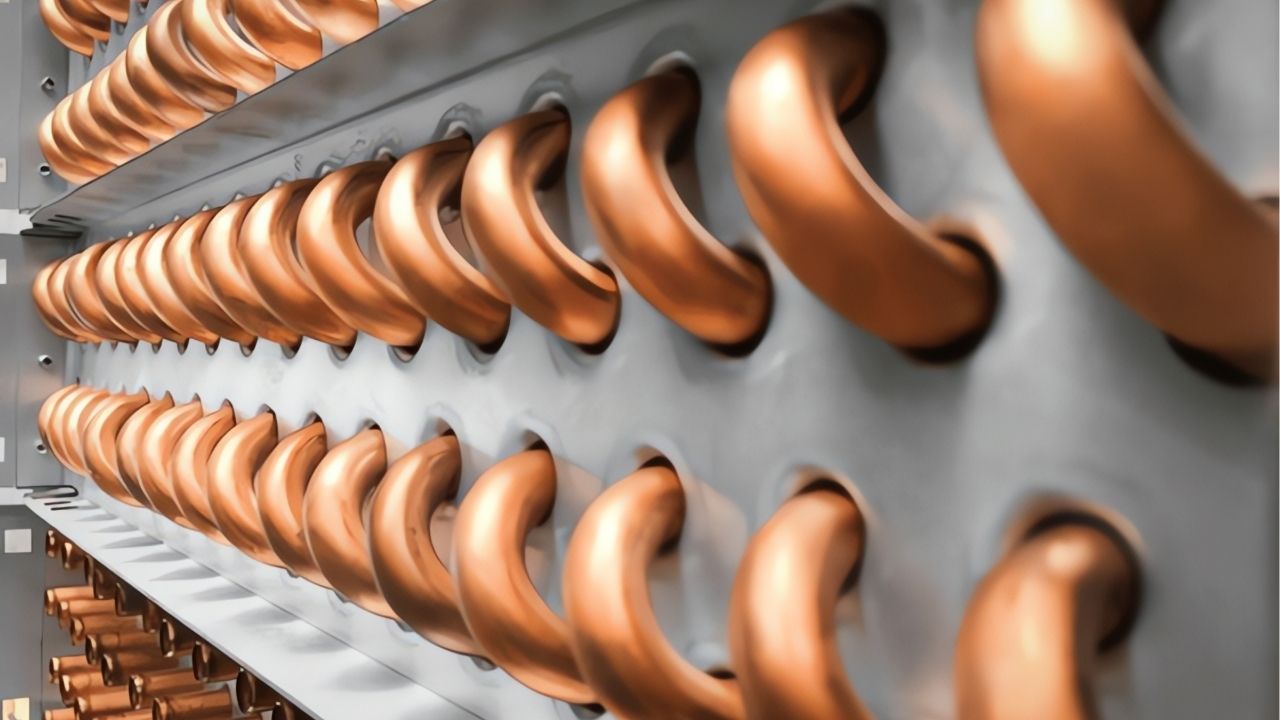
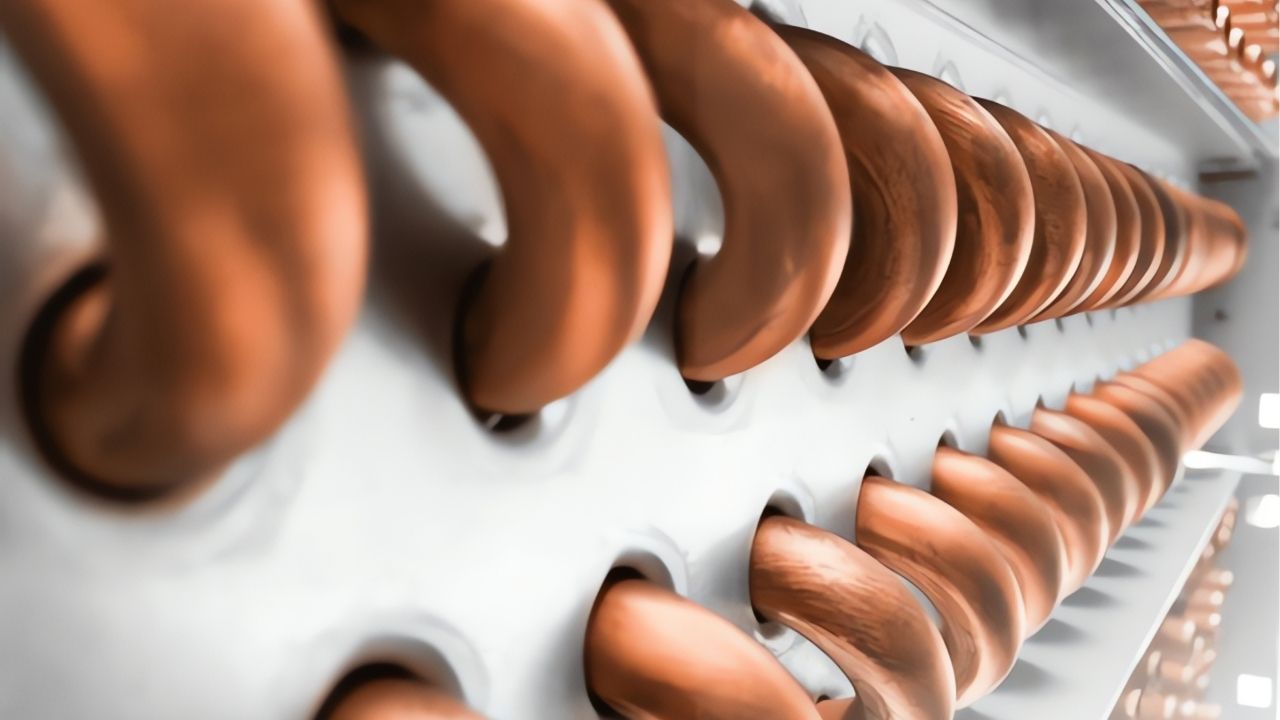
- Target temperature difference (dT): Because the available temperature difference narrows at high ambient temperature, condensers are typically selected with a larger heat transfer surface, i.e. a lower design temperature difference, to reject the same heat; the effect of this design choice on overall system efficiency should also be evaluated.
- Safety margin: Adding an extra safety margin to capacity to offset performance loss on extreme-heat days is a common engineering approach.
- Refrigerant type: Since different refrigerants have different pressure-temperature relationships, refrigerant-specific pressure limits must not be exceeded at high ambient temperature.
A calculation made with an insufficient safety margin can result in the system experiencing capacity shortfalls and failing to maintain the target cooling temperature during the hottest days of summer.
Which Condenser Type Should Be Preferred In Hot Climates?
Different condenser types offer different advantages and drawbacks under hot climate conditions:
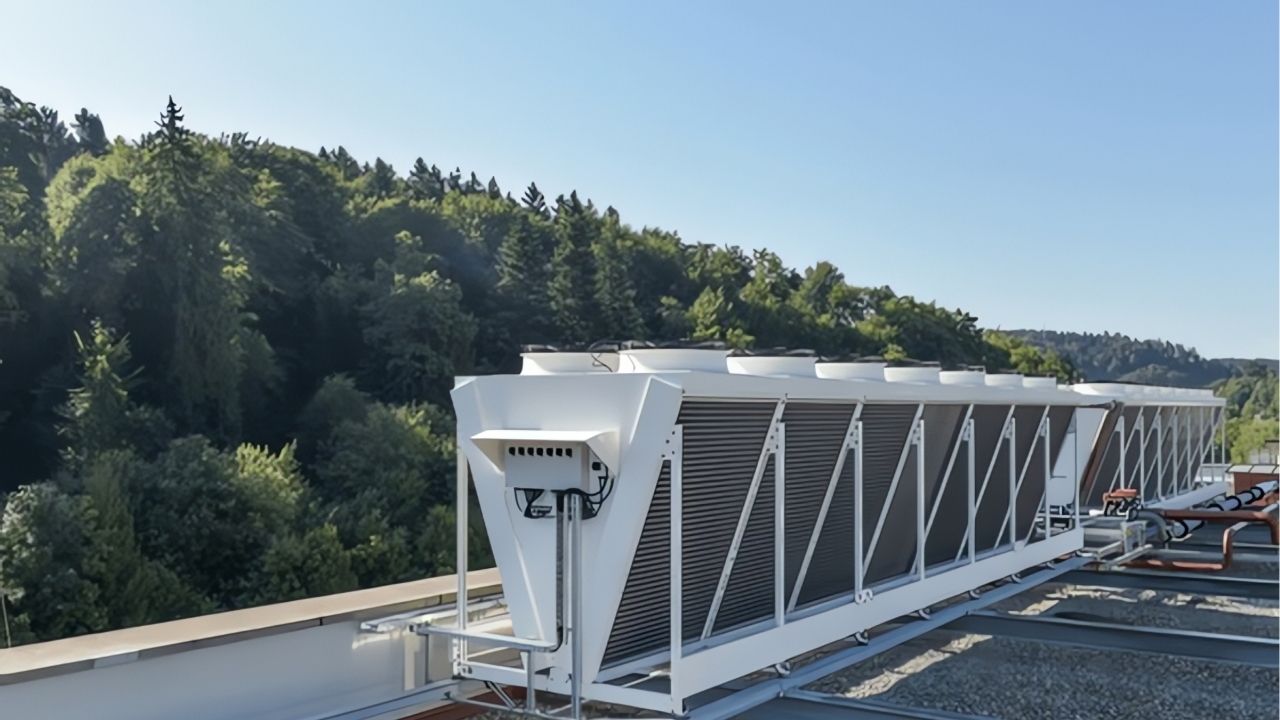
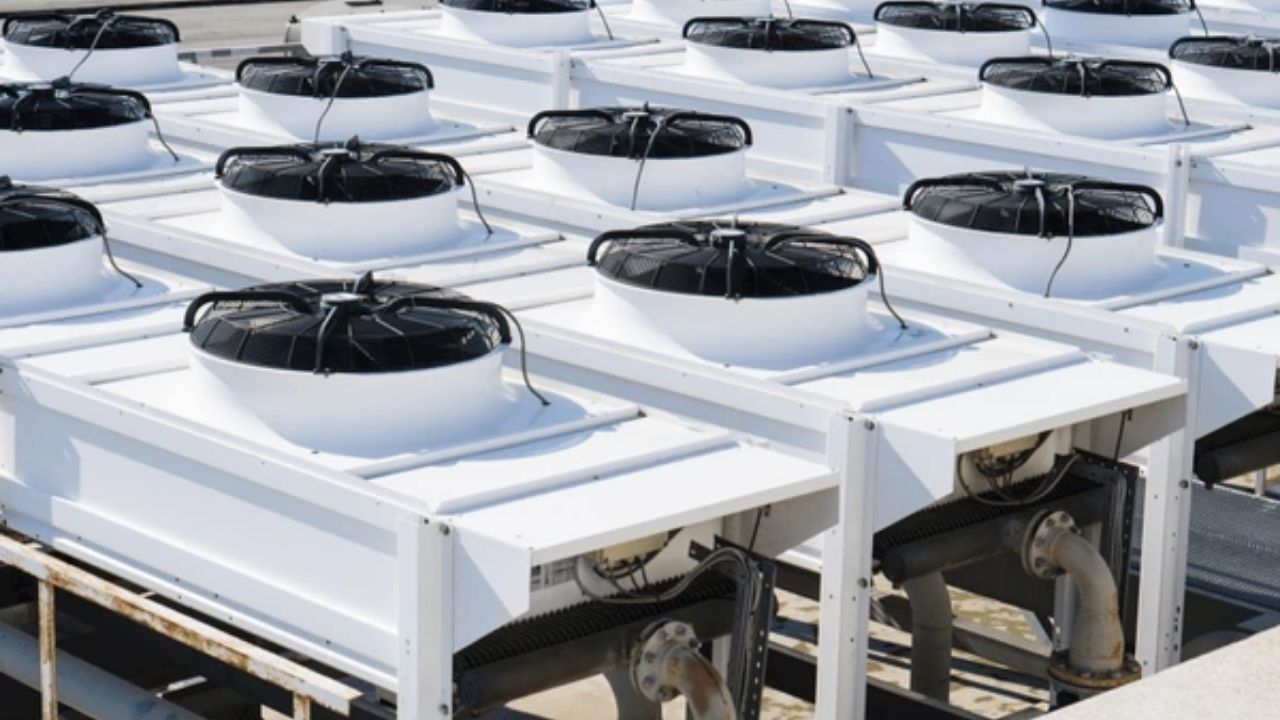
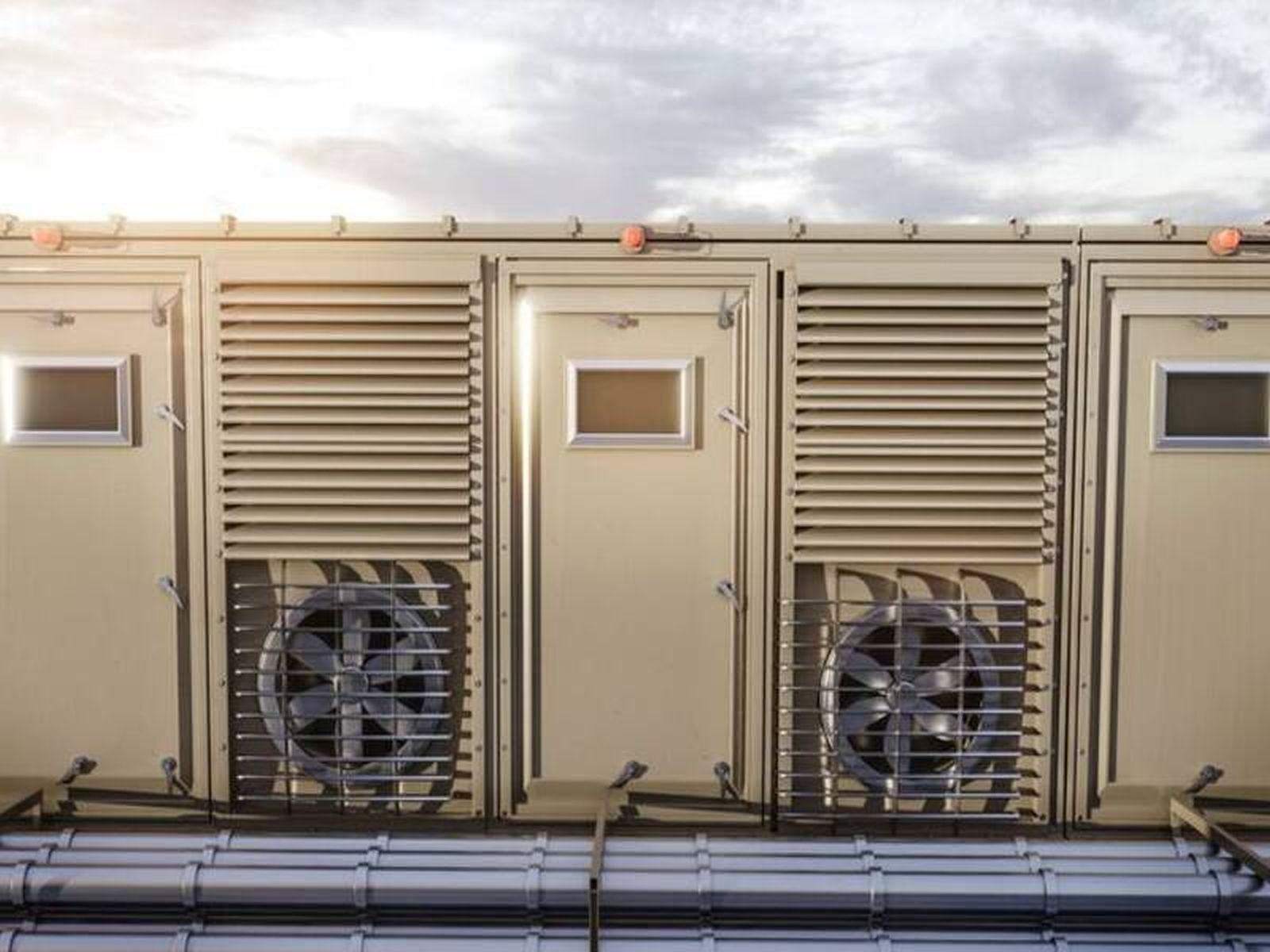
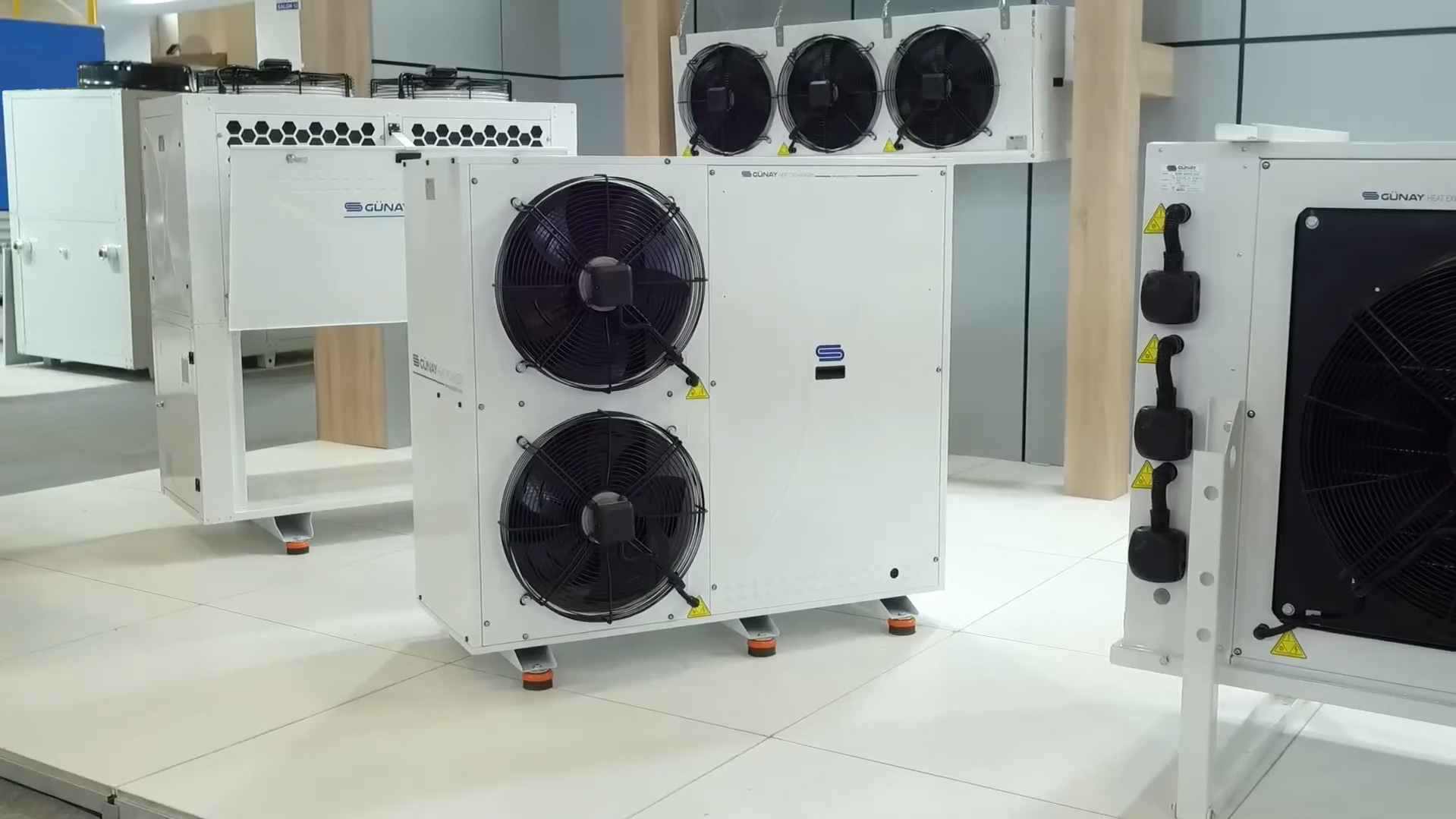
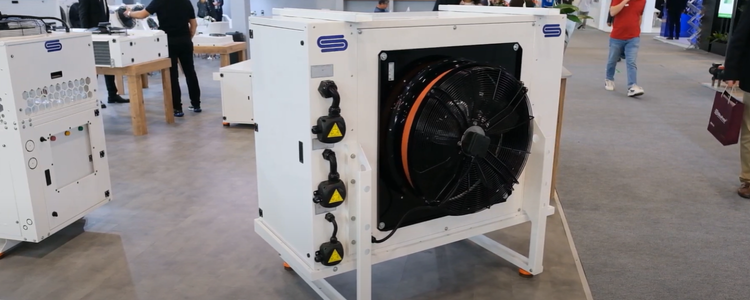
- Air-cooled condensers: Widely preferred for their simple construction and low maintenance requirements; however, performance loss at very high ambient temperatures can be more pronounced than with other types.
- Adiabatically pre-cooled condensers: These systems temporarily cool the incoming air by humidifying it before it reaches the condenser; particularly in dry, hot climates, this can help lower the condenser's entering air temperature and limit performance loss.
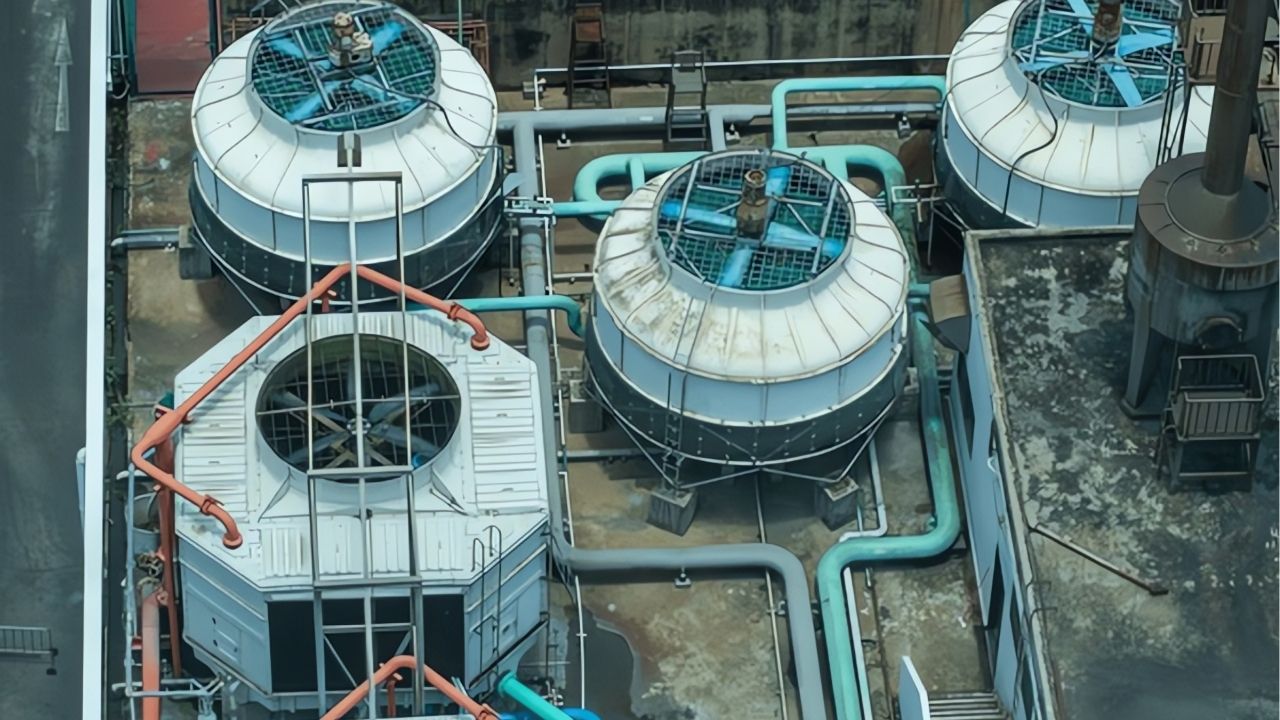
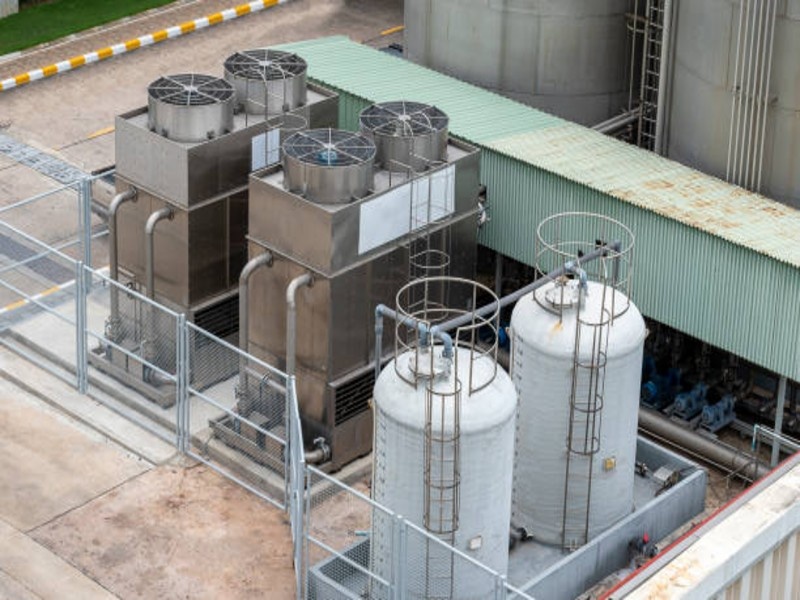
- Evaporative condensers: Using a combination of water and air, these bring the condensing temperature closer to the lower wet-bulb temperature rather than the dry-bulb ambient temperature; this characteristic can provide a notable performance advantage under high-temperature conditions.
Which type to prefer should be evaluated based on project-specific conditions such as access to a water source, maintenance capacity, installation space, and investment budget. No single condenser type can be said to be universally optimal for every hot climate application.
Why Are Condenser Placement And Ventilation Critical In A Hot Climate?
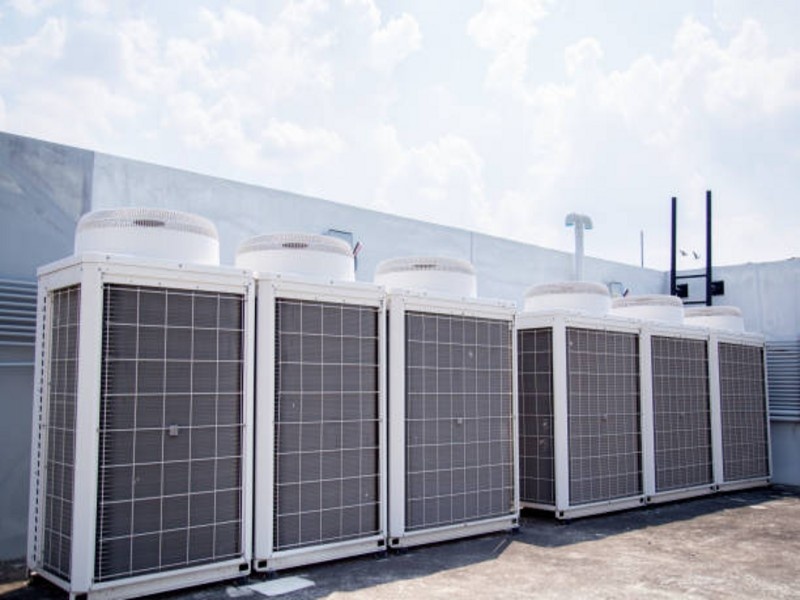
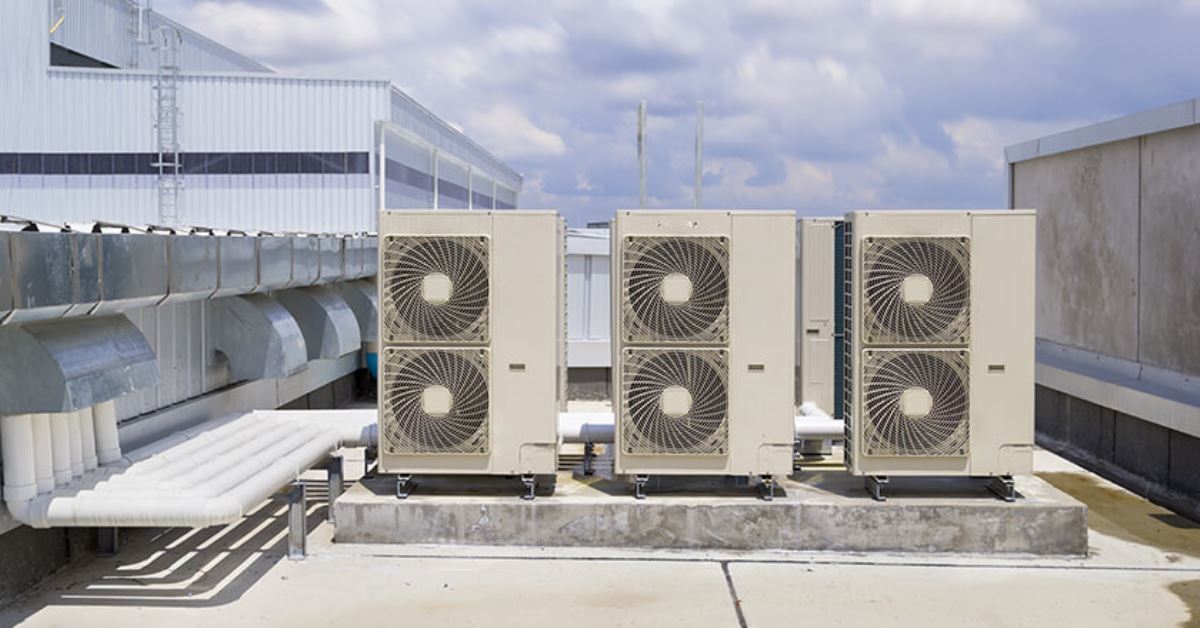
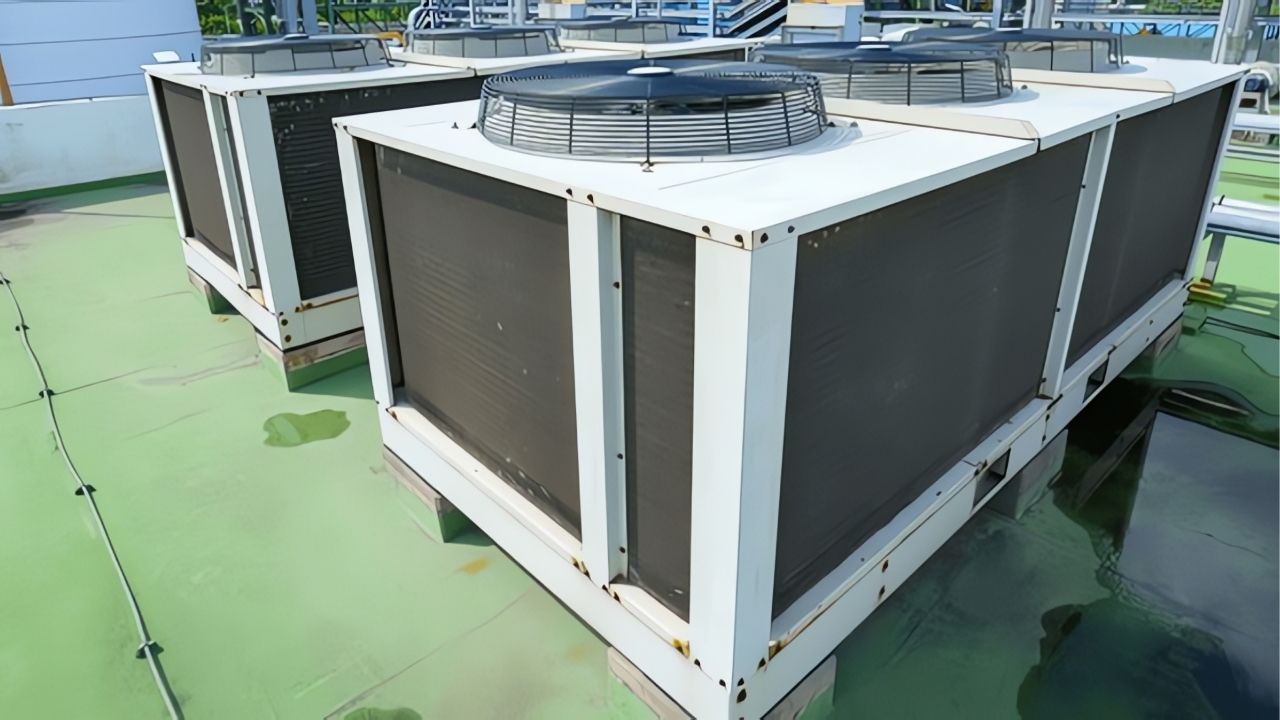
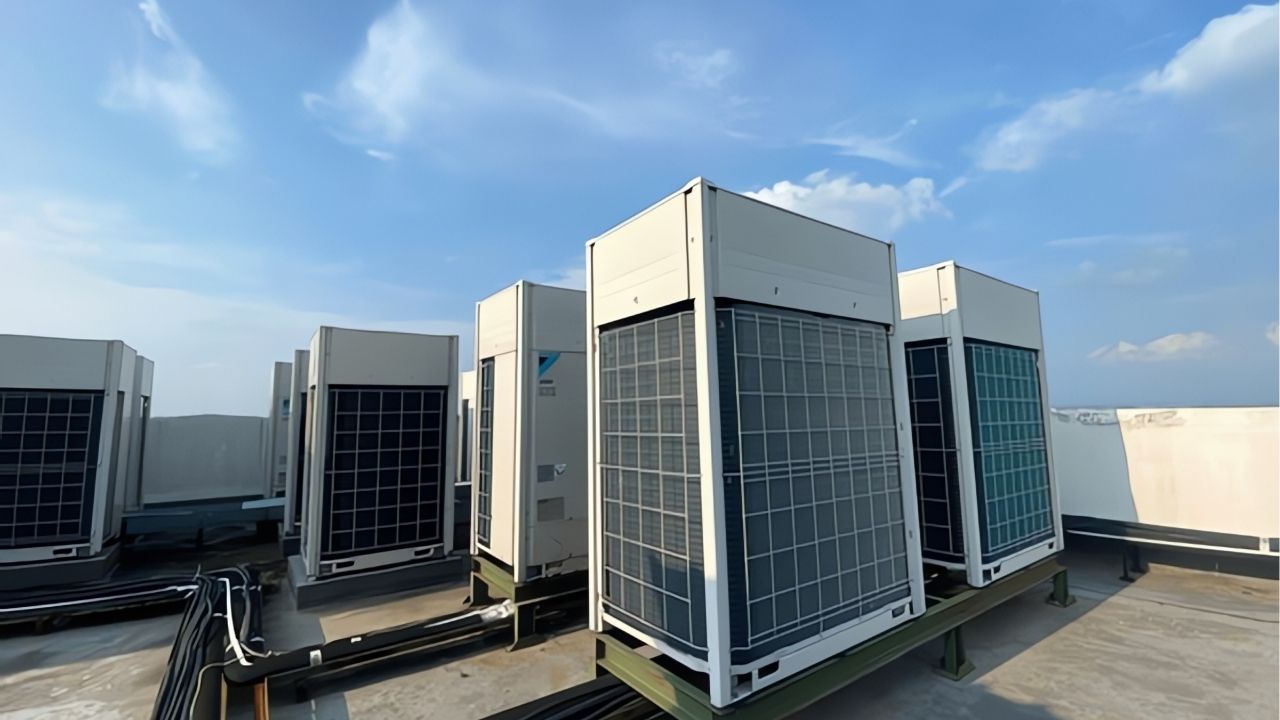
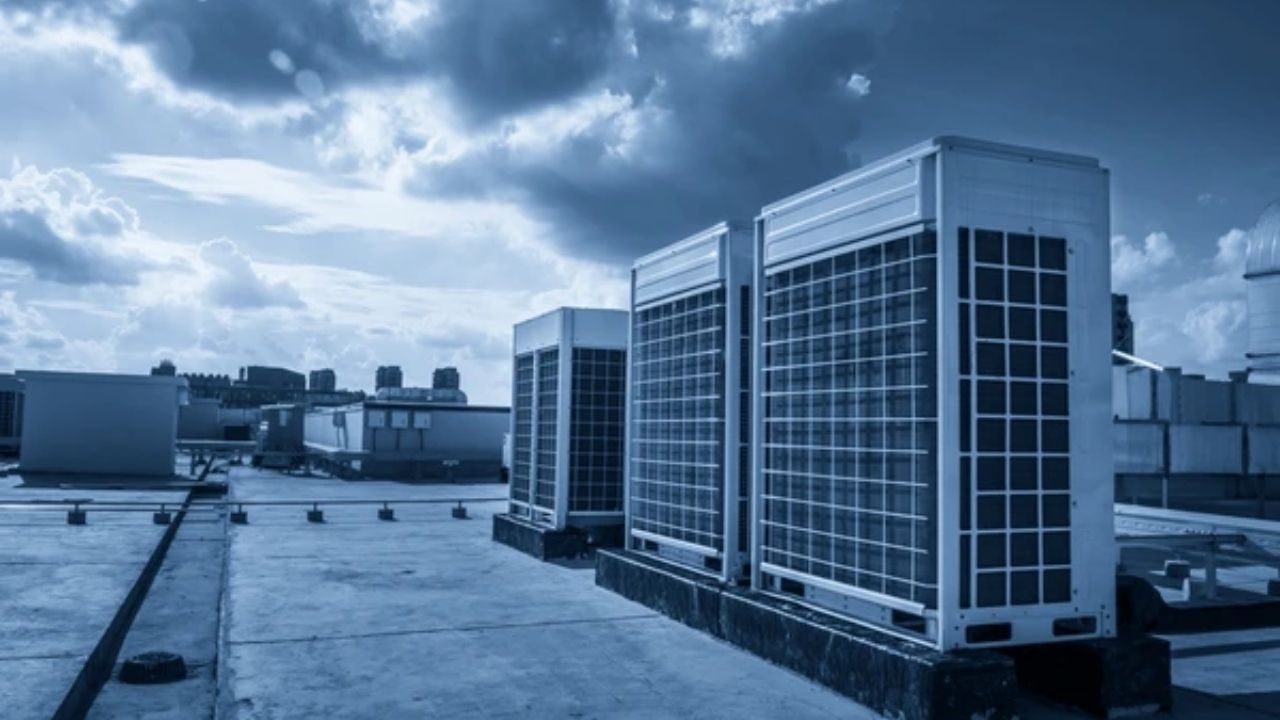
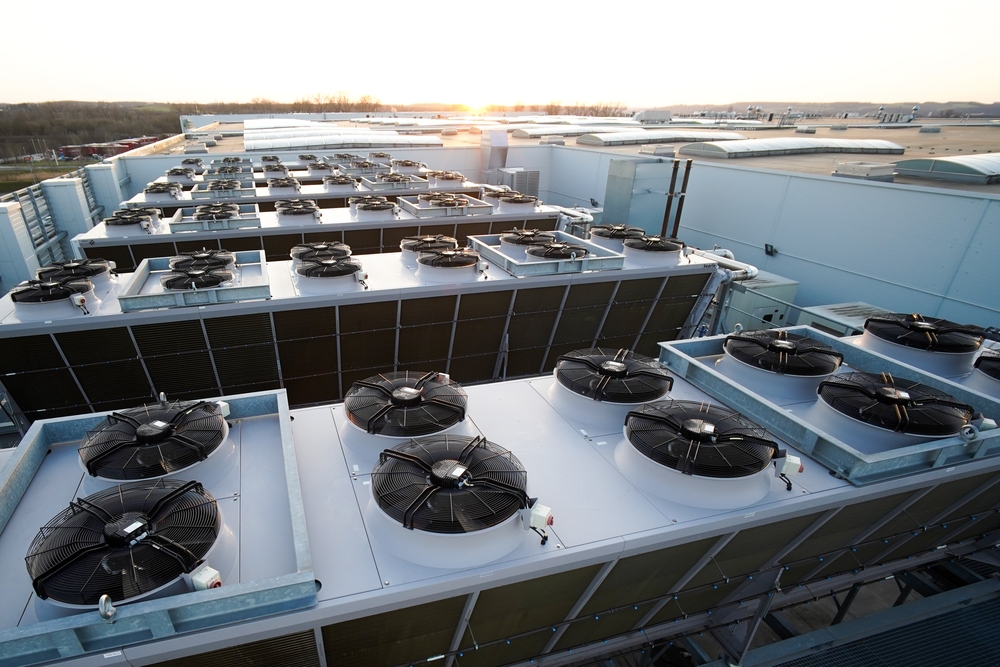
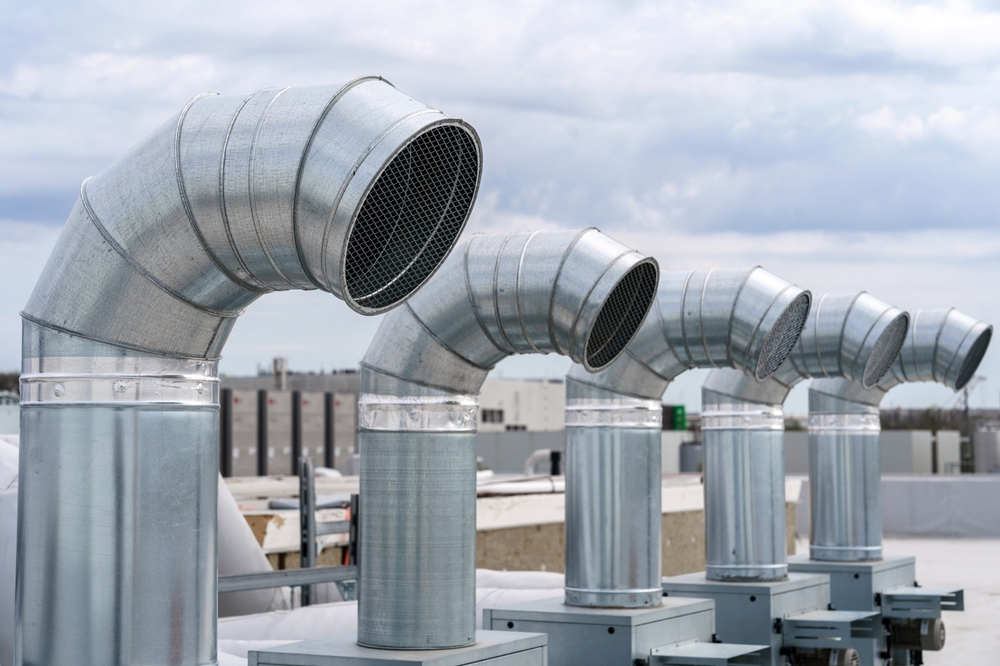
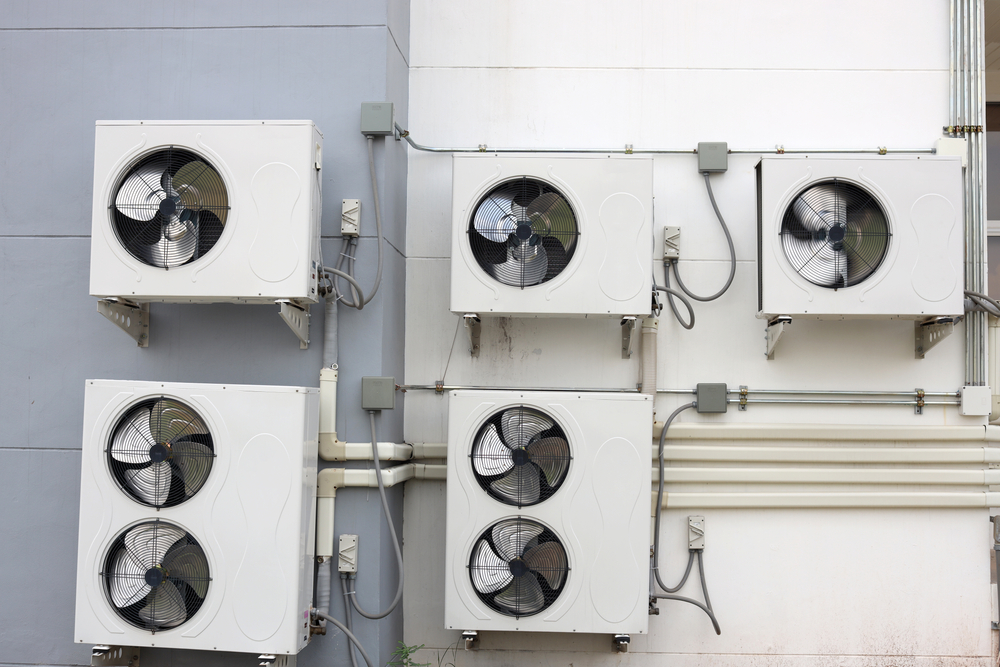
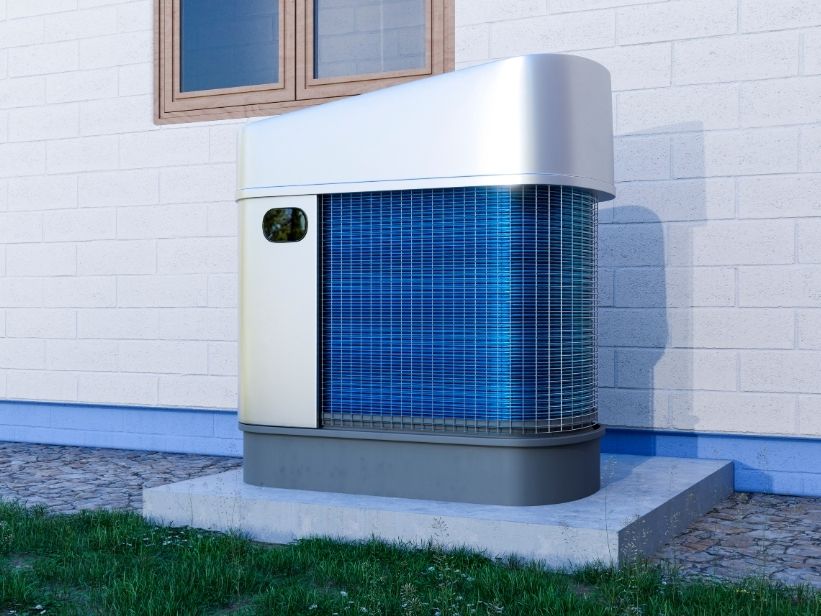
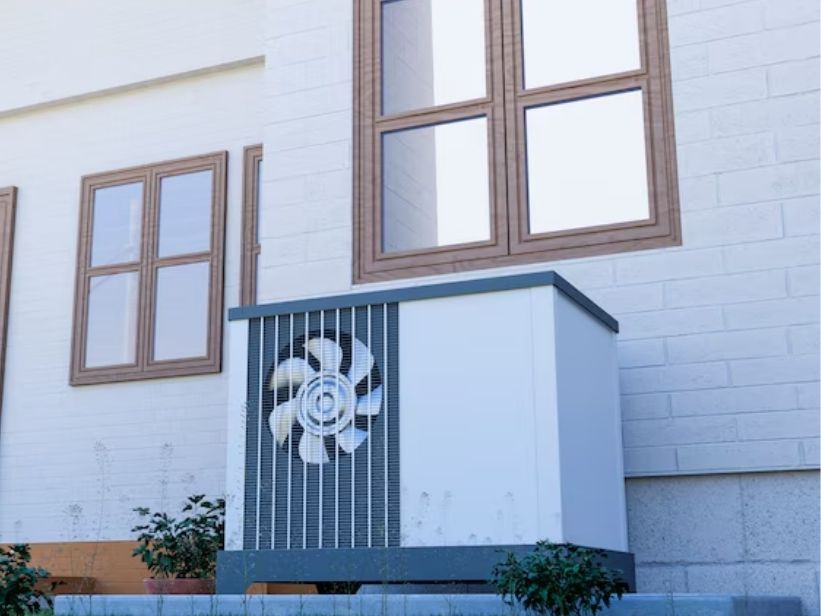
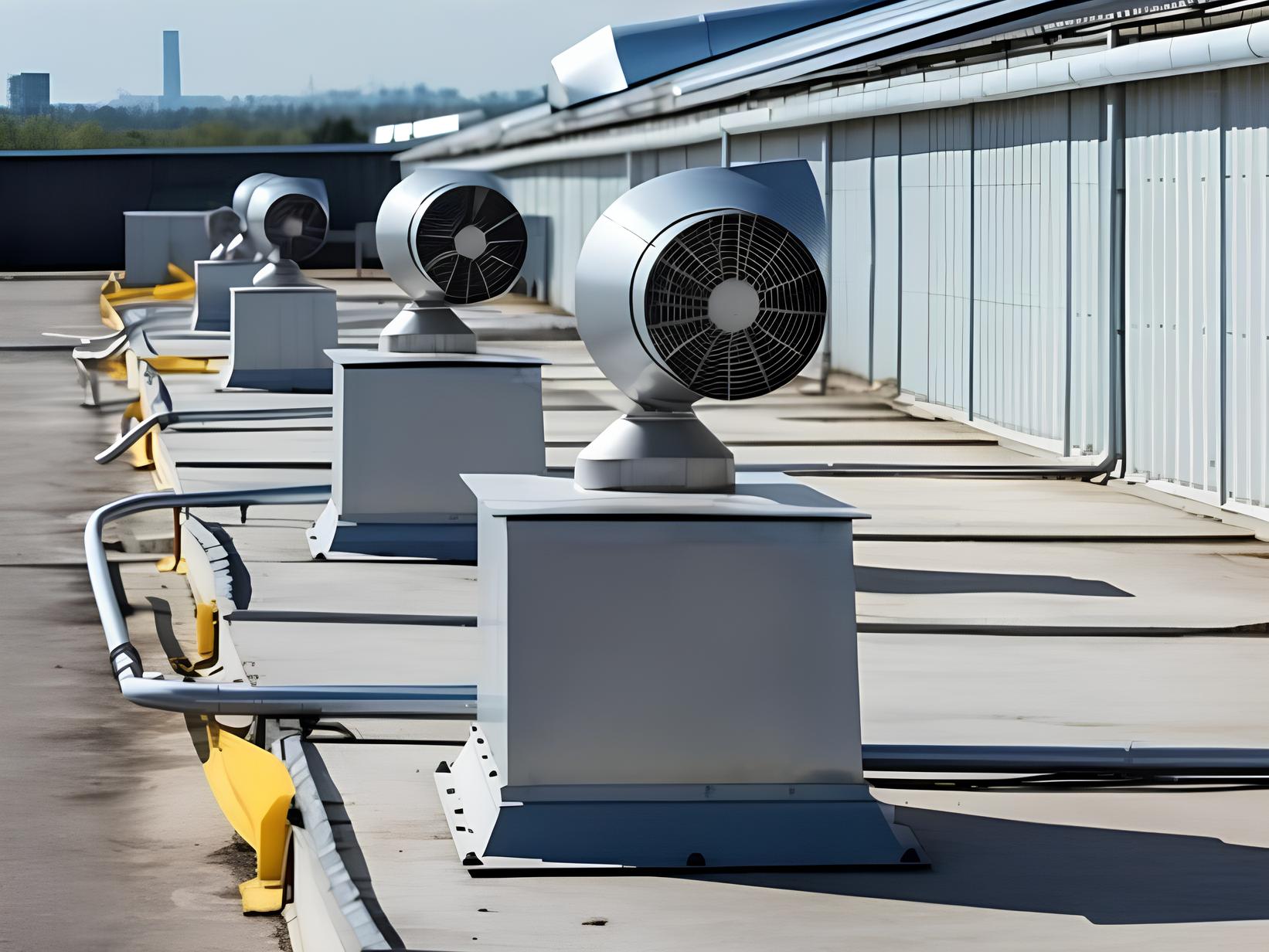
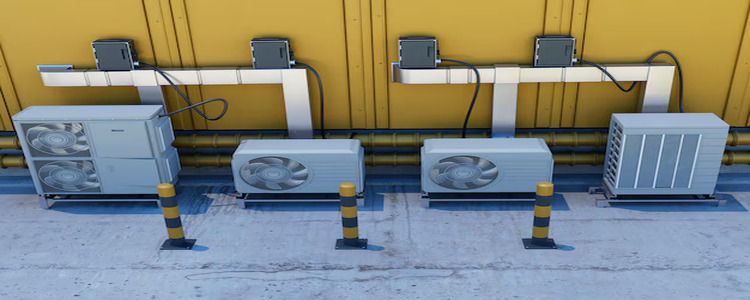
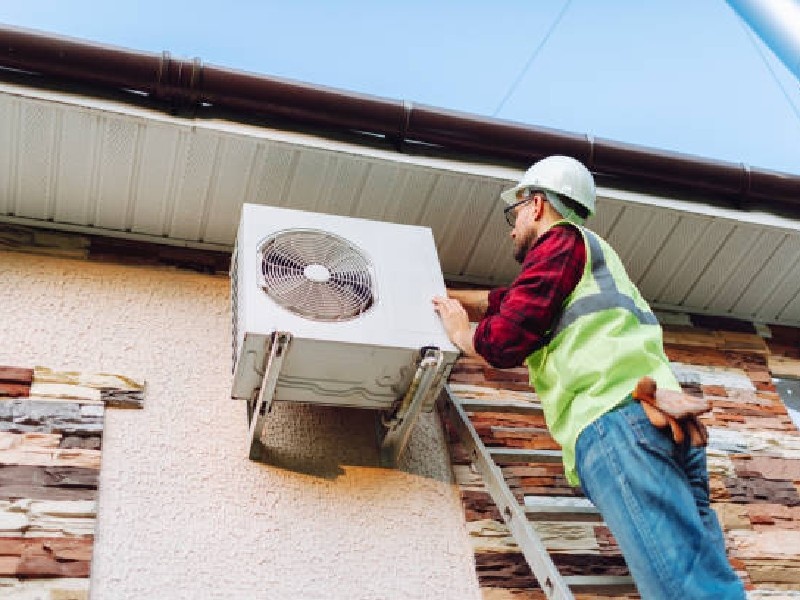
A condenser's physical placement is a factor that directly affects performance, particularly in regions with high ambient temperature. The hot air discharged by the condenser can recirculate back into the condenser's air intake, raising the local temperature further; this is referred to as "hot air recirculation" and can significantly reduce performance.
Elements to consider regarding placement and ventilation include:
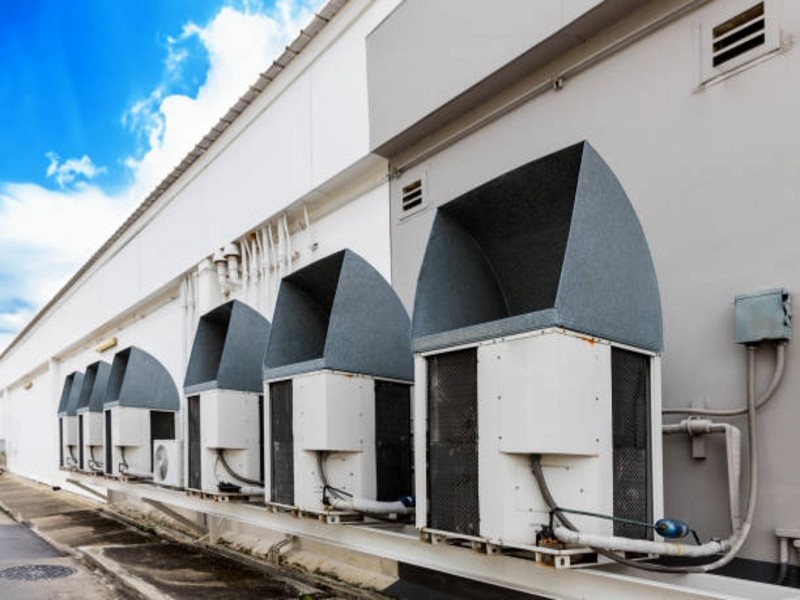
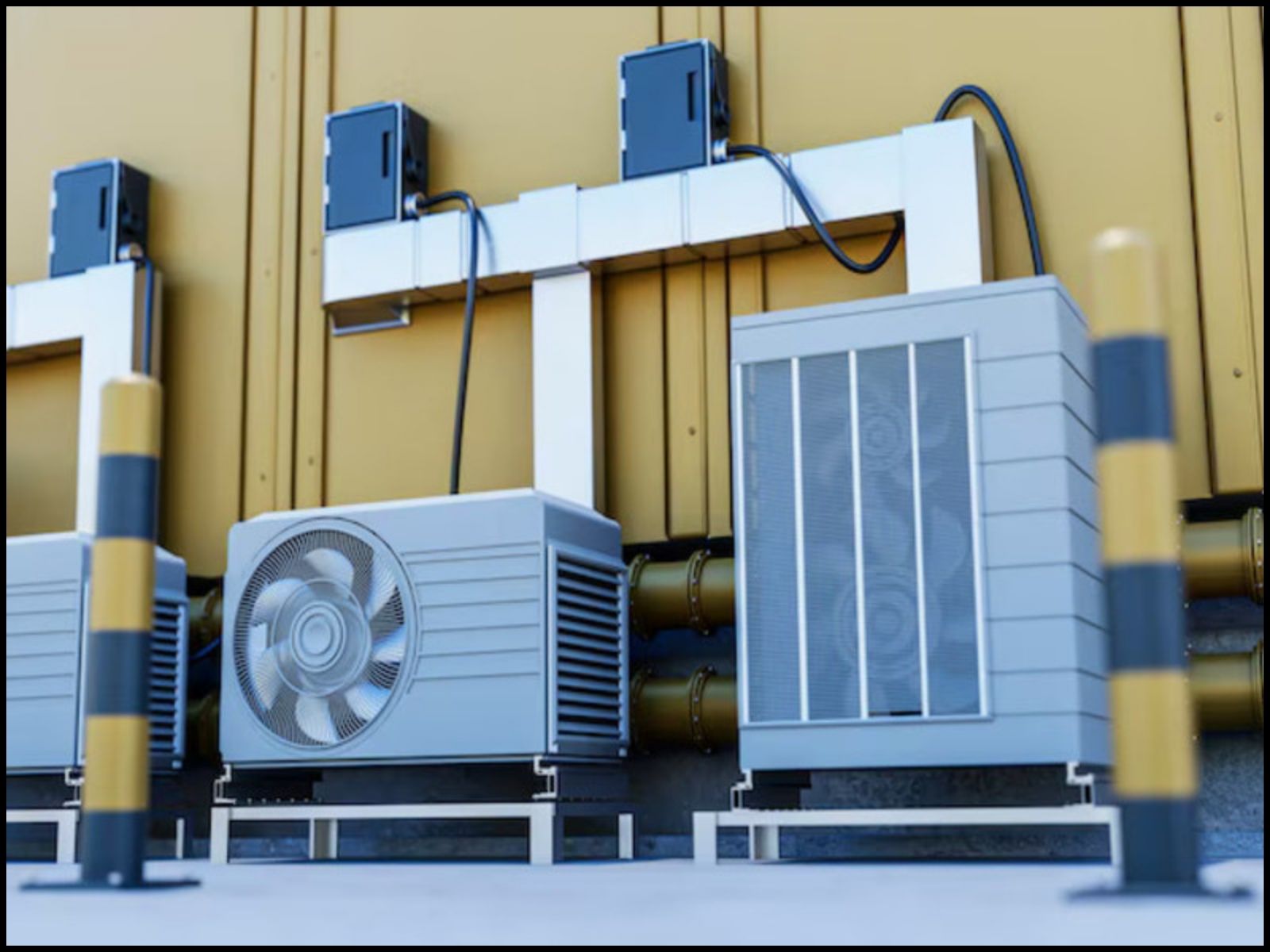
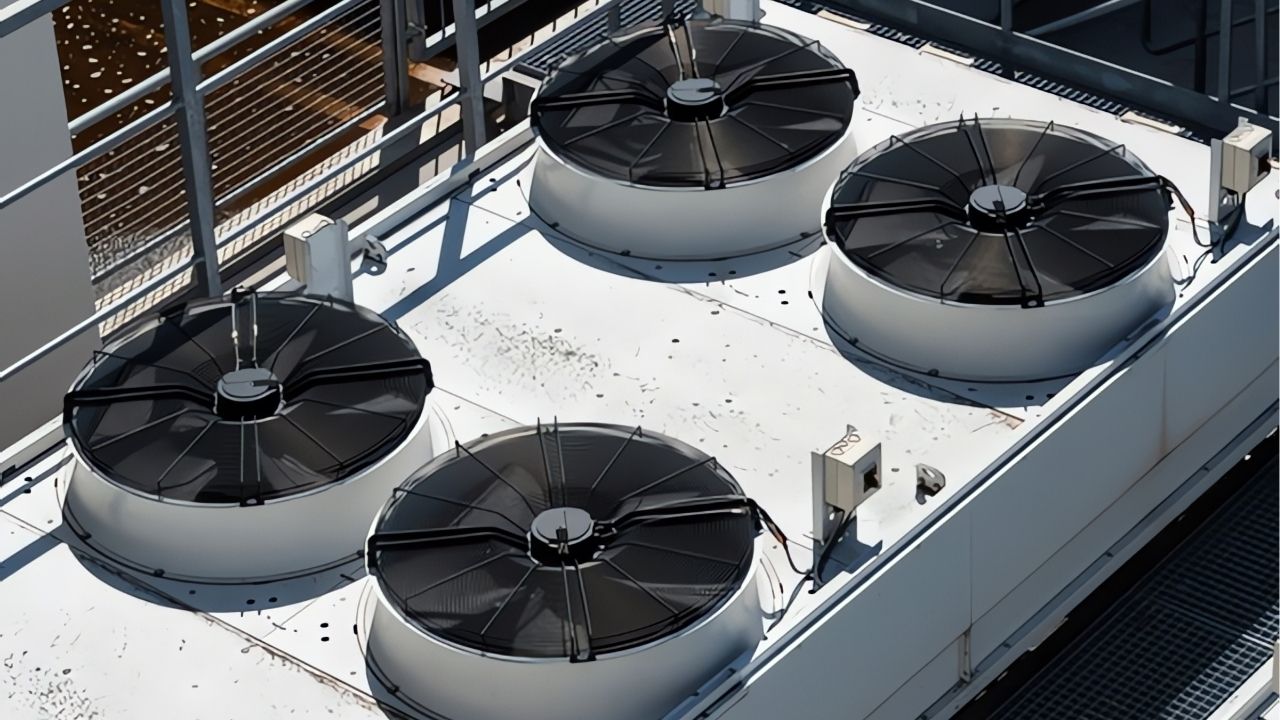
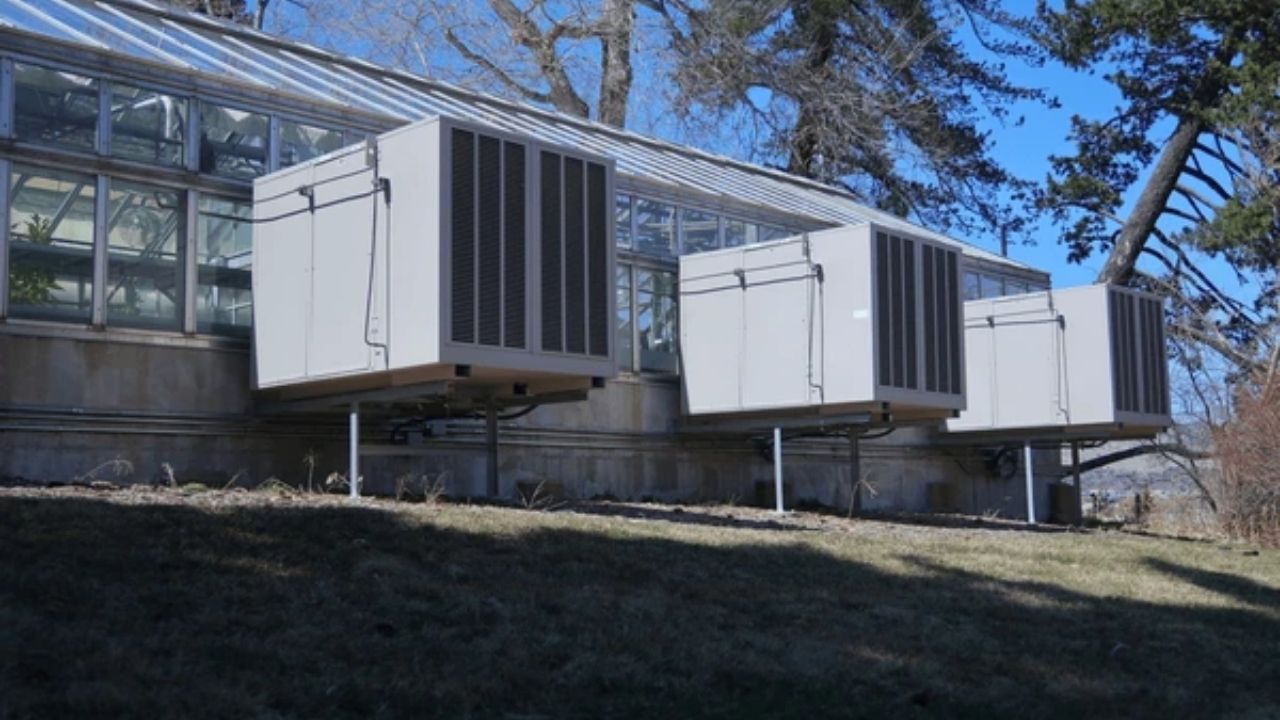
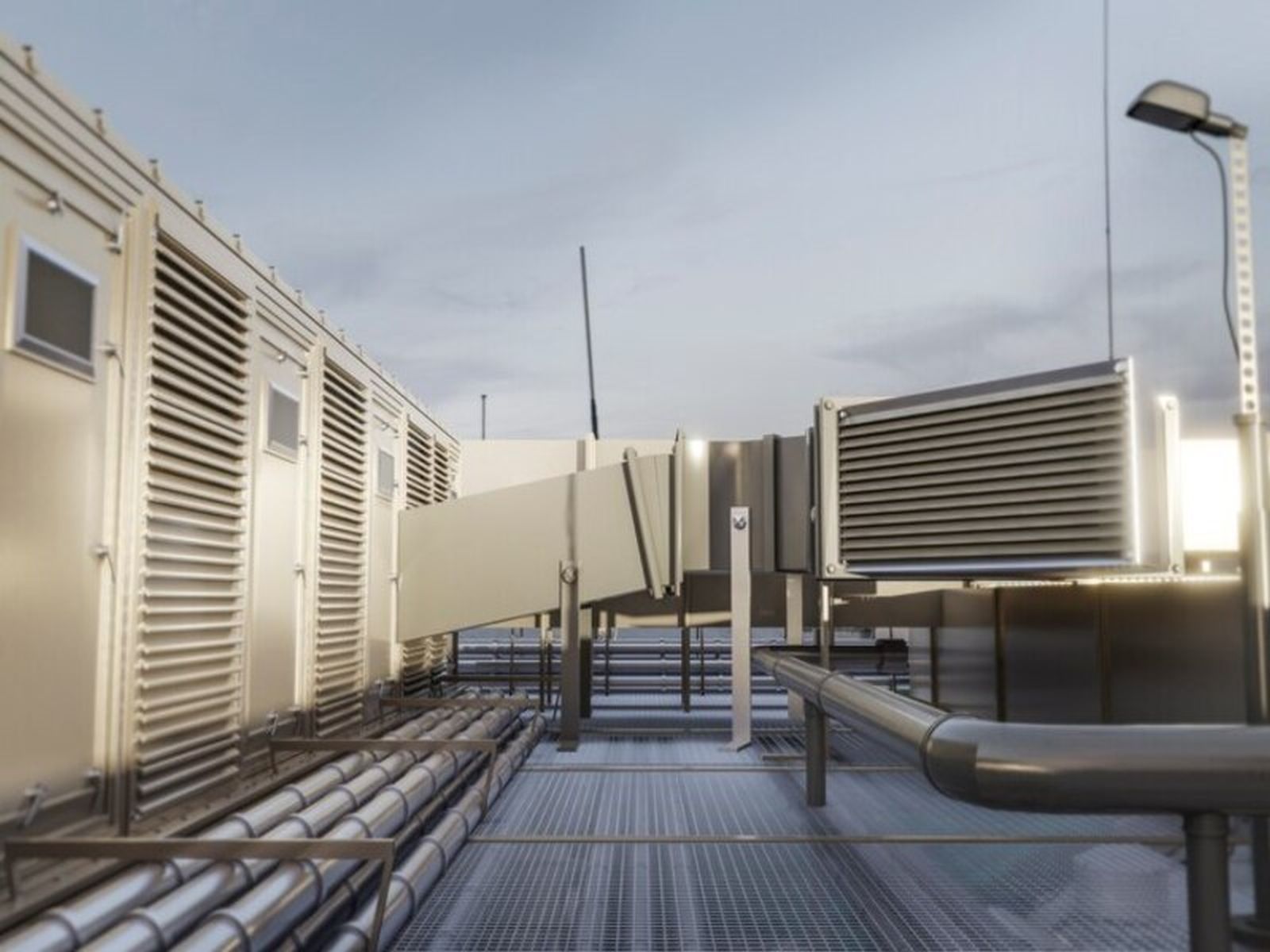
- Sufficient airflow clearance: The distance between the condenser and walls, fences, or other equipment should be sufficient to allow the discharged hot air to disperse freely.
- Sun exposure: A condenser enclosure left under direct sunlight can create an additional heat load; shading or reflective surface coatings can be considered.
- Dust and debris buildup: In hot, dry regions, dust accumulation can reduce the heat transfer efficiency of the fin surface, so regular cleaning access should be ensured.
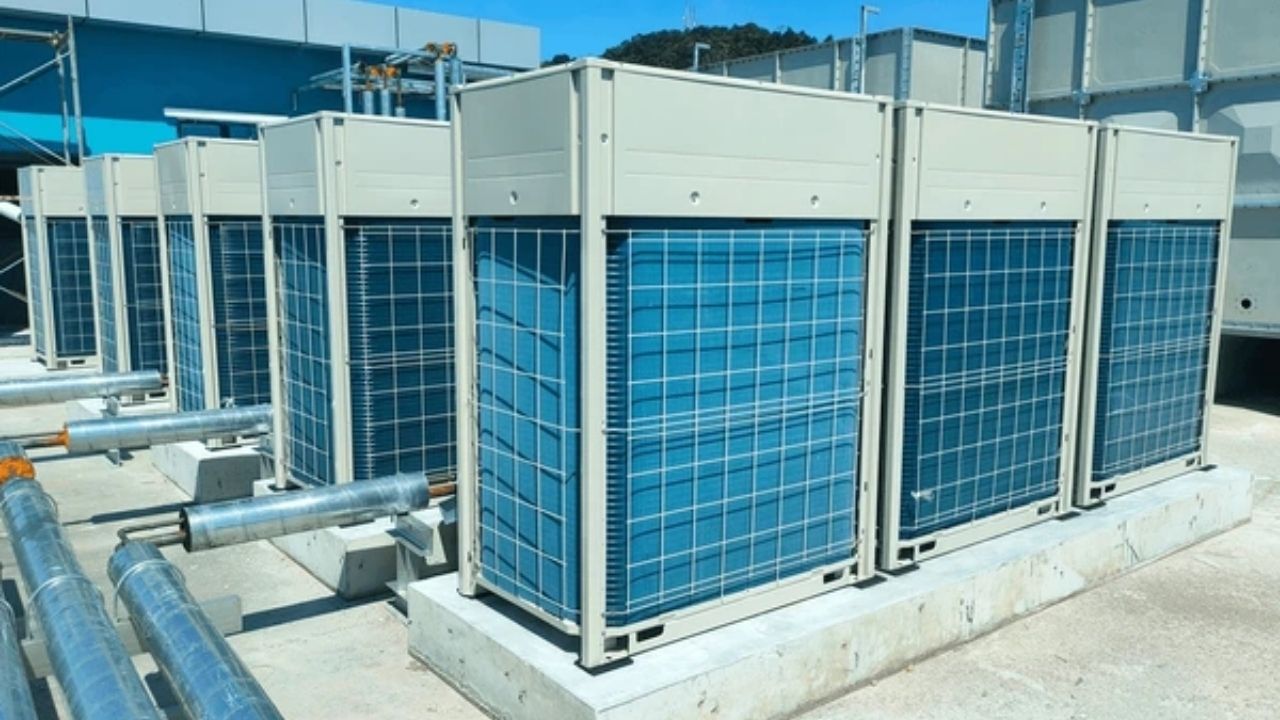
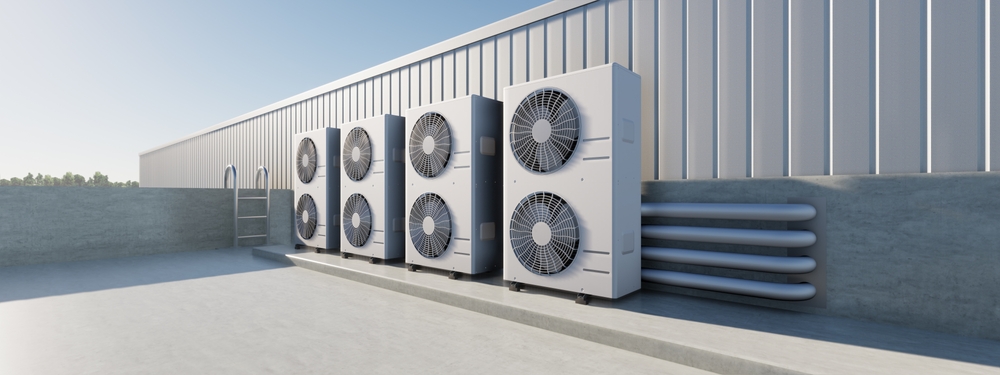
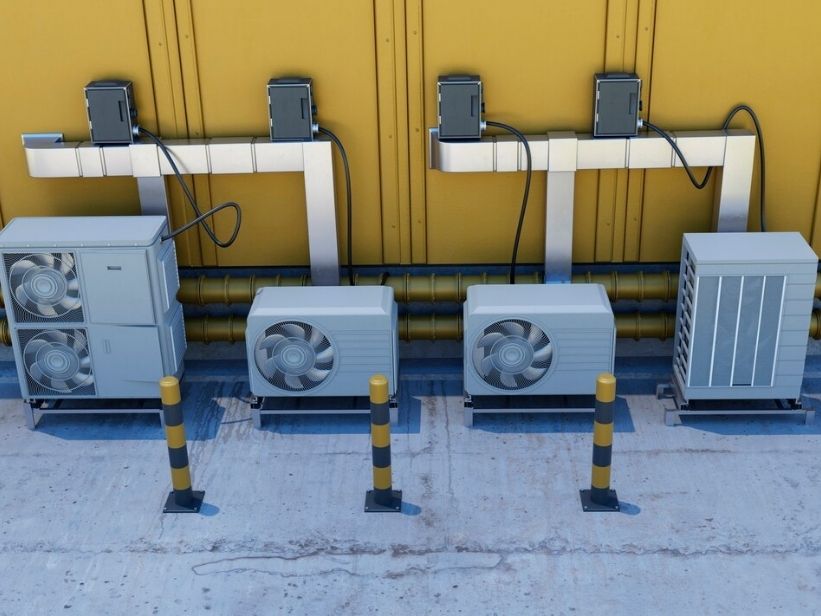
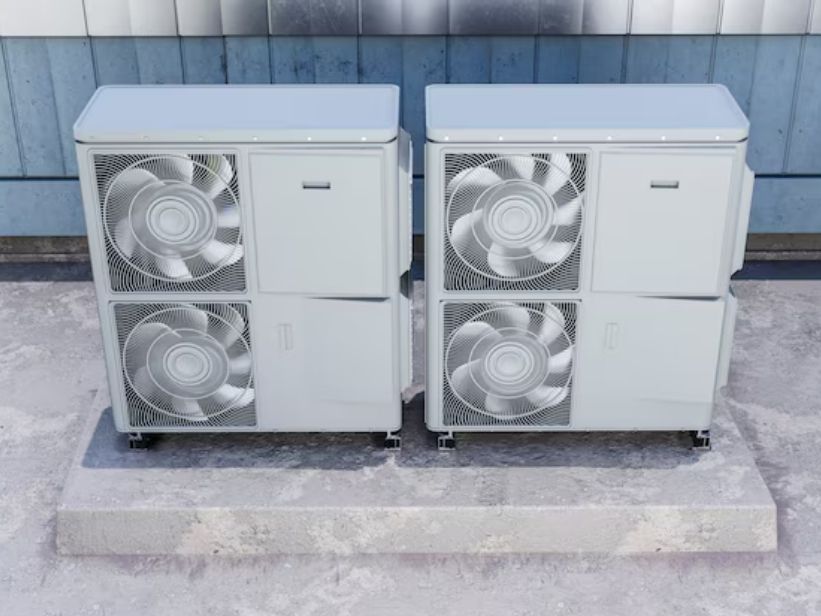
- Placement of multiple units: In projects using more than one condenser unit, units need to be positioned so they do not obstruct each other's air intake.
Overlooking these elements can result in a condenser that is correctly calculated on paper still failing to deliver the expected performance in the field.
What Steps Should Be Followed When Selecting A Condenser For A Hot Climate?
A practical approach that can be followed in the condenser selection process for a region with high ambient temperature may include the following steps:
- Gather the region's design temperature data: Recorded peak temperature data should be used as the basis, not average values.
- Calculate capacity with a safety margin: A margin should be added to capacity to offset performance loss on extreme-heat days.
- Determine the suitable condenser type: Air-cooled, adiabatically pre-cooled, or evaporative options should be compared based on water access, maintenance capacity, and budget conditions.
- Plan placement and ventilation: Sufficient clearance and orientation should be ensured to prevent hot air recirculation.
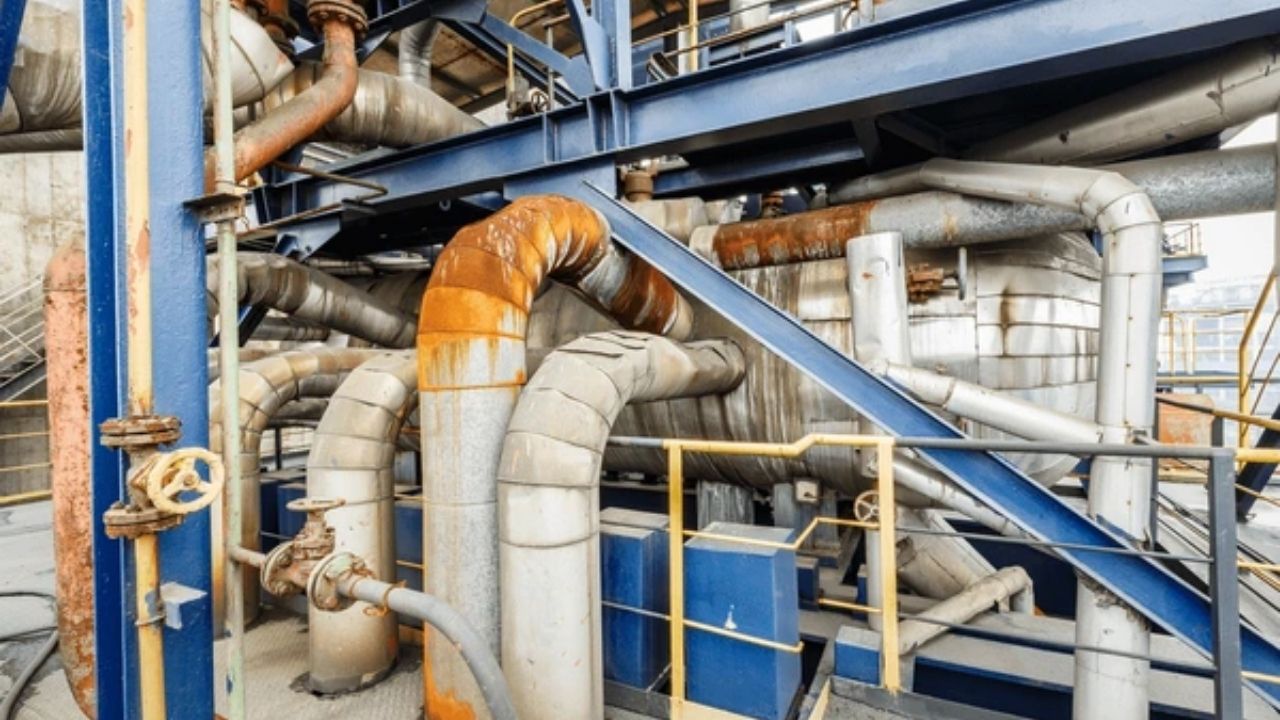
- Evaluate material durability: Corrosion-resistant coating or material options should be considered for condensers exposed to salty, humid air, particularly in coastal regions.
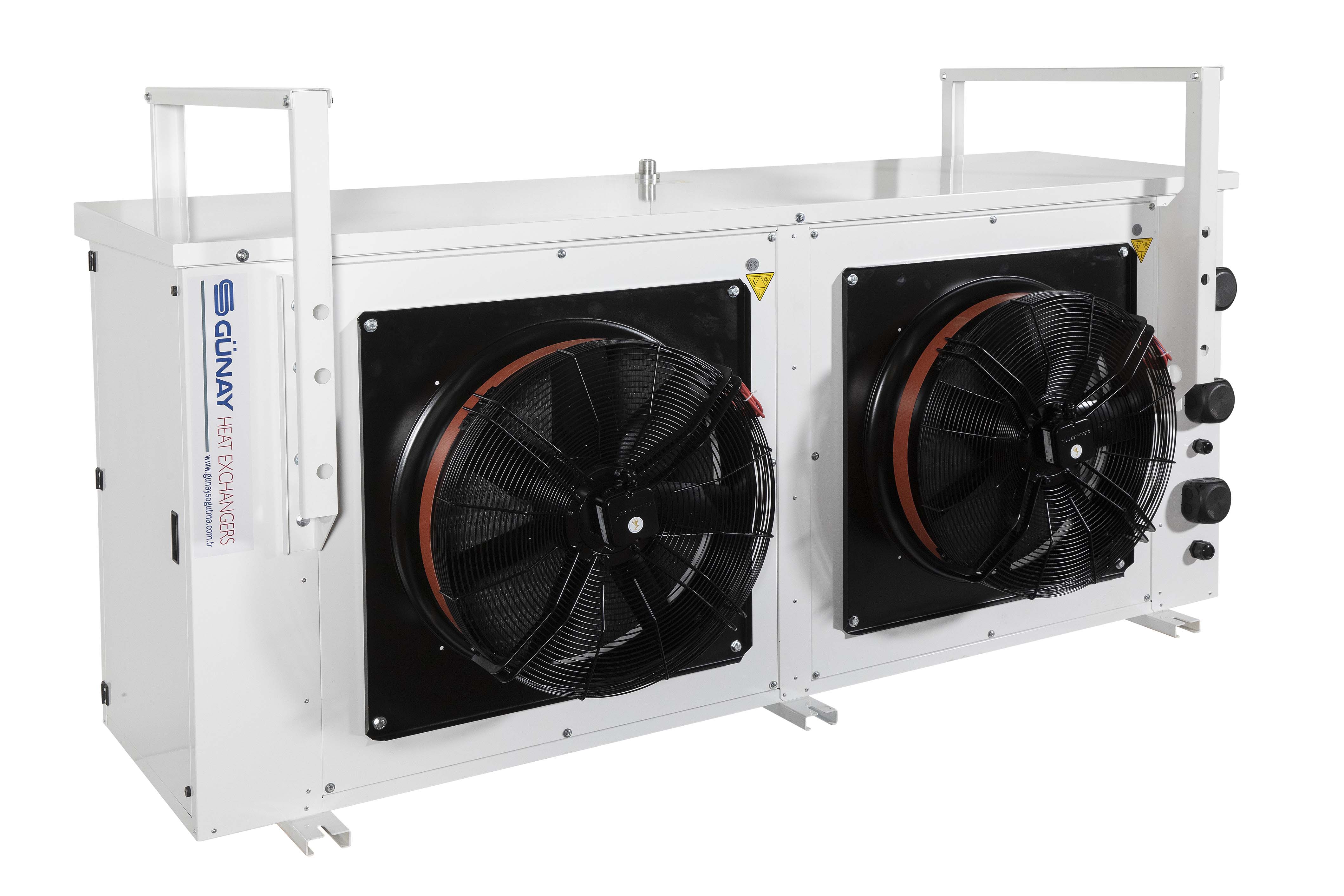
For projects where this evaluation is complex or requires a solution beyond the standard catalog, consulting directly with a manufacturer capable of both series and custom production can help arrive at an engineering solution suited to the region's actual climate conditions. Günay Soğutma offers an engineering approach capable of evaluating condenser models and capacity options for different climate conditions.
Frequently Asked Questions
Can A Standard Condenser Be Used In A Hot Climate?
It can technically be used, but a standard model may experience capacity shortfalls on days exceeding its design temperature. A model sized with an additional safety margin for hot climates should be preferred.
Is An Evaporative Condenser Suitable For Every Hot Climate?
No. Evaporative condensers require access to a water source and regular water/chemical maintenance; in regions with limited water access, air-cooled or adiabatically pre-cooled alternatives may be more suitable.
How Can Condenser Recirculation Be Identified?
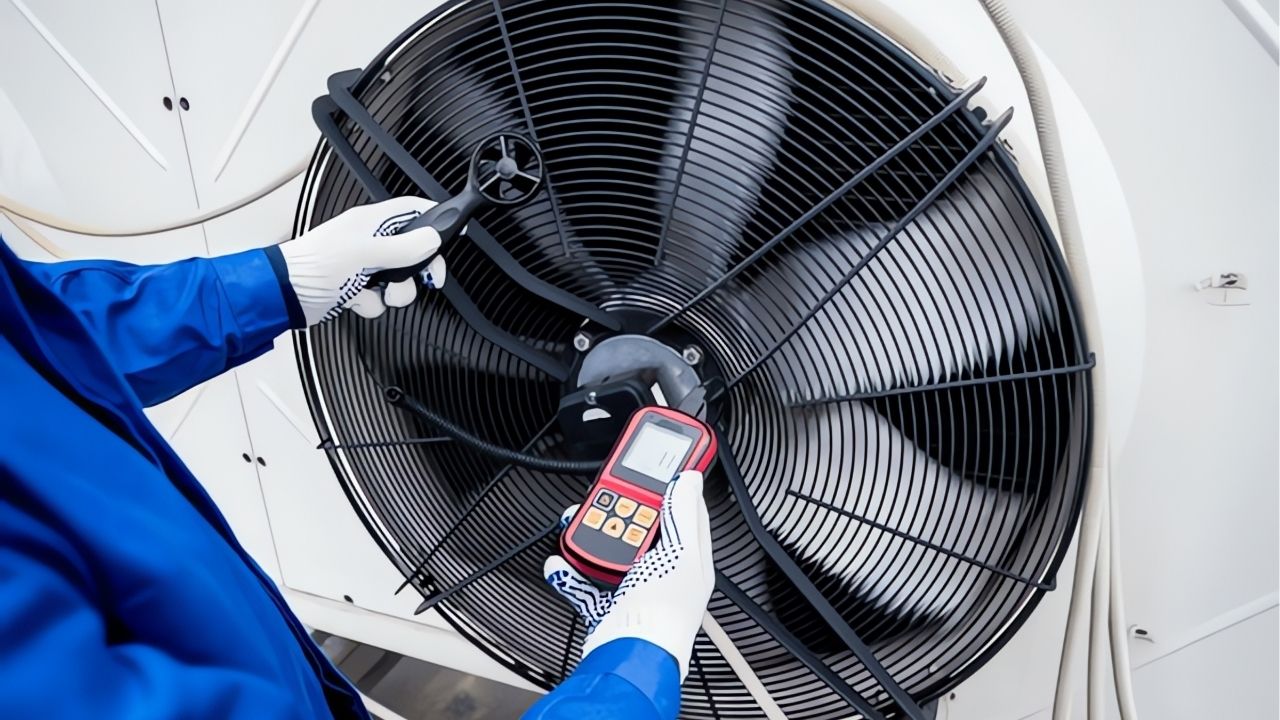
A condenser entering air temperature measured higher than expected relative to the ambient temperature can indicate hot air recirculation. Reviewing the condenser's placement and surrounding clearance is recommended.
How Much Extra Capacity Should Be Selected For A Condenser In A Hot Climate?
There is no fixed ratio; the appropriate margin varies depending on the region's climate data, refrigerant type, and system design. A project-specific engineering calculation is recommended.
What Climate Data Is Needed For Condenser Selection?
The region's recorded peak ambient temperature, humidity level, and, where relevant, wet-bulb temperature data should be compiled in advance for accurate condenser selection.